Showing posts with label writing. Show all posts

Thursday, 31 December 2020

To Epilogue or Not To Epilogue

Every couple of months, there will be a debate in the writers' corners of social media.  Are epilogues a good tool for wrapping up a story or are they the tool of a lazy writer who should have made the ending clear within the main plot?  In other words, are they useful/enjoyable or not useful/enjoyable?


For the most part, I like epilogues, so I usually just shrug and say "No one's forcing you to read them if you don't like them" to myself and move on to the next amusing cat video.

However, the last time this debate circled, I actually asked myself the question: why do I like epilogues?  Their critics raise valuable points: an epilogue shouldn't be necessary to complete the story, and they are often used as bait-hooks which can leave the story feeling incomplete.  I've been annoyed by some epilogues in the past, so why do I continue to believe that some stories need an epilogue in order to work?

I sat down to figure it out.  And now I'm sharing my conclusions with you. (I'll mostly be talking about romance novels since that's most of what I read these days.)

The most consistent factor that makes an epilogue satisfactory (in my opinion) is the timeline/pacing of the main story and the main characters' relationship.  When I'm reading a fast-paced suspense novel, the epilogue is a welcome opportunity to breathe.  It's a chance for the author to show me that the characters have overcome their challenges and have a smoother path ahead.  Especially in romance stories, I like to know that the characters are still finding their happily ever after with one another, without the stress of saving the world, or being on the run, or whatever other danger has overshadowed the relationship to that point.

Perhaps I'm too much of a realist to put my faith in a relationship that has only existed under high stress and forced proximity.  Especially if the individuals in question have spent most of the story fighting their feelings for one another.  In those cases, an epilogue reassures me that the ending really was the start of a happily ever after.  Seeing the couple a few months or a few years after the official end gives me that contentment.  I don't need them to have gotten married or have kids, or anything like that.  I just need to know that they're still happy and together.

Another factor that makes an epilogue necessary (again, in my opinion) is when the conflict of the relationship has been solved via a grand gesture.  If I am reading a character who has chosen to self-sabotage their feelings (eg.: pushing their love away to "keep them safe" or because "they deserve better" or because the character thinks they'll only screw everything up) then I need to know that they have truly overcome their tendency to run away rather than face their problems.  A grand gesture can be wonderful, but it's only one moment in the character's history.  If there are lots of other moments where they've made the wrong choice, then that one moment isn't enough to convince me of the change.  I need to see that they've sustained it over time.

This also applies when a character is struggling with addiction as part of their arc.  Relapse is an expected and frequent part of recovery, so I need to know they've made it through those initial hurdles.

Critics are right when they say that an epilogue shouldn't be necessary.  All the crucial plot elements and character growth should happen in the main story.  But an epilogue can provide reassurance to the reader.  It gives comfort and a sense of security.

That's what an epilogue should do.  It shouldn't be used to undermine the main story or to solely provide a hook for the next book in the series.  It should enhance and support the main story, relieving any lingering tension for the reader.

I suppose, by this definition, the epilogue isn't necessary.  The conflict has been resolved and what the epilogue shows is that it has remained resolved.  For some readers, they may not need the reassurance that everything continues to be okay.  And that's all right, they can skip it and move on to their next read in perfect confidence.  But for those of us who wonder what happened after The End, an epilogue can be a perfectly enjoyable thing.  Like dessert after a good meal.  It might not be necessary, but it is satisfying.

In other words: "No one's forcing you to read them if you don't like them" so please, let's all agree to disagree and finish by watching this adorable cat video.

Previous Blogpost: Learning From Rudolph The Red Nosed Reindeer (1964)

Blog Homepage

Thursday, 24 December 2020

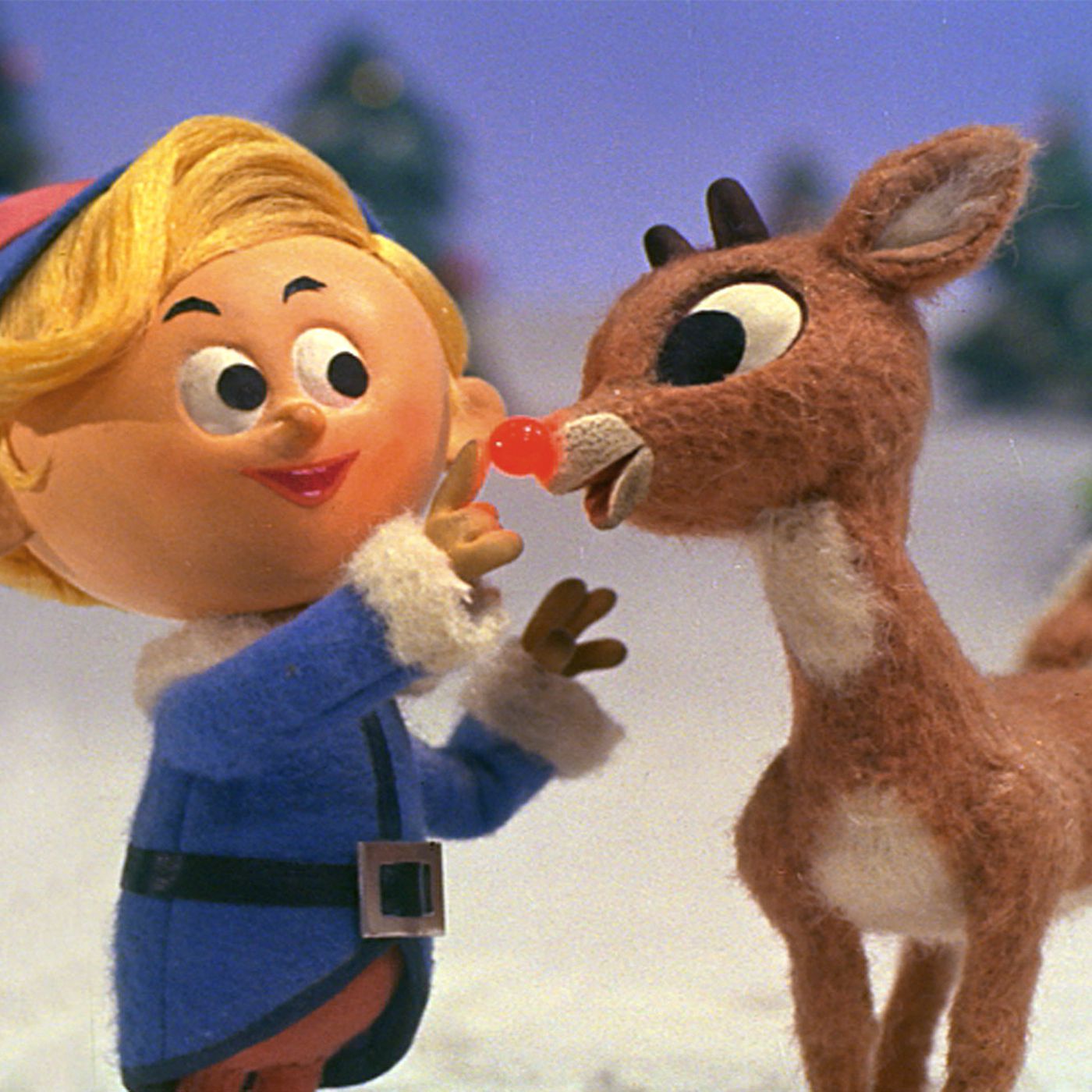
Learning from Rudolph the Red-Nosed Reindeer (1964)

When I first began to write, one of the common pieces of advice was to learn good story structure from the books and movies I enjoyed.  This is good advice, but I've found that I often learn more from bad stories, the ones I should have enjoyed, but didn't.  Figuring out why those stories didn't work and plotting out how I would have done them differently has taught me a lot about editing and story-telling. (Warning: this post will contain spoilers)

I'm sure I'm not the only one for whom the stop-motion Rudolph the Red-Nosed Reindeer is a holiday staple.  And I'm sure I'm not the only one who finds herself wincing through the nostalgia.  The story itself is pretty good and it has a lovely message about being true to yourself and found families, but there are a lot of dated approaches and references that grate on a current viewing.  So this month, I decided to think about how it could be updated, while still keeping the good parts.


First off, let's look at what works.  I love the stop-motion aesthetic and think it works really well for a fanciful holiday story.  I like that Rudolph leaves the North Pole to try and find a place that he belongs, but ends up finding it among friends who also don't fit in.  I think that part of the story speaks to a lot of us who felt like outsiders growing up.  From the moment Rudolph leaves with Hermey, the plot flows nicely.  They run into the prospector, Cornelius, and the Abominable Snowman (Bumble).  They float off on an iceflow and find the Island of Misfit Toys.  Rudolph sneaks away, afraid that his nose is drawing the Bumble and endangering his friends.  Then there's a growing up montage, and he decides to go home and confront his family.  He discovers his family is gone and goes to rescue them from the Bumble, but only succeeds with the help of his friends.  Then they all return to the North Pole and Rudolph helps Santa save Christmas.

That's good.  What's not good are the repeated sexist references sprinkled throughout the story.  Any reference to "not for does, this is bucks' work" needs to be ditched immediately.  Next to go can be the references to what "makes Christmas"; such as silver and gold ornaments on a tree or lots of toys.  There are too many families celebrating in too many ways to declare something as a required Christmas experience.  Luckily, those things are fairly minor.  They don't affect the plot and are mostly asides which don't even drive dialogue.

Slightly harder is toning down the rejection from Santa and Rudolph's parents.  It makes them very difficult to like.  I honestly think an updated version would provide a powerful opportunity to examine how painful microaggressions can be.  Most people would already agree that Rudolph's parents treating him as a freak is bad.  But most people don't understand how a careless comment or joke can cause harm.  I would probably write the introduction as Rudolph is shy, his parents encourage him to be himself, but he still faces rejection from the other reindeer.  That would allow the message of self-acceptance to be more resonant.

There is a bit of a nasty undercurrent to the 1964 story.  The misfits are only accepted because they are useful.  But people don't have to be useful to be accepted.  By changing it so that Rudolph has a supportive family, he's got an unconditional place to belong.  And by gaining friends, he learns that he doesn't need to rely on his reindeer peers for acceptance.


It also would add poignancy to the Island of Misfit Toys (which is my favourite part - side note: I wanted an elephant with pink polkadots and a swimming bird).  These are toys that self-loathe themselves because they don't fit in.  Except their differences make them the perfect toys for particular children.  There are people waiting to love them just as they are, which is a fantastic message for a children's movie.  I would make that part more explicit, showing them being happy with different children.

The music would have to be updated.  The songs are mostly forgettable, aside from Rudolph the Red-Nosed Reindeer and Holly, Jolly Christmas.  And since I'm partial to musicals, I'd keep the key points of the story tied into music.

I would also tweak Cornelius.  Rather than having him be a prospector, I'd make him a naturalist or an environmentalist (which is why he knows so much about Bumbles!).  He finds and helps Hermey and Rudolph.


The ending also needs work.  I'm not a big fan of pulling out the Bumble's teeth to make him helpless.  I'd much rather Cornelius be working with him and ends up gentling him so that the North Pole doesn't have to be afraid any more.  And Hermey gets accepted because Santa has a nasty toothache (and that's why he didn't want to eat).  He fixes it and Santa makes him the official North Pole dentist.  Rudolph can still save Christmas, but he tells the other reindeer that he doesn't need them to be his friends.  He knows who he is and he's proud to be red-nosed.

Previous Learning from Suicide Squad

Previous blog post: Things I Love: December 2020

Blog homepage


Thursday, 3 December 2020

Missing My Writing Retreat

 Usually, the first week of November finds me on a beach in South Carolina with 10-12 other writers, enjoying a writers' retreat.  For 2020, even before the pandemic hit, we were nervous about being in the United States during what was expected to be a highly polarizing election.  With Corona, it became a non-decision: any thought of the trip was cancelled.

Writing retreats are one of the ways I keep up my writing progress through the year.  I've got a lot of responsibilities at home, plus a full time job, so my writing time is pretty minimal.  In a typical year, I can manage 4000-6000 words per week, but on a writing retreat, I can often do 20 000 to 25 000 words, which is a major jump forward.  Being able to just concentrate on my writing, plus the fun, energy-boost of being around some amazing and entertaining folk turns on the creative flow at full volume.  (The relative warmth and sunshine helps too, energizing my inner lizard from winter sleep to summer productivity.)

I really miss having that break this year.

Pictured: not this November

However, I have a bunch of unclaimed time-for-time through my day job, so I decided to try an at-home writing retreat.  I've been managing about 1000-1500 words per week since the kids went back to school in September.  For my writing retreat, I did about 8000 words, which puts me within a chapter or two of finishing my WIP.  (For those looking for perspective, a 300 page book is about 90 000 words, and my books tend to be 100 000 to 130 000 words.)

It's hard not to compare what I usually do on a writing retreat with what I was able to do this time.  Usually I write for about 5-7 hours throughout the day.  For this week, I wrote for 2-4 hours.  I am very aware that my energy levels are still quite fragile and that I needed to be able to preserve enough to function as a parent during the evening.

I'm glad I took the time.  It felt good to be able to concentrate on my writing.  I've had to switch my writing time from the afternoon (when I was traditionally able to do 1500-2500 words in 90 minutes) to the morning (where I'm only able to do 500-700 words in the same amount of time).  Usually I have to turn off my computer when the words are just starting to flow and I can feel my brain starting to spark with ideas.  For this week, I could keep going and it was a real pleasure.

Going back to the regular routine is hard, but its necessary.  I do like my day job and the people I work with, but it's not my heart's calling.  I keep hoping that someday I'll make enough money with selling stories to support myself and my family.  That would be one of my happily ever afters.

Thursday, 26 November 2020

Learning From Suicide Squad

 When I first began to write, one of the common pieces of advice was to learn good story structure from the books and movies I enjoyed.  This is good advice, but I've found that I often learn more from bad stories, the ones I should have enjoyed, but didn't.  Figuring out why those stories didn't work and plotting out how I would have done them differently has taught me a lot about editing and story-telling. (Warning: this post will contain spoilers)

I love comic book movies, and I love stories about redeeming villains, so I should have loved Suicide Squad.  But while I did really enjoy some parts of the movie, overall, it's not a great experience.  However, it could have been with some changes.

First of all, let's look at the parts that did work, specifically Margot Robbie, Will Smith and Viola Davis.  Harley Quinn, Deadshot, and Amanda Waller were all brilliantly developed characters with good, clear arcs.  They played off against each other well, with Deadshot's methodical precision acting as a great foil for Harley's chaotic impulsivity.  And Waller was the perfect villain, one who believes that her chosen ends justify the means.  The scenes with these three make the film worth watching.

Jay Hernandez's Diablo had the potential to be a really strong character with a powerful backstory, but he got lost in the general mishmash of plotlines.  And I actually liked Jared Leto's Joker.  The combination of lethality and playfulness is an approach to the character which is often used in the comics but hasn't usually been attempted in film.  However, many of the Joker's scenes seemed superfluous in the greater story.

This is where Suicide Squad falls down.  Too many characters, too many contrasting character arcs, and a vaguely defined overall conflict.  There are 8 named characters in the title squad: Deadshot, Harley, Diablo, Killer Croc, Slipknot, Boomerang, Rick Flag and Katana.  There are 3 main villains: Amanda Waller, Enchantress, and Incubus.  And then there's the Joker, who I don't count as a villain for this movie because he isn't trying to attack the protagonists or the city.  That's 13 characters competing for screen time.

- Deadshot wants to provide for his daughter

- Harley wants to reunite with the Joker

- Diablo wants to atone for killing his family

- Killer Croc wants to be free to... lurk in the sewers, I guess?  He just seems to want to enjoy himself, to be honest

- Slipknot wants to escape and gets his head blown off

- Boomerang wants to screw over Amanda Waller and make her look bad

- Rick Flag wants to protect his girlfriend, June Moon (who is also Enchantress)

- Katana wants to avenge her husband's spirit, who is trapped inside her sword

- Amanda Waller wants to make use of a bunch of villains instead of leaving them trapped in a black site at taxpayer expense

- Enchantress wants to resurrect her brother, Incubus, and break free of Amanda Waller's control

- Incubus wants to rule the world after being imprisoned for millennia


That's a lot of different competing motivations and is one reason why the movie ends up being muddy.  The other reason is that the audience rarely knows what the stakes are, especially for the mystical elements.  Is there a reason why Diablo is afraid of losing control of his powers or is it just an issue of emotional regulation?  Why do Enchantress and Incubus want to take over the world and what do they plan to do with it?  Is there a deadline on Katana's vengeance?  Why is she even connected with Suicide Squad to begin with?

Without knowing the stakes, it's hard to achieve dramatic tension.  This is a particular problem for Diablo's storyline, which is why it comes as a complete (and frankly, meaningless) surprise when he morphs into a Mexican fire god to battle Incubus.  We had no idea it was possible, we have no idea if this means Diablo is sacrificing himself or his personality, and we don't know if this is Diablo leveling up on his powers or something completely unrelated.


The only stakes that are clearly spelled out are for Deadshot, Harley, and Waller.  Deadshot wants to be reunited with his daughter and provide for her.  If he goes along with Waller's proposal, he'll be able to do that.  However, following Waller's instructions mean breaking his own moral code.  That's a good tension set up.  

Harley wants to be the Joker's wife and have a fairytale life with him.  She is using the Squad as a means to escape, but risks having her head blown off by the explosive boobytraps installed by Waller.  She thinks the Joker dies in an explosion, leaving her to find her own goals and path.  That's a journey of self-discovery and one the audience can empathize with.

Waller's main motivation seems to be power and efficiency.  She's got no problem with using dangerous people to further what she sees as laudable goals.  She's also got no problem with discarding them (by blowing their heads off) if they step out of line.  She's a manipulator but has a lot of enemies waiting to see her fail and take her power.  The audience knows that if the Suicide Squad doesn't succeed, she faces a professional crisis.  As the film's main antagonist and the only one where we understand why she's taking the actions she is, she serves to keep the plot moving.


For everyone else, it's really foggy what's supposed to be going on or why we're supposed to care.

I'm a huge comic nerd.  And if I can't figure out what's going on, then that's a pretty sad condemnation of the storytelling.

Now comes the fun part: how I'd change the movie to make it a better story.

First, I'd trim down the cast.  My Suicide Squad would be Deadshot, Harley, Killer Croc, and Diablo.  My villains would be Amanda Waller and Enchantress, with Joker thrown in for chaotic intervention.  I would keep Rick Flag as the token "good guy" on the squad, but change it so that he thinks Enchantress killed his girlfriend, June Moon.

I would start with Amanda Waller proposing the Suicide Squad and getting rejected.  The government has decided to move the villains out of her control and put them in some extremely isolated place (out in the ocean or even a space station).  The proposal could be used to introduce the various characters in the Squad and what their skills are.

Next would be the transfer.  Deadshot, Harley, Killer Croc, Diablo and Enchantress are loaded into the transport.  Flag and Waller are overseeing it.  The audience knows that Joker has gotten wind of the transit and is planning to intercept.  I would include a terse conversation between Flag and Enchantress about how she destroyed the one person he loved (June) and Enchantress gives him a knowing smirk.  Lots of insulting petty bickering between the villains (because I love that kind of thing).  Enchantress keeps promising that they'll all die painfully.

The Joker intercepts the transport.  During his attack, Enchantress breaks loose.  She transforms the guards into the stone creatures, which then attack the remaining human guards.  Harley leaves with the Joker and Waller tries to activate her booby-trap bomb.  It doesn't work.  Deadshot and Killer Croc both react with "we're getting out of here."  Enchantress blasts them (not killing them), then sends a blast after Joker and Harley in the helicopter, bringing it down.  Next she turns on Waller, but Diablo stands between Waller and Enchantress.  Instead of attacking him, Enchantress vanishes.

This would set up an understandable conflict, plus give the group a reason to stay together.  They want to stay with Diablo because Enchantress is afraid of him.  Flag and Diablo insist that Waller be allowed to come along.  They find Harley near the wreckage, in tears.  Killer Croc convinces her to come with them.  She wants vengeance on the Enchantress for killing her Puddin'.  Waller tells them that the new prison will be hell on earth and their new warden won't see their potential the way she does, so this is their only chance to prove themselves.  She offers them privileges if they get her to safety (this is where Harley could get her expresso machine, Croc gets BET, etc.). 


There could be adventure and conflict as they move through the city, which is rapidly filling up with the Enchantress's stone creatures.  There's a conflict between Deadshot, Flag and Waller as to who is in charge.  There's the conflict of getting Diablo to reveal his story (which would need to include some kind of mystical element for his powers to set up the god reveal properly) and that he is protecting others because he doesn't want his soul to succumb to the devil, since the afterlife is the only way he'll ever see his daughters and wife again.  Again, this would set up a relatable tension between using his powers and his own goals.

The Enchantress is building some kind of portal device that will allow her to escape this Earth and thus never be at the mercy of people like Waller ever again.  (This is a much more understandable villain goal than just ruling the world.)  If she opens the portal, the world will be destroyed, giving our motley crew the motivation to stop her.

There would have to be an acknowledgment of why Superman, Batman, Wonder Woman, etc. aren't able to fight the Enchantress themselves.  Maybe we get a report of them attacking and failing, because they're not willing to kill the Enchantress.  Or they're occupied with something else and the Enchantress is blocking them somehow (a dome over the city, which means the Suicide Squad is the only one in position to stop her).

Finally, we get down to the climatic conflict.  The Squad is preparing to attack the Enchantress when she tries to bribe them with their deepest dreams, including Flag, who is promised that he could have June again.  Flag is furious and goes to attack Enchantress, who then reveals that she is in June's body.  He hesitates and is struck down.

Waller tries to get the Squad to attack, but they are ignoring her (if this has been set up properly, the audience should be tense as to whether or not they'll step up and save the world).  Enchantress contrasts herself with Waller: "I just want to go home.  She wants to control all your lives."

I would keep the climactic twist of Harley attacking Enchantress just when we think she's going to accept the offer to have her dream life with the Joker.  The Enchantress's hold is broken and Diablo surrenders himself to the fire god.  The two gods battle it out while the Squad and Flag fight the stone creatures.  Waller is conspicuously absent from the battle.

Diablo is winning the fight when Flag approaches.  Diablo expects Flag to try and stop him, but instead Flag helps him to defeat Enchantress.  He blasts her, driving her out of June's body.  Diablo then collapses, returned to his human form and gravely weakened.

Fresh troops arrive.  The Squad is faced with a choice of surrender or fight their way out.  Flag steps up for them, protecting them.  The Squad surrenders, under the condition that they stay with Waller rather than get transferred to the middle of nowhere.

Epilogue, we see everyone happily enjoying their rewards.  In particular, Diablo, who is hoping that saving the world will be enough to offset his gangster past.  Final scene is Waller meeting with the Joker, revealing that she's the one who told him about the transport because she wanted an opportunity to demonstrate her Suicide Squad idea.  She asks him if he wants Harley back and he ends with "I always want what's mine."

Because this story isn't overloaded with characters, there's time to properly develop each arc and make sure they complement the overall story instead of seeming forced or unnecessary.  Sometimes writers have really cool ideas, but those ideas don't fit, so we have to be strong enough to let them go.  And we need to focus on the elements that we do choose to include to make sure that they're given a proper opportunity to shine.

I am going to be curious to see what the writers and director have done with Suicide Squad 2, which is supposed to release in 2021.  It'll be interesting to see if it's another chaotic, overloaded romp or if they're willing to pare their ideas down to ensure each one shines.

Other posts you might like:

Learning from Jurassic Park III

Previous post: Why Is Self-Care So Hard?

Blog homepage

Thursday, 22 October 2020

Learning From Jurassic Park III

One of the first pieces of writing advice that I received was to examine my favourite movies and books to see why they worked.  This is good advice, but I've actually discovered that it can be more helpful to examine movies that I should have enjoyed, but didn't.

I love the Jurassic Park movies.  They're a great combination of action and terror.  But just about everyone agrees that Jurassic Park III missed the mark.  It failed to connect with audiences, even the enthusiastic fans.  The question is: why?

Superficially, it should have worked.  It followed the formula of the other movies, the special effects were decent, and the cast was talented.  But I can explain where Jurassic Park III worked and where it didn't, and I'll share how I would have rewritten it to avoid some of the inherent problems.  Those are the exercises that I've found most helpful for improving my own writing.

It case it's not already clear, there will be spoilers in this post.

There are actually a lot of good elements in the movie.  Setting up a repeat of the "rich guy bribes Dr. Grant to come to the dinosaur park" element and then twisting it when Grant discovers that the Kirbys aren't actually rich was a good idea.  There was a good mix of humour with the danger, which gives the audience relief from the thrills and usually make them eager for more.  The displays of raptor intelligence, using a trap to lure in the humans and sophisticated communication, were awesome.  The pterosaurs and Spinosaurus were something new for the audience to be afraid of.  And, as a parent who as watched way too much Elmo's World, I will admit to a little schadenfreudish satisfaction watching the actor who plays Mr. Noodle get killed and eaten.

In my opinion, one of the biggest problems with the structure of the story is that there are very few tension builds.  In order for an audience to connect with a story, they have to be engaged with it.  They have to care about the characters and they need to understand the stakes and dangers so that they're worried when the characters are in jeopardy.


In Jurassic Park III, the audience is rarely given a chance to understand the dangers.  The writers didn't tell the audience that the grad student, Billy, had stolen raptor eggs, thus provoking the raptors to track the group.  We're never really shown what the spinosaurus's capabilities are, so we have no way to judge when the group is in danger from it.  The clearest example of this is when the Spino breaks through the fence.  We had no idea it was possible, so the moment is basically a jump scare rather than a tension build.  Ten seconds later, the group is behind another barrier and safe, so the audience doesn't feel any lingering effects from what should have been a major moment.

That's something that a lot of writers have problems with.  We, as authors, know everything that's happening and sometimes we forget to let our audience know the details they need to share in our excitement.  This is where beta readers and test audiences are crucial.  They don't know anything about the story and thus can point out when an author's vision hasn't quite made it into the current draft.

Another challenge is giving the audience enough time to make an emotional connection with what's happening on the page or on screen.  If things happen too quickly, they don't have an impact.  In movies, the time is built into what's on screen and for how long.  In a book, the author needs to recreate the subjective experience of time.  Time seems to slow down when an experience is intense, so an event that only takes a few seconds can last for several paragraphs or several pages.  The focus shifts from the narrative to the emotional.

This is why Jurassic Park III doesn't resonate the way Jurassic Park or Jurassic World does.  The dangers are rushed into and over too quickly.  The audience doesn't know what the stakes are.  Too many things are treated as surprise twists, but the twists rarely have any consequences past the immediate moment.  Those are all lessons that writers can learn from.  Figure out what the big moments are in your story and make sure that the audience clearly understands why they're important and that they have important consequences afterward.  Don't be afraid to take your time with them.

Now the fun part (or at least, the fun part for me).  Rewriting the story to make it better.

First things first, I would have had Ellie be with Dr. Grant as opposed to being married to someone else.  (This isn't a structural plot issue, but I shipped them in the first movie and since I'm writing it, I can do that.)  I also would have gotten rid of the Kirby's divorce and reconciliation subplot.  It didn't really add anything to the story.  They could have been married and arguing about the best way to parent their son and the story still would have worked.

The movie opens with the son (Eric) and the mom's boyfriend doing a Dino-Soar parasailing tour.  The boat is attacked behind fog and crashes, sending the two into Isla Sorna.  This is the inciting incident.

I would have opened with a similar scene, but with a few crucial changes.  I would have had the mom there with the son.  She's taking him on an "adventure" that his dad wouldn't approve of while they're on a family vacation.  Paint the dad as a rule-following fuddy-duddy and the mom as the freewheeling fun parent.  The tour guide mentions that they have to be careful because of an elevated U.S. military presence in Costa Rican waters (this is to set up the rescue at the end).  The kid is sent up on the parasail and is having a great time... until the pterosaurs come out.

The pterosaurs attack the sail and end up snapping the line holding the kid to the boat.  He goes flying toward the island.  The mom frantically tries to get the tour guide to follow but he refuses.  End the scene with the mom screaming and fighting to get to her kid.

This is a very relatable situation which instantly raises stakes for the audience.  We know the kid is alone on the island, which is full of dangerous dinosaurs.

Next scene, the mom and dad are together on the resort.  They're blaming each other (Dad: he never should have been anywhere near that island, Mom: It's not important now, we just have to find him.)  During the argument, mention that the family runs a plumbing supply chain, profitable but not stratospherically rich.  Mom has approached some mercenaries that the tour guide knows and suggested, but they won't go without a dinosaur expert.  Cue a poster about Dr. Alan Grant's scheduled lecture.

This set-up allows the audience to know that the Kirbys are fooling Dr. Grant, but it also compresses the timeline.  In the original movie, the kid is on his own on the island for 8 weeks, which they did to make it plausible that the kid learns to navigate the island, but also decreases the stakes.  (This was also another lost opportunity to build tension, where the parents expect to find their child dead, but I don't like dead kid stories so I'd make it a race against the clock instead.)

The scene where the Kirbys lie to Grant and claim to want him to serve as their guide for an island overflight could continue pretty much as is.  I would have Dr. Grant arguing with Ellie.  He wants to accept the deal because they haven't been able to get funding for their digs.  She tells him that he's crazy for even thinking of going back there and refuses to go.  He decides to go anyway, setting up a nice wedge between them which makes it questionable whether or not she'll take his call later on in the movie.

Now we've got a good batch of interpersonal tension going, plus the audience knows what the stakes are.

The rest of the movie only needs a few tweaks.  I would make the raptors and the pterosaurs the main threats and forget the spinosaurus.  Or, if necessary to include the Spino, make it a secondary threat (much like they did with the aquatic mosasoar in Jurassic World).  Have Grant explain what these animals can and can't do so that we know what the stakes are.  Spend more time building the tension in the big impact scenes.  I'd keep Billy (Grant's grad student) stealing the eggs and later sacrificing himself to save the kid, but make sure the audience is following along with it.

The difference between a story that works and one that doesn't is often pretty subtle.  That's why analyzing stories that don't work can be a great tool to make sure your own stories shine.

(And now my shameless self-promo moment, if you like the way I would have told this story, you'd probably like the books I wrote!)

Previous blogpost: Update on Audiobook Progress

Blog Homepage

Thursday, 1 October 2020

Finishing the Character Arc: Vincent

Vincent Harris has appeared in every lalassu novel before getting his own story in Division.  He's gone through big changes since he first appeared on the page.  He's been a long time favourite of mine and I'm proud of his character arc.

He started off as the annoying little brother of my Revelations heroine, Dani.  He was a Peter Pan type who was always ready for the next party and never took anything seriously.  His big brother, Eric, dragged him along to a job interview for a professional bodyguard firm, trying to get him to take some responsibility.  Only it turned out to be a trap set by a multinational CEO looking for people with superpowers.  Eric and Vincent are taken captive and need to be rescued by their sister (and her newfound partner, a psychic child therapist).


Eric and Vincent have different reactions to being taken prisoner.  Eric struggles to resist the CEO's psychic powers of persuasion, but Vincent falls for it hard.  He's seduced by the temptation to have someone else take charge of his life, of not having to hide his abilities and being recognized as a powerful and admirable man.

When Metamorphosis starts, Vincent is deeply changed.  He's lost his confidence and is consumed by shame about what he did to his people and his family.  He's also been exiled to an isolated community in the far North, because his family are worried that his mind is still being controlled.


The experience has broken Vincent's joie-de-vivre, but he's still trying to escape from his fears by numbing himself and hiding from the rest of the world.

In Inquisition, he's starting to return to the world, but there's still a lot of trauma that he needs to process.  He's hiding his pain through sarcasm, pushing other people away.


But even though he's undeniably prickly, there's still a hint of the caring person underneath.  He's focused on protecting his family and helping others, even though he sees himself as an anti-hero at best and an untrustworthy villain at worst.

The hints of his return to a hero status begins in Judgment, when he helps the prisoners at Woodpine to overthrow the guards and escape.  This is the book where he initially meets Annika, but like so many great romances, she's not overly impressed with him at first and he's more focused on the task at hand than his feelings.


But the part of his story that I'm most proud of is recognizing his trauma and depression.  As someone who's suffered with my own mental health challenges, it was thrilling to give him a chance to do what is, in my opinion, the most courageous act of all: taking a chance on hope.  Falling in love doesn't cure him, because that's not how love works.  But it does give him a chance to see himself through fresh eyes and realize that maybe he's a better person than he's given himself credit for.

Through it all, he never loses his best quality: his sense of humour.  There are times when it's bitter and dark, and sometimes it's just off-the-wall.  Writing his dialogue has given me many moments of laughter and I'm glad to share them with everyone else.

And now the obligatory buy link, if you'd like to pick up your own copy of Division.

Previous blog post: The Problem with Problematic Creators

Blog homepage

Thursday, 9 January 2020

Heroine Fix: Bluffing With Molly Bloom

Heroine Fix is a monthly feature where I look at amazing characters who inspire my own writing or who offer opportunities to improve my writing craft.  Warning: this post will contain spoilers.

I debated long and hard about whether or not to choose this particular character for this month's Heroine Fix because the character is based on an autobiographical book and movie, Molly's Game.  When a character is based on a real person, it can be hard to separate the fictional creation from the actual person, and make no mistake, even in an autobiography, it is a character, a version of reality rather than the objective truth.

However, having recently picked up the book Molly's Game, I was struck by several key differences in how Molly was presented in the biography versus the film.  And I think it provides valuable insight into how small differences in description and emphasis can make a big difference in the impact that a character has.

One of the most important thing in creating a compelling story is to create likeable characters.  The audience has to root for the protagonist, even if they are making bad choices or taking actions the audience finds distasteful.  This is often why movies and novels have idealized versions of people, even when the story is based on true events.


For the most part, the book Molly's Game and the film of the same name follow the same course of events.  Molly Bloom comes to LA and begins working for an obnoxious real estate tycoon who runs an underground poker game.  She takes over managing the game, eventually taking it away from him.  She is making millions of dollars on tips from players and running a successful entertainment business.  However, she runs afoul of a particular celebrity player, who runs her out of the game.  She moves to New York and starts again.  This time, some of the players in her game have ties to the Russian mafia.  She struggles with addiction and the challenge of being the bank of a multi-million dollar game, eventually taking a rake (a percentage of the pot, which is illegal).  She is attacked by the Italian mafia, who want a piece of her game.  The game is raided by the FBI and Molly is indicted as part of a RICO prosecution.  Her money is seized and she is destitute.  Eventually, she pleads guilty.

The story isn't exactly one of triumph, at least not on the surface.  So the question is, how does one transform this tale?

The first and easiest option is the sheer spectacle of it.  There's plenty of glitz and glamour in this story.  It's reinforced by Molly's narration, which often focuses on the cost and exclusivity of the trimmings of her lifestyle: the costs of hotel rooms, customized chips and tables, and designer clothing and shoes.  It's very clear that she enjoys having expensive things and the allure of regular contact with titans of industry, professional athletes, and celebrities.

But it also demonstrates the first clear difference between the Molly in the book and the Molly in the film.  In the film, Molly draws a very clear line in the sand.  She will not, under any circumstances, reveal the names or identities of those who played in her game.  Not even when such a disclosure would grant her a reduced sentence or give her enough money to deal with her financial troubles.  This demonstration of integrity is one of the factors that can bring the audience onto a character's side.  We like someone who sticks to their principles even when those principles cost them.

In the book, Molly names a number of people directly, including the narcissistic Player X of the movie, described as a movie star who personally destroys Molly's LA game out of jealousy.  She also mentions sharing anecdotes from her tables on several social occasions.

Another difference between the book and movie is Molly's determination to be independent.  In the movie, she organizes a coup of the poker game when her obnoxious boss tries to blackmail her into working for free in order to continue to have access to the game.  Molly immediately gives fake numbers to the new assistant hired to replace her and starts her own independent glamorous game.  In the book, she does continue to work for the obnoxious real estate tycoon, without a salary.  Having demonstrated that she could take away the game, she's earns his respect and they continue with a business relationship.

Similarly, in the film, when Player X takes away the game, she immediately folds and moves to New York.  In the book, she confesses that she tried to continue the game for weeks, getting repeatedly blown off by the players.


These small changes make a significant difference in how the audience sees Molly.  Making clean breaks after betrayal is a sign of strength and confidence.  However, it is more realistic that she does take time to flounder and figure out what to do next.  People don't naturally take failure in stride without any hint of hurt or self-doubt.  But it makes a great story when a character can do so.  It gives the audience hope that they might be able to do the same with their own disappointments.

The biggest change is the erasure of Molly's romantic relationships.  In the movie, she is portrayed as fiercely independent, uninterested in entangling herself with any of the powerful and wealthy men at her table.  In the book, she confesses to several relationships.

Although I'm usually a fan of including a good love story, in this case, I can agree with the decision.  It's too easy to define a powerful woman by her love interest and involvement with men.  Romantic stories would have been a distraction from Molly's accomplishments.

All of the narrative changes were to increase Molly's independence.  They made her stronger, and more competitive.  Such as creating a freak accident to end her career as a competitive athlete and escalating the personal conflict between herself and her father.  

We've all had moments where we've been caught flat-footed by an unexpected aggression.  We've all longed to prove ourselves to the people who dismissed our talents and strengths.  We've all wanted to be glamorous and admired.  That's what makes the story powerful, because we can identify with Molly's determination to prove herself.

When writing our own stories, it can be easy to be caught up in what feels realistic.  But it's important to remember that what draws an audience in is a mixture of realism and larger than life actions.  We want our fiction to be better than reality, without making us remember the gap.  It needs to feel as if it could all be possible.

Because that's why we keep reading.  Or gambling.  For the possibilities.

Previous post: Reclaiming My HEA: My reaction to "if I was single, I wouldn't ever want to date again."

Previous Heroine Fix: Samantha/Charlie from The Long Kiss Goodnight

Blog homepage

Thursday, 1 August 2019

LIAR!! Using Body Language to Detect Deception

In case you missed it, I did a mini-workshop on Twitter last week for the #notRWA19 group (those who weren't able to attend the RWA National Conference in New York) and I thought my blog readers might appreciate a look at it.

Body language and expressions are an area of interest of mine.  It started out because I'm not skilled at picking up social cues, so I had to teach myself (and my kids, who inherited my social blindness).  As I researched and compiled information, I found myself with a great writing resource and I started presenting workshops on different aspects of body language.

For #notRWA19, I did a thread on how to use body language to detect deception, both in life and for your POV characters.  Most of the information here is from Dr. Paul Eklund's books and research.

It would make life so much easier but sadly, there are no universal signs that someone is lying to you.  We see a lot of lists that claim to be able to expose liars, and most of them include things like avoiding eye contact, fidgeting and sweating.  However, the things on those lists tend to be signs of increased anxiety, which doesn't always correspond to lying.


That said, there are postures and expressions that can help a person to figure out if someone is trying to deceive them.  But they're not quite as simple as "touching their nose means a person is LYING!!!" would like us all to believe.

There are three signs which can indicate deception:
- increased anxiety (** with a caveat that this is the most complicated and unreliable sign)
- mismatched emotional reactions
- uneven expressions/postures

Lying to another person makes most people anxious.  It's stressful to have to remember details, to evaluate others' reactions, and since most people have a goal when they lie, to worry about whether or not they'll get the result they want.  The anxiety can be especially high if the situation involves an authority figure or a high stakes scenario.

That said, there are plenty of people who don't display any sign of nerves when lying, no matter how intense the situation is.  And there are people who are naturally anxious, who will show signs of nerves in the most innocuous of situations.  In general, anxiety as a tell for deception is most effective with people that we know well enough to see whether or not their behaviour is an increase in anxiety or just their regular baseline.

Signs of anxiety include sweating, twitching, fidgeting, faster breathing, increased heartrate, and flicking eyes.  It also includes self-soothing gestures like touching their own skin, hair or stroking their own hand.

But, really, all that signs of anxiety tell you is that a person is anxious.  It doesn't tell you why that person is anxious.  They might be afraid that their listener isn't believing them (for example, if the listener is a police officer who is accusing them of a crime) or they might be afraid about making a mistake (for example, when relating an account of what has happened to them), or they might be embarrassed (for example, wanting to gloss over particular details), or even just not wanting to hurt someone's feelings.  Anxiety alone doesn't necessarily mean lying.

In general, if someone is lying, you'll see mismatched emotional expressions (when the expressed emotion doesn't match the words/situation)  and/or uneven expressions or postures (done with only part of the body/face or beginning on one side instead of evenly).

If someone is lying, they'll try to assume the appropriate emotions to what they're saying.  Eg, if you're claiming you can't come to work because your grandmother died, you'll probably try to sound and look sad.  However, people can't completely suppress their actual emotions, so the truth will leak through for a split second, which is called a microexpression.

This is actually a slowed down version.
Interestingly, the only ones who have success at having their expressions match a false story are professional actors, and they cheat (kind of).  They use their own memories and experiences to generate genuine emotions on cue.  It sounds simple but it's actually quite difficult.

Another interesting (though sad) fact, is that psychologist first grew interested in microexpressions as a way to figure out which patients were lying about intending to self-harm.  The patients would lie very convincingly, claiming to be happy and excited, but when discharged, would attempt (or succeed) suicide.  In looking at video recordings of the sessions, the psychologists discovered split-second expressions of grief and pain in the faces of those patients who later hurt themselves.

One of the most reliable signs of deception is called "duping delight" and it's a combination of contempt, relief and glee.  Most good liars try to mask it but it can still come through as a microexpression.

Uneven postures and expressions are another way that people mask their real reactions.  Natural expressions are always symmetrical (unless there's a physical reason why they can't be).  But if someone is deliberately making the same expression, it will be uneven.  It might be only on one side of their face or body (one sided shrug or smile are the most common).  Or it will begin more on one side before evening out.  Forced expressions will also tend to switch faster than natural ones, eg: the smile will appear and disappear faster.

Fun fact: a one sided shrug is often an indication of suppressed helplessness, and can be a reasonably reliable indicator of a long term deception.

Another side of uneven expressions are when different parts of the body are sending different messages.  Like feet pointing toward the exit when someone is talking to you.  It's a subconscious sign that they're ready to run.  Or nodding when saying no, or shaking their head when saying yes.  Or smiling but having the eyes show fear or anger.  In all of these cases, the gesture is the truth.  We have less conscious control over our movements than we do over our words, the eyes are less controllable than the mouth.

One final caveat, even if someone is lying, it's not necessarily due to a malicious reason.  We lie to avoid hurting people, to avoid embarrassing ourselves, to fit in socially, and sometimes because we wish what we were saying was true.

That said, it can be such a relief to spot signs of dishonesty in a person's behaviour.  Especially if our instincts have already rung alarms that the person is not being truthful with us or that their intent doesn't match their external actions.  It takes away confidence-sapping second-guessing and removes the opportunity for others to gaslight or manipulate us.

(Princess Bride gif: Liar!  Liaaaarrr!)
Previous blog post: Hidden Diamond, Jaycee Jarvis and her fantasy romance series and the importance of creating a satisfying emotional experience for your readers.

Blog homepage

Monday, 29 July 2019

Weekly Update: July 21-27

It's been another week of healing, so not a lot of writing progress but I got two good writing days this week.  I didn't track word counts, because it's still a lot lower than I'd like, but I'm counting this as progress.

Next week is Romancing the Capital and I am looking forward to that so much.  The last couple weeks has been all about making sure I'm in good shape for the conference.

I had friends at RWA National Conference last week and I am so jealous of their New York experiences.  New York is still on my bucket list to visit in person at some point.  This year, the money wasn't there, but someday, it will be.

Thursday, 18 July 2019

Still A Real Writer: Struggling With Limitations

On Tuesday last week, I injured myself rather severely.  I fell, spraining both hands and my foot.  My doctor told me to avoid moving my hands or putting any weight on my foot for three days to allow the sprains to begin to heal properly.

I spent Wednesday, Thursday, and Friday in one of the most excruciatingly difficult positions.  Everything I would ordinarily do to occupy and entertain myself: typing, drawing, puzzles, cross-stitch, all of them require my hands.  Luckily, I had sent off my final edits for Deadly Potential to Soul Mate Publishing before this happened.

Even scrolling through Twitter on my phone was overwhelmingly painful.  I tried using the dictation software to write a few replies, but it was frustratingly difficult.

The problem with hand-held devices is that you have to HOLD them in your HANDS!
As I was scrolling, I saw a piece of writing advice that often gets trotted out: Real writers write every day, they have no other choice.

That advice is garbage, but it is particularly hurtful to those suffering from chronic health conditions, injuries, or who have other responsibilities, such as family, earning an income, or other challenges.

I didn't write for three days.  That doesn't make me suddenly less of a "real writer" or a bad writer.  Very few authors can manage to write on a daily basis.  For those that can, I think they should be celebrated.  But those who can't should never be made to feel less than.

I'm going to be several weeks recovering from this injury.  And if I want to actually recover, I will need to listen to my body and respect the pain warning me that something is wrong.  It will be a challenge, because I strongly internalized the message that there are no excuses for not getting work done.  That illness and injury are things that willpower can and should overcome.

That level of expectation is harmful, even in the best of circumstances.  In a case like my current one, it could delay or even eliminate my chance to recover completely.

So I'm going to be quiet for the next few weeks.  But I'm still going to be a real writer, regardless of how many words I put on the page.


Previous blogpost: Heroine Fix: Mazikeen from Lucifer, and how she's worth it.

Blog homepage

Thursday, 6 June 2019

The Despair Moment in Romance (My Favourite Part)

This may seem contradictory, since I've long said that the main reason why I read romance is for the reminder that no matter how bleak things seem, there is always a spark of hope waiting to ignite a happily ever after, but my favourite part of any romance novel is the despair moment (also known as the black moment).


This is the moment when everything seems impossible.  When there are huge, seemingly impenetrable barriers between the love interests.  (To cite a few movie examples, in While You Were Sleeping, it's when Sandra Bullock's character decides to marry coma guy instead of his brother, whom she has fallen in love with, because he won't tell her how he feels; or in The American President, when Michael Douglas torpedoes Annette Bening's environmental legislation in a Washington Hill deal.)

The despair moment has always been the part of the story which stands out in my memory.  If the story has been written well, when that moment hits I am living the experience with the characters.  I feel all of their pain because I am completely invested in them.

I am also strangely drawn to despair moments that include the apparent death of one of the main characters.  I'm not a fan of fridging (hurting/killing a female character to motivate a male character), but there is something primally powerful about a character who truly believes that they have lost the person who defined their existence.  (It counts as a faux death rather than fridging if the following criteria have been met: 1) the relationship between the characters has been an ongoing focus of the story so that the readers/audience are invested in both characters; and 2) the "death" is resolved to still give a happy ending.)

I think the reason this particular version of the despair moment resonates with me is because there is a brutal honesty to it.  When a character believes their love is gone, they no longer have any reason for fakery or coolness.  It's a vulnerable exposure of everything they've been too afraid to say.

One of the earliest narrative memories I have is from a Saturday morning cartoon.  I don't even remember which one it was, but I remember the scene vividly.  There had been hints of a romantic relationship between two characters (hints I always devoured because even as a child, I was a shipper).  One of them was poisoned and despite heroic efforts, died.  The other walked away from her bedside, ignoring all the others.  He went outside into the rain, fell to his knees and howled his anguish to the skies.  (It turned out that she was not dead though!  The poison mimicked death so that the bad guy could kidnap her for a reason which I no longer remember but the good guys rescued her and then they went back to the not-saying-anything-to-each-other holding pattern.)

In the TV show Fringe, a romantic relationship develops between Peter and Olivia, the two leads over the course of four seasons.  (Spoiler coming for those who haven't seen the show.)  At the end of season four, Peter's father shoots Olivia in the head to stop the world from ending.  The naked despair on Peter's face as he runs to her side and begs her to be okay is heartbreaking.  He is absolutely broken in this moment and I could see the regret for all the lost opportunities where he didn't have the courage to share his feelings.  (But it turns out that his father has a way to heal her, once the bad guys are convinced their plan has failed.)

Turning to a book example, in Kristen Ashley's Breathe, the heroine is buried alive with a cell phone to say goodbye to the hero.  She tells him that she loves him and she doesn't want him to be destroyed by her death, she wants him to live on and be happy.  He is tearing apart the entire town and crossing some serious moral lines in his search because he's realized he doesn't care about anything else, not his profession, not his reputation, nothing except her.  Because if he loses her, he loses everything.  (He does find her and she's okay.)

These moments don't happen easily.  It takes a lot of careful work to make certain the readers/audience are connecting with both characters and want them to succeed.  The despair situation needs to feel natural and not contrived, and hopefully it comes as something of a shock.  It should violate the happily-ever-after expectation (and then swoop in and make it even happier than expected), convincing the reader/audience that this time might actually be the last.

When it's done properly, it shows a truth that can't be revealed any other way.

Most of us will thankfully never have to experience this kind of pain.  Which is good because such deaths are rarely fakes in the real world.  But I think the appeal lies in knowing incontrovertibly how someone else feels.  If a person throws themselves on a grenade, or shelters you with their body, then that's an instinctive reaction which can't be faked.  Losing something makes us realize how much we truly value it and reveals our ego-protective excuses as meaningless.  It brings everything into clarity, and real life is rarely clear.  But in the stories we read or watch, that moment is priceless.

So it isn't contradictory that I love both the despair moment and romance's promise of hope.  The happily ever after is the reason why I love the despair moment because I can trust the author to take me from the pain into joy.  And that's what keeps me going.


Previous blogpost: a Hidden Diamond double feature: Barbara Nolan and Rayanne Haines

Blog homepage