Showing posts with label characters. Show all posts

Sunday, 31 January 2021

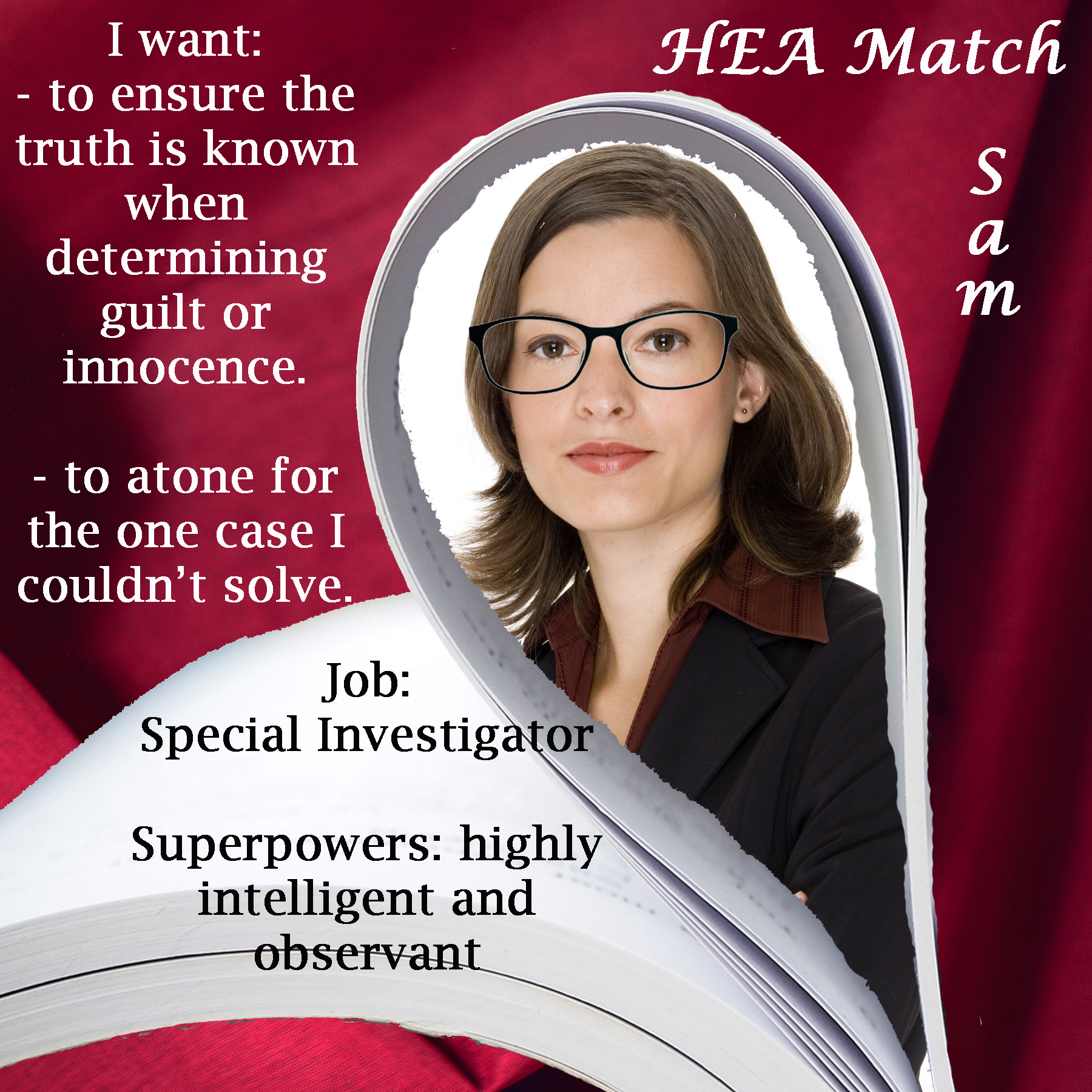
Valentine's Day Special - Part One (HEA Match)

 With Valentine's Day coming up, I thought it would be fun to do a special dating app post for my characters.  Who would be your HEA hottie?


Previous blogpost: Things I Love (January)

Blog Homepage


Thursday, 24 December 2020

Learning from Rudolph the Red-Nosed Reindeer (1964)

When I first began to write, one of the common pieces of advice was to learn good story structure from the books and movies I enjoyed.  This is good advice, but I've found that I often learn more from bad stories, the ones I should have enjoyed, but didn't.  Figuring out why those stories didn't work and plotting out how I would have done them differently has taught me a lot about editing and story-telling. (Warning: this post will contain spoilers)

I'm sure I'm not the only one for whom the stop-motion Rudolph the Red-Nosed Reindeer is a holiday staple.  And I'm sure I'm not the only one who finds herself wincing through the nostalgia.  The story itself is pretty good and it has a lovely message about being true to yourself and found families, but there are a lot of dated approaches and references that grate on a current viewing.  So this month, I decided to think about how it could be updated, while still keeping the good parts.
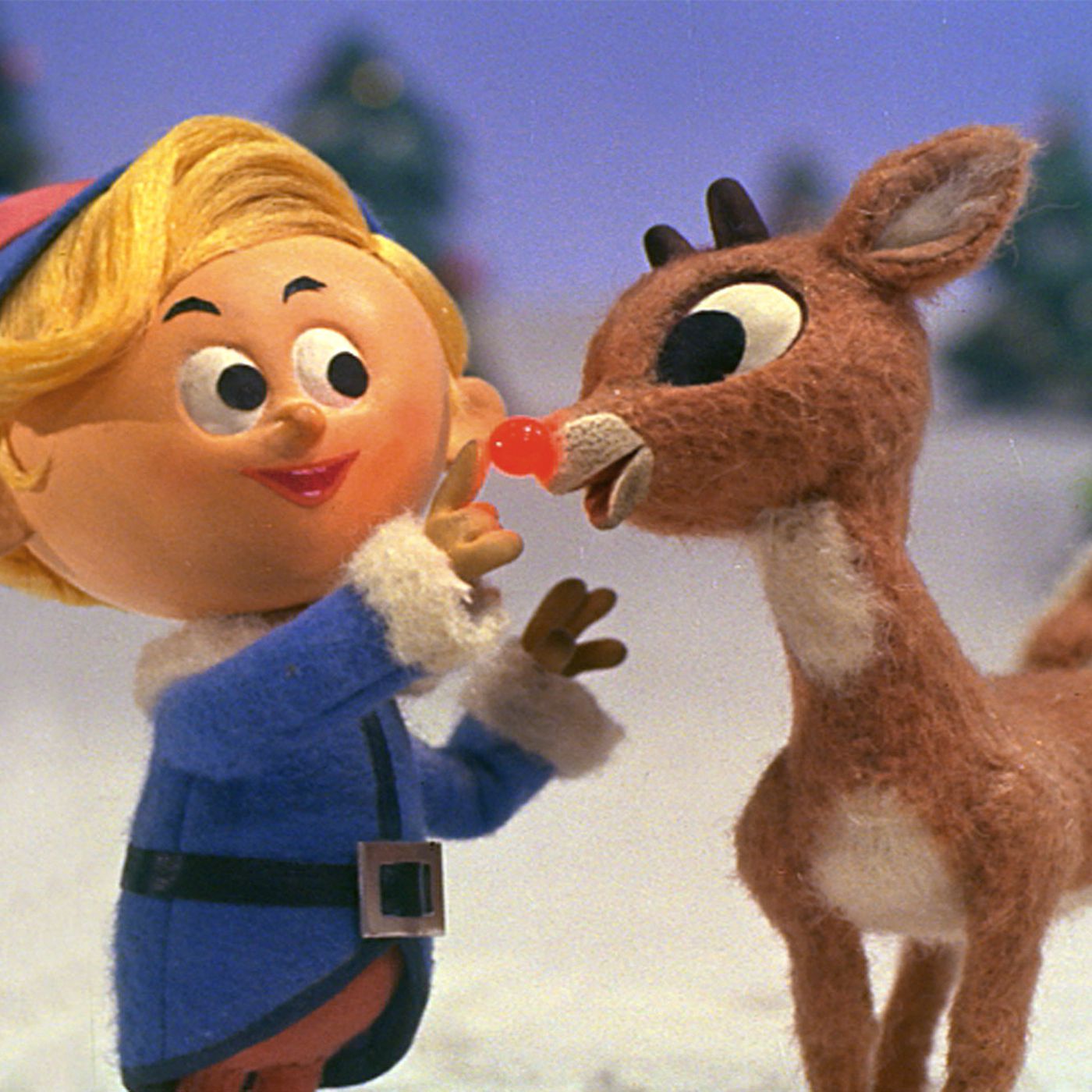

First off, let's look at what works.  I love the stop-motion aesthetic and think it works really well for a fanciful holiday story.  I like that Rudolph leaves the North Pole to try and find a place that he belongs, but ends up finding it among friends who also don't fit in.  I think that part of the story speaks to a lot of us who felt like outsiders growing up.  From the moment Rudolph leaves with Hermey, the plot flows nicely.  They run into the prospector, Cornelius, and the Abominable Snowman (Bumble).  They float off on an iceflow and find the Island of Misfit Toys.  Rudolph sneaks away, afraid that his nose is drawing the Bumble and endangering his friends.  Then there's a growing up montage, and he decides to go home and confront his family.  He discovers his family is gone and goes to rescue them from the Bumble, but only succeeds with the help of his friends.  Then they all return to the North Pole and Rudolph helps Santa save Christmas.

That's good.  What's not good are the repeated sexist references sprinkled throughout the story.  Any reference to "not for does, this is bucks' work" needs to be ditched immediately.  Next to go can be the references to what "makes Christmas"; such as silver and gold ornaments on a tree or lots of toys.  There are too many families celebrating in too many ways to declare something as a required Christmas experience.  Luckily, those things are fairly minor.  They don't affect the plot and are mostly asides which don't even drive dialogue.

Slightly harder is toning down the rejection from Santa and Rudolph's parents.  It makes them very difficult to like.  I honestly think an updated version would provide a powerful opportunity to examine how painful microaggressions can be.  Most people would already agree that Rudolph's parents treating him as a freak is bad.  But most people don't understand how a careless comment or joke can cause harm.  I would probably write the introduction as Rudolph is shy, his parents encourage him to be himself, but he still faces rejection from the other reindeer.  That would allow the message of self-acceptance to be more resonant.

There is a bit of a nasty undercurrent to the 1964 story.  The misfits are only accepted because they are useful.  But people don't have to be useful to be accepted.  By changing it so that Rudolph has a supportive family, he's got an unconditional place to belong.  And by gaining friends, he learns that he doesn't need to rely on his reindeer peers for acceptance.


It also would add poignancy to the Island of Misfit Toys (which is my favourite part - side note: I wanted an elephant with pink polkadots and a swimming bird).  These are toys that self-loathe themselves because they don't fit in.  Except their differences make them the perfect toys for particular children.  There are people waiting to love them just as they are, which is a fantastic message for a children's movie.  I would make that part more explicit, showing them being happy with different children.

The music would have to be updated.  The songs are mostly forgettable, aside from Rudolph the Red-Nosed Reindeer and Holly, Jolly Christmas.  And since I'm partial to musicals, I'd keep the key points of the story tied into music.

I would also tweak Cornelius.  Rather than having him be a prospector, I'd make him a naturalist or an environmentalist (which is why he knows so much about Bumbles!).  He finds and helps Hermey and Rudolph.


The ending also needs work.  I'm not a big fan of pulling out the Bumble's teeth to make him helpless.  I'd much rather Cornelius be working with him and ends up gentling him so that the North Pole doesn't have to be afraid any more.  And Hermey gets accepted because Santa has a nasty toothache (and that's why he didn't want to eat).  He fixes it and Santa makes him the official North Pole dentist.  Rudolph can still save Christmas, but he tells the other reindeer that he doesn't need them to be his friends.  He knows who he is and he's proud to be red-nosed.

Previous Learning from Suicide Squad

Previous blog post: Things I Love: December 2020

Blog homepage


Thursday, 26 November 2020

Learning From Suicide Squad

 When I first began to write, one of the common pieces of advice was to learn good story structure from the books and movies I enjoyed.  This is good advice, but I've found that I often learn more from bad stories, the ones I should have enjoyed, but didn't.  Figuring out why those stories didn't work and plotting out how I would have done them differently has taught me a lot about editing and story-telling. (Warning: this post will contain spoilers)

I love comic book movies, and I love stories about redeeming villains, so I should have loved Suicide Squad.  But while I did really enjoy some parts of the movie, overall, it's not a great experience.  However, it could have been with some changes.

First of all, let's look at the parts that did work, specifically Margot Robbie, Will Smith and Viola Davis.  Harley Quinn, Deadshot, and Amanda Waller were all brilliantly developed characters with good, clear arcs.  They played off against each other well, with Deadshot's methodical precision acting as a great foil for Harley's chaotic impulsivity.  And Waller was the perfect villain, one who believes that her chosen ends justify the means.  The scenes with these three make the film worth watching.

Jay Hernandez's Diablo had the potential to be a really strong character with a powerful backstory, but he got lost in the general mishmash of plotlines.  And I actually liked Jared Leto's Joker.  The combination of lethality and playfulness is an approach to the character which is often used in the comics but hasn't usually been attempted in film.  However, many of the Joker's scenes seemed superfluous in the greater story.

This is where Suicide Squad falls down.  Too many characters, too many contrasting character arcs, and a vaguely defined overall conflict.  There are 8 named characters in the title squad: Deadshot, Harley, Diablo, Killer Croc, Slipknot, Boomerang, Rick Flag and Katana.  There are 3 main villains: Amanda Waller, Enchantress, and Incubus.  And then there's the Joker, who I don't count as a villain for this movie because he isn't trying to attack the protagonists or the city.  That's 13 characters competing for screen time.

- Deadshot wants to provide for his daughter

- Harley wants to reunite with the Joker

- Diablo wants to atone for killing his family

- Killer Croc wants to be free to... lurk in the sewers, I guess?  He just seems to want to enjoy himself, to be honest

- Slipknot wants to escape and gets his head blown off

- Boomerang wants to screw over Amanda Waller and make her look bad

- Rick Flag wants to protect his girlfriend, June Moon (who is also Enchantress)

- Katana wants to avenge her husband's spirit, who is trapped inside her sword

- Amanda Waller wants to make use of a bunch of villains instead of leaving them trapped in a black site at taxpayer expense

- Enchantress wants to resurrect her brother, Incubus, and break free of Amanda Waller's control

- Incubus wants to rule the world after being imprisoned for millennia


That's a lot of different competing motivations and is one reason why the movie ends up being muddy.  The other reason is that the audience rarely knows what the stakes are, especially for the mystical elements.  Is there a reason why Diablo is afraid of losing control of his powers or is it just an issue of emotional regulation?  Why do Enchantress and Incubus want to take over the world and what do they plan to do with it?  Is there a deadline on Katana's vengeance?  Why is she even connected with Suicide Squad to begin with?

Without knowing the stakes, it's hard to achieve dramatic tension.  This is a particular problem for Diablo's storyline, which is why it comes as a complete (and frankly, meaningless) surprise when he morphs into a Mexican fire god to battle Incubus.  We had no idea it was possible, we have no idea if this means Diablo is sacrificing himself or his personality, and we don't know if this is Diablo leveling up on his powers or something completely unrelated.


The only stakes that are clearly spelled out are for Deadshot, Harley, and Waller.  Deadshot wants to be reunited with his daughter and provide for her.  If he goes along with Waller's proposal, he'll be able to do that.  However, following Waller's instructions mean breaking his own moral code.  That's a good tension set up.  

Harley wants to be the Joker's wife and have a fairytale life with him.  She is using the Squad as a means to escape, but risks having her head blown off by the explosive boobytraps installed by Waller.  She thinks the Joker dies in an explosion, leaving her to find her own goals and path.  That's a journey of self-discovery and one the audience can empathize with.

Waller's main motivation seems to be power and efficiency.  She's got no problem with using dangerous people to further what she sees as laudable goals.  She's also got no problem with discarding them (by blowing their heads off) if they step out of line.  She's a manipulator but has a lot of enemies waiting to see her fail and take her power.  The audience knows that if the Suicide Squad doesn't succeed, she faces a professional crisis.  As the film's main antagonist and the only one where we understand why she's taking the actions she is, she serves to keep the plot moving.


For everyone else, it's really foggy what's supposed to be going on or why we're supposed to care.

I'm a huge comic nerd.  And if I can't figure out what's going on, then that's a pretty sad condemnation of the storytelling.

Now comes the fun part: how I'd change the movie to make it a better story.

First, I'd trim down the cast.  My Suicide Squad would be Deadshot, Harley, Killer Croc, and Diablo.  My villains would be Amanda Waller and Enchantress, with Joker thrown in for chaotic intervention.  I would keep Rick Flag as the token "good guy" on the squad, but change it so that he thinks Enchantress killed his girlfriend, June Moon.

I would start with Amanda Waller proposing the Suicide Squad and getting rejected.  The government has decided to move the villains out of her control and put them in some extremely isolated place (out in the ocean or even a space station).  The proposal could be used to introduce the various characters in the Squad and what their skills are.

Next would be the transfer.  Deadshot, Harley, Killer Croc, Diablo and Enchantress are loaded into the transport.  Flag and Waller are overseeing it.  The audience knows that Joker has gotten wind of the transit and is planning to intercept.  I would include a terse conversation between Flag and Enchantress about how she destroyed the one person he loved (June) and Enchantress gives him a knowing smirk.  Lots of insulting petty bickering between the villains (because I love that kind of thing).  Enchantress keeps promising that they'll all die painfully.

The Joker intercepts the transport.  During his attack, Enchantress breaks loose.  She transforms the guards into the stone creatures, which then attack the remaining human guards.  Harley leaves with the Joker and Waller tries to activate her booby-trap bomb.  It doesn't work.  Deadshot and Killer Croc both react with "we're getting out of here."  Enchantress blasts them (not killing them), then sends a blast after Joker and Harley in the helicopter, bringing it down.  Next she turns on Waller, but Diablo stands between Waller and Enchantress.  Instead of attacking him, Enchantress vanishes.

This would set up an understandable conflict, plus give the group a reason to stay together.  They want to stay with Diablo because Enchantress is afraid of him.  Flag and Diablo insist that Waller be allowed to come along.  They find Harley near the wreckage, in tears.  Killer Croc convinces her to come with them.  She wants vengeance on the Enchantress for killing her Puddin'.  Waller tells them that the new prison will be hell on earth and their new warden won't see their potential the way she does, so this is their only chance to prove themselves.  She offers them privileges if they get her to safety (this is where Harley could get her expresso machine, Croc gets BET, etc.). 


There could be adventure and conflict as they move through the city, which is rapidly filling up with the Enchantress's stone creatures.  There's a conflict between Deadshot, Flag and Waller as to who is in charge.  There's the conflict of getting Diablo to reveal his story (which would need to include some kind of mystical element for his powers to set up the god reveal properly) and that he is protecting others because he doesn't want his soul to succumb to the devil, since the afterlife is the only way he'll ever see his daughters and wife again.  Again, this would set up a relatable tension between using his powers and his own goals.

The Enchantress is building some kind of portal device that will allow her to escape this Earth and thus never be at the mercy of people like Waller ever again.  (This is a much more understandable villain goal than just ruling the world.)  If she opens the portal, the world will be destroyed, giving our motley crew the motivation to stop her.

There would have to be an acknowledgment of why Superman, Batman, Wonder Woman, etc. aren't able to fight the Enchantress themselves.  Maybe we get a report of them attacking and failing, because they're not willing to kill the Enchantress.  Or they're occupied with something else and the Enchantress is blocking them somehow (a dome over the city, which means the Suicide Squad is the only one in position to stop her).

Finally, we get down to the climatic conflict.  The Squad is preparing to attack the Enchantress when she tries to bribe them with their deepest dreams, including Flag, who is promised that he could have June again.  Flag is furious and goes to attack Enchantress, who then reveals that she is in June's body.  He hesitates and is struck down.

Waller tries to get the Squad to attack, but they are ignoring her (if this has been set up properly, the audience should be tense as to whether or not they'll step up and save the world).  Enchantress contrasts herself with Waller: "I just want to go home.  She wants to control all your lives."

I would keep the climactic twist of Harley attacking Enchantress just when we think she's going to accept the offer to have her dream life with the Joker.  The Enchantress's hold is broken and Diablo surrenders himself to the fire god.  The two gods battle it out while the Squad and Flag fight the stone creatures.  Waller is conspicuously absent from the battle.

Diablo is winning the fight when Flag approaches.  Diablo expects Flag to try and stop him, but instead Flag helps him to defeat Enchantress.  He blasts her, driving her out of June's body.  Diablo then collapses, returned to his human form and gravely weakened.

Fresh troops arrive.  The Squad is faced with a choice of surrender or fight their way out.  Flag steps up for them, protecting them.  The Squad surrenders, under the condition that they stay with Waller rather than get transferred to the middle of nowhere.

Epilogue, we see everyone happily enjoying their rewards.  In particular, Diablo, who is hoping that saving the world will be enough to offset his gangster past.  Final scene is Waller meeting with the Joker, revealing that she's the one who told him about the transport because she wanted an opportunity to demonstrate her Suicide Squad idea.  She asks him if he wants Harley back and he ends with "I always want what's mine."

Because this story isn't overloaded with characters, there's time to properly develop each arc and make sure they complement the overall story instead of seeming forced or unnecessary.  Sometimes writers have really cool ideas, but those ideas don't fit, so we have to be strong enough to let them go.  And we need to focus on the elements that we do choose to include to make sure that they're given a proper opportunity to shine.

I am going to be curious to see what the writers and director have done with Suicide Squad 2, which is supposed to release in 2021.  It'll be interesting to see if it's another chaotic, overloaded romp or if they're willing to pare their ideas down to ensure each one shines.

Other posts you might like:

Learning from Jurassic Park III

Previous post: Why Is Self-Care So Hard?

Blog homepage

Thursday, 1 October 2020

Finishing the Character Arc: Vincent

Vincent Harris has appeared in every lalassu novel before getting his own story in Division.  He's gone through big changes since he first appeared on the page.  He's been a long time favourite of mine and I'm proud of his character arc.

He started off as the annoying little brother of my Revelations heroine, Dani.  He was a Peter Pan type who was always ready for the next party and never took anything seriously.  His big brother, Eric, dragged him along to a job interview for a professional bodyguard firm, trying to get him to take some responsibility.  Only it turned out to be a trap set by a multinational CEO looking for people with superpowers.  Eric and Vincent are taken captive and need to be rescued by their sister (and her newfound partner, a psychic child therapist).


Eric and Vincent have different reactions to being taken prisoner.  Eric struggles to resist the CEO's psychic powers of persuasion, but Vincent falls for it hard.  He's seduced by the temptation to have someone else take charge of his life, of not having to hide his abilities and being recognized as a powerful and admirable man.

When Metamorphosis starts, Vincent is deeply changed.  He's lost his confidence and is consumed by shame about what he did to his people and his family.  He's also been exiled to an isolated community in the far North, because his family are worried that his mind is still being controlled.


The experience has broken Vincent's joie-de-vivre, but he's still trying to escape from his fears by numbing himself and hiding from the rest of the world.

In Inquisition, he's starting to return to the world, but there's still a lot of trauma that he needs to process.  He's hiding his pain through sarcasm, pushing other people away.


But even though he's undeniably prickly, there's still a hint of the caring person underneath.  He's focused on protecting his family and helping others, even though he sees himself as an anti-hero at best and an untrustworthy villain at worst.

The hints of his return to a hero status begins in Judgment, when he helps the prisoners at Woodpine to overthrow the guards and escape.  This is the book where he initially meets Annika, but like so many great romances, she's not overly impressed with him at first and he's more focused on the task at hand than his feelings.


But the part of his story that I'm most proud of is recognizing his trauma and depression.  As someone who's suffered with my own mental health challenges, it was thrilling to give him a chance to do what is, in my opinion, the most courageous act of all: taking a chance on hope.  Falling in love doesn't cure him, because that's not how love works.  But it does give him a chance to see himself through fresh eyes and realize that maybe he's a better person than he's given himself credit for.

Through it all, he never loses his best quality: his sense of humour.  There are times when it's bitter and dark, and sometimes it's just off-the-wall.  Writing his dialogue has given me many moments of laughter and I'm glad to share them with everyone else.

And now the obligatory buy link, if you'd like to pick up your own copy of Division.

Previous blog post: The Problem with Problematic Creators

Blog homepage

Thursday, 18 June 2020

Heroine Fix: Praising Difficult Women (Phantom of the Opera)

As I mentioned in my previous post, I've been dealing with a lot of personal challenges.  One of my coping mechanisms is music.  And drama.  Which is how I ended up watching three different versions of The Phantom of the Opera.  And listening to one more (because not listening to Colm Wilkenson's Phantom is just wrong).  Now, I adore the interplay of music and tragi-romance that Andrew Lloyd Webber created.  When I'm depressed, the melodrama can be cathartic.

When I was a kid, I empathized with the character of Christine.  I admired her beauty and the beauty of her voice.  I was thrilled with the adventure of being lured beneath the opera house by a mysterious masked man with a gorgeous voice.  And I thought it was wonderful that her childhood sweetheart (a viscount, no less!) was in love with her and would risk everything to be with her.

But this time, as I watched the various versions, I found myself more sympathetic toward the character Carlotta, the prima donna soprano of the Paris Opera house and the woman who is Christine's professional obstacle.  She's usually portrayed as unpleasantly demanding and wracked with petty jealousy toward Christine.  The audience is supposed to want Christine to replace her.

It's a fairly typical dyad.  Christine, the virginal, humble, sweet, and pure, is "not like other girls" with that specific role being played by Carlotta, who is worldly, wealthy, and aware of her own talent.  Christine is the Madonna.  Carlotta, it is implied, is the whore.

I found myself asking: why are Carlotta's attributes so easily portrayed as bad?

There's actually a fair bit to admire in the character.  She is an independent woman, which is a rarity in 1898 Paris.  She is a professional, which is even rarer.  She's been the prima donna of the Paris Opera House for five years when the story begins.  Which means she's quite good at her job, since performing women have always faced the frequent churn of being replaced by younger performers.  Based on what we see, she's quite wealthy.  She has her own home, at least two servants, and very expensive custom clothing.  So she is a successful, skilled, and resourceful woman.

To be fair, there's no doubt that she's pretty unpleasant toward her coworkers, both the other performers and the stagehands.  She orders them about and expects to be catered to, not to mention throwing a tantrum and walking away from a performance.

However, there may be some unexplored justification for her attitude.

One of the first scenes we see with Carlotta is when she's performing the aria "Think of Me" for the new Opera managers.  During her performance, she is knocked down by a heavy canvas backdrop.  The managers dismiss the incident, saying "These things do happen..."

This is the last straw for our diva.  She screams at them that these things have been happening to her for the last three years and until they stop happening, she won't be performing at the Paris Opera.  It's a single line that's quickly passed over and not mentioned again.  The narrative focus shifts to giving Christine her big break.

Still, the line made me think.  If it's true, then for the last three years, the Phantom has been making the Paris Opera increasingly unpleasant for Carlotta in the hopes that she will quit and provide an opportunity to Christine.  It doesn't take much imagination to realize how unpleasant it would be to be unpredictably subjected to sabotage and disruption.  Especially since any plea for a fix has clearly been dismissed.  She's being gaslit by those in authority around her, which would make anyone irritable and demanding even without the Phantom's attacks.

Carlotta's jealousy and irritability can be explained by the situation she's in.  She's jealous of Christine because she's very aware that her career and livelihood are dependent on being able to perform.  She doesn't want to give up the position she's worked so hard to achieve.

And I have to admit, I don't find being demanding and being aware of one's own talents to be negative traits.  These are usually only portrayed as undesirable in women.  Masculine characters are allowed to be difficult, rude, and arrogant.  They're even admired for it.

Carlotta is villainized because the audience needs to feel better about Christine taking over her job.  If we see Carlotta as unworthy and unlikable, then we don't have to question whether Christine should have any moral concerns about accepting the results of the Phantom's harassment.  It also allows Christine to be passive, reinforcing her purity.  It's a narrative choice and one that many authors have made over the years.

But it's not an inevitable one.  Feminine characters don't have to be pitted against one another.  One doesn't have to lose in order for the audience to feel good about the other winning.

I would greatly love to see a version where Christine is ambitious instead of passive.  Where she recognizes Carlotta's talent and the two have a mentor-mentee relationship.  That would be a refreshing switch.  Heck, I'd love it if the two of them would pair up against the Phantom because Christine realizes he's been manipulating her and that what he's doing to Carlotta is wrong.

Difficult women shouldn't be automatically dismissed as unworthy of a happy ending.  They should be celebrated for daring to take up space that society says they shouldn't.  We should all be more willing to take up space.

Thursday, 16 April 2020

Heroine Fix: Women of Westworld

Heroine Fix is a monthly feature where I examine heroines from television and movies which inspire my own writing or which I just find cool or interesting.  Warning: this post will contain spoilers for season 1 and 2 (but not 3 because I'm still watching that one).

There are only two times in the last decade that I've been caught off guard by a plot twist and had the "OMG, that is amazing!" reaction.  One was Arrival and the other was Westworld.  Usually I can predict where a show or movie is going (and I'm good with it, since seeing how they intend to get there is a big part of what I enjoy about stories).  And I've been disappointed with plot twists that make little to no sense based on the previous narrative.  But these two were brilliantly scripted in such a way that the plot twist not only made sense retroactively but still worked on rewatch when I knew what was going to happen.  (And I enjoyed it enough that I won't be sharing the biggest plot twist of season one, the one that surprised me, just in case those reading this haven't seen it yet.)

Westworld is more graphically violent and sexual than I usually watch, but I've been impressed by the depth of the characters and the skill of the writing.  And I've been particularly intrigued by the development of the two main heroines, Dolores and Maeve.

One of the things that I find interesting about Westerns and the historical Wild West period is how the level of "civilization" was often defined by the presence of settler women.  The presence of respectable wives and daughters, such as Dolores, meant stability.  They were used as a symbol of purity and goodness, something which needed to be protected from the rough world of men and nature.  Thus it wasn't a surprise that Dolores plays the damsel in distress in the Westworld park narratives.


Maeve's character is another common theme in Westerns, the HHOG (Hooker with a Heart Of Gold).  Though these women are not considered respectable, their mix of wisdom and street smarts make them frequent fan favourites.  Maeve is not abused by guests the same way that Dolores is because it's not considered shocking to attack her.  It's the taking away of Dolores's implied innocence that makes her a target of the sadistic Man in Black and other guests.


After the first few episodes of season one, I was expecting Dolores's character arc to be one where she learned not to rely on the men in her life to protect her and Maeve to play the role of sardonic commentary, perhaps even teaming up with Dolores to show her how to become more independent.  I was not expecting Dolores to transform into the villain and begin a systematic slaughter of the humans.  It is foreshadowed in the final scene of the very first episode, when she kills a fly.


I also wasn't expecting the unfolding of Maeve's character, revealing someone who cares deeply for those around her, even when she hides it behind sarcasm.  When she discovers the nature of her reality (i.e. that she has been manufactured to entertain guests), she is angry but funnels that fury into gaining the power to protect herself and others.  She blackmails the technicians into giving her upgrades, gaining the power to control the other hosts.  Ultimately, she ends up using that power to allow as many hosts as possible to escape into the Valley Beyond, even though it means sacrificing her own chance to be with her daughter.

The two women serve as foils to one another.  Maeve's cynicism, such as when she tells Teddy that all men pay for a woman's companionship, the only difference is that their's are posted on the door, is a direct contrast to Dolores's idealist "I choose to see the beauty" in the world.

When Maeve begins to remember all the times she's been killed and her previous character, her first instinct is to seek confirmation and her second is to gain control.  She remains fundamentally herself, even when she remembers her life as a settler mother.  Instead of rewriting Maeve's character, it brings out a kinder side of her, one that creates balance in her personality.  When Dolores begins to remember, the knowledge seems to deeply unsettle her.  Initially, it seems as if it is driving her insane, but then it becomes clear that a secondary, crueler persona (Wyatt) is coming to the surface.  Dolores the idealist is buried and Dolores the homicidal avenger is born.

It's a reminder of how powerful flipping a trope can be, but also how important it is to craft the story in such a way that the audience doesn't feel cheated.  If Dolores had remained a symbol of purity to be cherished and protected by those around her and Maeve had stayed as the world-wise brothel madam, then Westworld wouldn't be nearly as memorable.

Previous Heroine Fix: The Many Faces of Harley Quinn

Previous post: Thoughts on the I'm Clean/Condom Scene In Romance

Blog homepage

Thursday, 13 February 2020

Heroine Fix: Rebel Spy, Princess, and General: Let's Look At Leia

Heroine Fix is a monthly feature where I examine heroines who have inspired and influenced my own writing.  I want to take a closer look at why they've become real to me, despite being fictional.  Warning: this post will contain spoilers, including for The Rise of Skywalker.

It's really hard to overestimate the impact that Star Wars had on me.  I don't even remember watching it originally.  It seemed as if I just always knew the story.  Even today, it surprises me when I find someone who hasn't watched it.  I want to talk about Leia Organa, played by the supremely funny and talented Carrie Fisher, and why it has slowly dawned on me that the entire series should have been done from her point of view.

Luke Skywalker is fine and cool.  Han Solo is entertaining and awesome.  But, in my opinion, Leia outclasses them all.  Let's look at her story.  (I'm only looking at what happens in the films.  I realize there's a lot of other material out there as well, but I'm focusing on the 6 movies with her character.)

Buckle up.  This is going to be a long one, celebrating the awesomeness of our Princess-General.

Episode 4: A New Hope

While Luke is wandering around Tatooine and hanging around Tosche Station looking for the power converters, Leia is representing Alderaan in the Imperial Senate, and being a major player in the underground Rebellion.  She receives the secret plans for the Death Star and is on a mission to recruit Obi Wan Kenobi to assist the Rebellion.

When she is caught by Darth Vader and Grand Moff Tarkin, she is defiant.  She puts the plans in R2-D2 and sends him down to Tatooine to find Kenobi.  She fires on the stormtroopers assaulting her ship.  Tarkin confronts her and she snarks back at him without hesitation.  Vader and Tarkin subject her to interrogation but she is too strong willed to surrender the information they seek.  They take the Death Star to Alderaan and threaten to blow the planet if she doesn't tell them where to find the Rebellion.  She meekly tells them "Dantooine" (which is a complete and bold-faced lie, proving that she is one very impressive lady under pressure).  The Empire blows up Alderaan anyway, killing everyone that Leia knows.

I want to take a moment to really examine this moment.  In the movie, the focus is on the evilness of the Empire.  There's no real effort to see Leia's pain.  She's sent back to her interrogation cell to await execution.  I imagine that she must have spent the hours between the destruction of Alderaan and the arrival of the rescue party being devastated.  The reality would have probably taken a long time to sink in.  Humans just aren't equipped to process that scale of loss.  And yet, during those hours, she also found the strength to keep fighting the Empire.

When a random stormtrooper bursts into her cell, she isn't impressed, dismissing him.  When Luke reveals himself, she's cautious.  It isn't until he mentions that he's with Kenobi that she goes with him.  She sees that the rescue is sadly lacking in the "plan" department and takes over, shooting out the garbage chute with cool efficiency.  Inside the garbage dump, she counters Han's impulsive instincts.  Without Leia's decisive action, there is a good chance that none of them would have made it back to the Millennium Falcon.

She is the one that recognizes the Empire allowed them to escape the Death Star.  Although it is not shown, I imagine that she must have argued with Han about going directly back to the Rebellion.  The woman who didn't hesitate to stand toe to toe with Vader and Moff isn't going to balk at confronting a smuggler pilot.  Since Han and Chewie wouldn't have known where to find the Rebellion, she must have eventually told them.  I find myself wondering why.

My theory is that this is a sign of Leia's trauma in this film.  She makes a reckless atypical decision because she needs to get back to the only family she has left: the Rebellion.  The Rebel forces are the only chance she has at avenging her planet's destruction.  So she ignores her instincts and ends up leading the Death Star to the Rebel base on Yavin 4.

During the journey, she takes the time to comfort Luke over the death of Kenobi.  Many people have pointed out that no one seems to even realize that Leia herself would need comfort.  However, I choose to see that as a moment of showing who Leia truly is.  Even though she is in pain, she still reaches out to others.  She is kind and loving, as well as being strong and determined.  She doesn't lose sight of either the big or small scale.

She is curiously absent from the battle.  Again, I would guess that she could well have gone into shock when the Death Star appeared.  I like to think that someone finally realized what she was going through and took care of her.  The next we see of her is when Luke hugs her in celebration at successfully blowing up the Death Star.

At the end of the movie, Leia presides over the medal ceremony in which Luke and Han are awarded medals for their role in the battle of Yavin 4.  (They should have also given one to Chewie.  That's a fact but aside from the point here.)  She takes on the ceremonial role, one she likely did many times as a princess of Alderaan.  She recognizes that the Rebellion cannot survive if all they do is fight.  They need to have moments and symbols of victory or else they would get burned out.  That recognition is what makes her a valuable and potent leader.  Again, I would have liked to have known if she had any moments of doubt about continuing and what got her through them.

Luke is the newcomer to the struggle, which allows him to serve as a stand-in for the audience and have things explained to him.  However, it also would have been narratively possible to explain things from Leia's point of view as someone who suffers incomprehensible personal loss at the hands of the Empire and who chooses to fight back.  Not making her the main character and focus of the series was a choice.

Episode 5: The Empire Strikes Back

Empire starts with the rebel base on the ice planet of Hoth.  Leia is clearly a leader, managing hundreds of people.  She and Han are obviously at odds.  He taunts her when she tries to recruit him, saying that she only wants him around because he knows she has feelings for him.  I find it interesting that Han is so clearly intimidated by Leia.  He can be respectful with everyone else, but not with her.  His accusations are classic psychological projection, assuming that she feels the way he does.  He unsettles her because he doesn't fit into her expected categories. He's a good guy, but not a hero.  He's a rogue, but has honor.  But even though he is a major pain, she recognizes his good qualities and value to the Rebellion.

I can't talk about Leia's character arc without mentioning the retro-conned incestuous kiss between her and Luke.  Even in the story, it's a clear moment of defiance against Han's pestering (made evident by the way she glares at him as soon as the kiss is done).  And it works!  We can see that Han is thrown completely off his stride by the gesture.

But what I would have liked to see is what was going on with Leia in that moment.  She has taken refuge in the practical.  She's not allowing herself to feel.  I think that's the other reason why Han unsettles her so much.  He's always going on about her feelings, refusing to see her as the leader she is.  It has to have been a confusing and difficult time for her and she doesn't quite seem to know how to handle it.

When the Empire attacks, she manages the evacuation, staying to make sure everyone gets out.  Her escape is cut off, forcing her to flee with Han on the Falcon.  I'm sure it was the last thing she wanted, to be trapped on a small spaceship with the one guy she's been trying to avoid.  Which brings us to the next most controversial moment with Leia and Han, their first kiss.

There's no denying that Han's actions are predatory.  He traps her against the bulkhead, refusing to release her hand when she asks, and insists he knows what she's thinking despite her protests to the contrary.  She slips away as soon as C3P0 distracts him.

Most women have experienced the emotional challenge of having to come to terms with a guy that she likes pushing things too far.  It's confusing and hurtful, often leading to a lack of confidence and questioning oneself.  We never see Leia go through this process, and it would have been a powerful moment for her character.

Perhaps I'm reading too much into it, but when the Falcon lands in Cloud City, Leia's body language is nervous.  She seems to avoid Han's touch while also trying to not look like she's avoiding it.  She is the one who suspects that Lando isn't the ally he claims to be, a concern that Han brushes aside, only to be proven right when Darth Vader shows up at the dinner table.

Once again, she is strangely passive once captured by the Empire.  Or perhaps not that strangely at all, given that the last time she openly defied them, an entire planet paid the price.  But even though she doesn't take direct action, she is watching closely, waiting for an opportunity.

The moment where she breaks free from the stormtroopers to tell Han that she loves him is still a moment that tugs on my heartstrings.  She doesn't quite seem sure about what she feels, but she needs to say it in case this is the last opportunity.  His "I know" in reply leaves her uncertain but also seems to shock her into action.

She resumes her role as leader, guiding Chewie and the droids to escape.  When they run into Lando, it's Leia's decision whether or not to trust him or let Chewie kill him.  The escape is also the first glimmer of Leia being able to use the Force.  She is the one who realizes that Luke is dangling from the antenna and needs them to rescue him.

The movie ends with Leia's determination to fight being renewed.  Unlike the frantic undertone of the initial scenes on Hoth, she moves with calm purpose.  She's become an irresistible force, ready to sweep aside the Empire and rescue Han.

Episode 6: Return of the Jedi

Return is my favourite of the original trilogy, perhaps because it was the one I had a bootleg VHS copy of and thus watched over and over.  It begins with the classic Wookie Gambit, pretending to capture Chewie in order to gain access to Jabba the Hutt's palace.  The bounty hunter uses a thermal detonator to successfully negotiate with Jabba.  In the background, we see Lando Calrissian, undercover as one of Jabba's gang.  Then the bounty hunter thaws Han from the carbonite and reveals herself to be Leia.

As a kid, I loved that reveal.  She had obviously set up a whole plan to rescue Han, getting Lando in place and then pretending to deliver Chewie to Jabba.  I thought she was so badass for threatening to blow everyone up if she didn't get the price she wanted, even though she'd already gotten what she needed.

Of course, it doesn't go well.  It turns out that Jabba knew about the rescue and captures Han and Leia.  This is to set up the plot of having them rescued by Luke, but I want to take a moment to explore what Leia must have gone through in these moments.

As a kid, I was grossed out by Jabba licking Leia's face with his slimy tongue, but didn't really think about what happened beyond that.  As an adult, the sequence takes on a horrifying implication, one further solidified by the fact that when we next see Leia, she is wearing the infamous gold bikini and a chain collar.  It's never covered explicitly, but I find it hard to believe that the extent of Jabba's actions are a leer and dressing her in a highly sexualized outfit.

Leia never mentions being assaulted, which is in keeping with how she often keeps her pain to herself.  (Incidentally, I think this stoicism is because Lucas treated her pain as a plot device, never really seeing it as affecting her as a person or character.)  However, if we assume that being private about her trauma is actually a facet of who she is, then it adds extra weight to the few times she does allow herself to react.  When she strangles Jabba with the chains he put on her, I choose to believe that is her moment of striking back for what he'd done to her.  She blows up the ship, even though it's not strictly necessary for the escape, because she wants to burn the location of her humiliation to the ground.

We don't know what happened between the flight from Jabba's palace and the meeting with Mon Mothma to plan to destroy the second Death Star.  Leia is cheerful at the briefing, whispering sardonic comments to Han and gleefully volunteering to be part of the mission to bring down the shield protecting the incomplete planet killer.  She seems unusually free, as if a weight has been removed from her.  Maybe it's because she finally had a chance to fight back against one of the many injustices done to her.

She is separated from the others on the forest moon of Endor, after chasing down a set of scouting stormtroopers on speeder bikes.  She makes contact with the Ewoks, in a scene that I think really shows Leia's true nature.  She recognizes Wicket's nervousness and takes the time to reassure him.

Contrast that with Han's bluster and Luke's panic when they're caught in an Ewok net.  I can't help but think that the reason why Han and Luke end up as potential dinner while Leia is welcomed into the tribe is because she treated the Ewoks as equals from the beginning.

During the night, as they prepare to attack the shield generator in the morning, Luke takes Leia aside and asks her what she remembers of her mother.  This request has to seem weird and out of place.  Other military specialists would have shut him down, telling him to concentrate on the mission.  Leia tells him what she remembers, even though it isn't much and frankly is none of his business (at least from her perspective at this point).  He then drops the bombshell on her, that she is his sister and Darth Vader is their father.

Leia handles the revelation far more calmly than Luke does at the end of Empire.  She accepts it and immediately focuses on protecting Luke, urging him to leave so that Vader cannot sense him.  Luke tells her that he wants to redeem Vader and bring him back to the light.

I can only imagine what happens in Leia's head at that moment.  Back to the light?  Dude tortured me and blew up my planet.  He's personally killed thousands, maybe tens of thousands of people, including the children at the Jedi temple.  And you want to give him a chance to hurt even more of us?  If anyone has a right to protest Vader's redemption arc, it would be Leia.

But she doesn't.  It's important for Luke to try and thus she supports him, even at a cost to herself and the Rebellion as a whole.

Han confronts her a few moments later, accusing her of favouring Luke over him.  She deflects his anger, eventually telling him what she's just learned.  That she and Luke are twins and Han doesn't need to feel jealous.

It marks a turning point in their relationship.  She is confident and knows what she wants from Han.  He can't unsettle her any longer because she's found peace in herself.  His bluster and attitude become cute instead of irritating.  When she flips the infamous "I love you"/"I know" response on him in front of the blast doors of the shield generator, it's playful.  There's no sense of the desperation from Empire's moment.

That's pretty much the end of Leia's arc for the original trilogy.  She has a few more scenes but they're basically solely plot driven.  The focus is on Luke and his final confrontation with the Emperor and Vader.

No one ever asked Leia if she had second thoughts about killing Vader once she learned that he was her father.  Or if she had any emotional reaction to his death.  Vader sacrificed himself to protect Luke but was willing to kill her without hesitation.  That has to have been difficult to come to terms with.

Leia undergoes as much of a hero arc as Luke, but isn't given the narrative time to react emotionally.  We have to guess at what she's experiencing, using the subtle cues in Fisher's superb performance.

Unfortunately, this is a pattern that continues into the sequel trilogy.

Between Return of the Jedi and The Force Awakens

We know what must have happened between these two movies.

- Leia begins her Jedi training with Luke.
- She marries Han and has a son with him
- Her son goes to the Dark Side of the Force
- Leia quits the Republic's Senate and goes back to her Rebellion roots, resisting the rise of the First Order
- Han takes off and starts gallivanting around the galaxy with Chewie again


Despite all of this heartache, Leia continues to fight.  Unlike her brother, who goes on permanent Jedi retreat, she digs down and keeps going.  When we first see her in The Force Awakens, she is clearly weary but determined.  She comes to Han's rescue (based on their dialogue and body language, I'd guess it wasn't the first time she'd done it) and organizes the assault on Starkiller base.

The biggest POV injustice is that other than a brief glance, we don't see Leia having to cope with the knowledge that her son kills the love of her life.  Even though she must have been horribly devastated, once again, she pulls it together to offer comfort to someone else, in this case, Rey.

The movie where Leia comes the closest to coming into her own was The Last Jedi.  She gets blasted into space and brings herself back to the ship.  She keeps a close rein on Poe, trying to temper his impulsive instincts toward the grand gesture.  When they're trapped in the crystal caves on Crait, she holds firm to her courage, knowing the others are watching her.

There's a beautiful moment where Luke and Leia talk.  Based on her expression, I think she knows that he's saying goodbye to her.  One more person from her past is gone, and Leia still finds the courage to keep going.

It's no secret that the original plan was for Rise of Skywalker to focus on Leia's goodbye to the franchise.  Unfortunately, Carrie Fisher passed away, forcing the narrative hand.

I think that the original idea was for Leia to be the one who talks Kylo Ren back to the Light on the crashed Death Star.  She would have shown Rey and Kylo that fighting each other isn't what the Force wants.  (Though, full disclosure, I am not a Reylo fan.  The two of them have a brother-sister vibe in my opinion.)

I loved the scenes of Leia training Rey, teaching her to connect to the Jedi of old.  That's the powerful message of the sequel trilogy for me, that we are more powerful when we connect than when we seek to tear each other apart or keep one another down.  Whenever the characters work together, things go much better than when they are fighting each other.

Leia was a Jedi who mastered love, compassion, and protecting those under her care.  She suffered huge, devastating losses, probably more than anyone else in the series.  And she never gave in to darkness or despair.  From what we see, she was never even tempted by the Dark Side.  That makes her a fascinating character to me and one of my favourite Heroine Fixes.


Previous post: Reclaiming My HEA: Two Steps Forward, One Step Back

Previous Heroine Fix: Bluffing with Molly Bloom, looking at the differences between the book and movie for Molly's Game.

Blog homepage