Weekly word count: 2700
Editing countdown: 7 chapters this week, 11 chapters total, 49 days left to deadline
This week was the release of Rose on the Grave and to celebrate I put Revelations on sale. There's been a lot of interest and I've learned a lot about targeting Facebook ads. I was surprised when one of my ads got rejected for having "too much text" even though it had considerably less text than an ad which ran fine a few days earlier.
Definitely a busy week with the latter part spent plugging a plot hole. I think it flows much better now.
It's been a grueling schedule but so far, I'm keeping up with it. I'm a little brain dead (at least the part of my brain which isn't preoccupied with editing), so I'm afraid I won't be doing much on social media. I'll try to stick my head up periodically and remind people that I'm still here.
My Books

Monday, 17 October 2016

Thursday, 13 October 2016
Heroine Fix: Scarlett O'Hara: Never Hungry Again
Scarlett O'Hara certainly captured the public attention since she first appeared on the pages of Margaret Mitchell's book Gone with the Wind in 1936. Vivienne Leigh's portrayal of the character in the 1939 epic film stands as a classic. The story continued to hold the public's interest, sparking Alexandra Ripley to pen a sequel, Scarlett, in 1991. The sequel was made into a television miniseries in 1994.
Scarlett is a difficult heroine to get behind. She's shallow, vain and manipulative. She spends the entirety of Gone With the Wind longing for another woman's husband, steals her sister's fiance, uses both slave and convict labour to undercut her competitors and seems more driven by greed than any other character trait.

By all logical examination, Scarlett is an unlikable heroine. She should have disappeared into history. But there is something about her which continues to intrigue and draw fans to her camp. Perhaps it is because Gone with the Wind ends just as she realizes her errors. She's on the cusp of a major character change, leaving readers and viewers to wonder if she will be able to persuade Rhett to take her back and live a happier life.
Maybe it's because despite her unlikable exterior, there is something attractive about Scarlett. Even in the beginning, she's vibrant, flirting with the boys and clearly enjoying every second of their attention. There's an innocence to her, an innocence which extends to all the Southerners pre-war. She shares their certainty that the world she knows will never change.
But of course, it does change. When the war collapses everything Scarlett knows and has always counted on, unlike the others around her, she steps into the gap. She protects her sister-in-law (despite her own jealousy), taking Melanie and her newborn baby on a perilous overland journey through occupied territory. She works in the fields, dragging her pampered family along with her so that they can all eat. She shoots a Yankee soldier intent on robbing and assaulting her and her kin.

This is Scarlett's first transformation: from spoiled and pampered princess to shrewd and stubborn schemer. With the complete collapse of her society, she abandons all the rules. If it is a dog eat dog world, then Scarlett is determined to be the final one sitting there with a knife and fork. She demonstrates her intelligence and determination, facing society's scorn as she launches a lumber business, a store and struggles to restore her family's plantation.
Her decision to marry Rhett isn't inspired by sentiment or affection, but by practicality. Whenever I've watched the film, I've seen hints of vulnerability develop through their marriage. I think she cares for him, but can't let herself trust in him. Not to mention feeling torn between wanting to be accepted as a Southern lady but not wanting to be left helpless again.
Personally, I always found the end of Gone With the Wind unsatisfying. Aside from the inherent racism and other issues, it's not a complete romance. It's why I prefer the sequel, Scarlett, where she completes her character arc and finally reunites with Rhett.

The sequel's Scarlett finally learns compassion and loyalty to more than herself. She learns the difference between surviving and living. But she's still strong, vibrant and intelligent. Now she's no longer afraid to show any of it.
In the end, it's the mixture of traits which I find inspiring about Scarlett. She's actually an unusually well-developed character, particularly for the time period when she was created. She's a modern CEO, almost fifty years before anyone would have considered it possible. She's attacked in the same way that many modern women are attacked, called unfeminine and overly aggressive. But she is successful in her business endeavors, outwitting her male competitors.
As a heroine, she has many flaws, perhaps too many to truly overcome. But it is those flaws which lend depth to her strengths. She's human, which is quite an achievement for a fictional character.
Scarlett is a difficult heroine to get behind. She's shallow, vain and manipulative. She spends the entirety of Gone With the Wind longing for another woman's husband, steals her sister's fiance, uses both slave and convict labour to undercut her competitors and seems more driven by greed than any other character trait.

Maybe it's because despite her unlikable exterior, there is something attractive about Scarlett. Even in the beginning, she's vibrant, flirting with the boys and clearly enjoying every second of their attention. There's an innocence to her, an innocence which extends to all the Southerners pre-war. She shares their certainty that the world she knows will never change.
But of course, it does change. When the war collapses everything Scarlett knows and has always counted on, unlike the others around her, she steps into the gap. She protects her sister-in-law (despite her own jealousy), taking Melanie and her newborn baby on a perilous overland journey through occupied territory. She works in the fields, dragging her pampered family along with her so that they can all eat. She shoots a Yankee soldier intent on robbing and assaulting her and her kin.
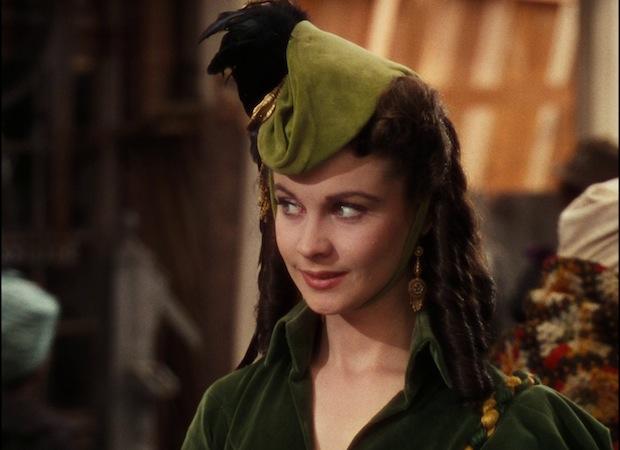
This is Scarlett's first transformation: from spoiled and pampered princess to shrewd and stubborn schemer. With the complete collapse of her society, she abandons all the rules. If it is a dog eat dog world, then Scarlett is determined to be the final one sitting there with a knife and fork. She demonstrates her intelligence and determination, facing society's scorn as she launches a lumber business, a store and struggles to restore her family's plantation.
Her decision to marry Rhett isn't inspired by sentiment or affection, but by practicality. Whenever I've watched the film, I've seen hints of vulnerability develop through their marriage. I think she cares for him, but can't let herself trust in him. Not to mention feeling torn between wanting to be accepted as a Southern lady but not wanting to be left helpless again.
Personally, I always found the end of Gone With the Wind unsatisfying. Aside from the inherent racism and other issues, it's not a complete romance. It's why I prefer the sequel, Scarlett, where she completes her character arc and finally reunites with Rhett.

The sequel's Scarlett finally learns compassion and loyalty to more than herself. She learns the difference between surviving and living. But she's still strong, vibrant and intelligent. Now she's no longer afraid to show any of it.
In the end, it's the mixture of traits which I find inspiring about Scarlett. She's actually an unusually well-developed character, particularly for the time period when she was created. She's a modern CEO, almost fifty years before anyone would have considered it possible. She's attacked in the same way that many modern women are attacked, called unfeminine and overly aggressive. But she is successful in her business endeavors, outwitting her male competitors.
As a heroine, she has many flaws, perhaps too many to truly overcome. But it is those flaws which lend depth to her strengths. She's human, which is quite an achievement for a fictional character.
Monday, 10 October 2016
Weekly update: October 2 to 8: Release of Rose on the Grave
Weekly word count: 2800
Editing countdown: 4 chapters done, 55 days until deadline
I'm trying something a little different this year. Last year, from October to February, I concentrated almost exclusively on editing Metamorphosis, with only brief periods of new writing. This year, I'm going to try and give myself one or two big chunks of writing time per week as well as my goal of editing one chapter per day. I'm hoping that I can get some good progress on the first book my new series. I've still got the fourth book of the lalassu simmering in my back brain, though.
On Tuesday, I will be releasing my latest Spirit Sight short story, Rose on the Grave. It's in review on Amazon right now. I'm very excited to share the beautiful cover done for me by Samianne.

Rose on the Grave is a continuation of Jessica and Greg's story, begun in Whispers In the Dark. After their harrowing encounter with the demon box, both of them are dealing with fresh scars. Jessica's freshly bloomed medium gifts seem to have shut down and Greg isn't sure if his continuing nightmares are signs of trauma or of some dark entity still lurking in his mind.
When the pair are invited to investigate Rose on the Grave, a haunted bed and breakfast, they find themselves increasingly on opposite sides. They are quickly drawn deeper into a world of ghosts, fraud and strange powers. Otherworldly messages warn of dramatic changes to come and send them on a mission to rescue a little girl named Bernie, a name that readers of Revelations will find familiar.
As part of the release for Rose on the Grave, I'll be putting Revelations on sale on Amazon.com and Amazon.uk from October 11th to the 17th. I wish I could put it on sale in Canada but unfortunately I don't have that option. (Maybe some of my Canadian readers can contact Amazon and ask for Canada to be included in the Kindle Countdown deals?)
I'm very excited to share this newest installment of the lalassu world and can't wait to hear what people think.
Editing countdown: 4 chapters done, 55 days until deadline
I'm trying something a little different this year. Last year, from October to February, I concentrated almost exclusively on editing Metamorphosis, with only brief periods of new writing. This year, I'm going to try and give myself one or two big chunks of writing time per week as well as my goal of editing one chapter per day. I'm hoping that I can get some good progress on the first book my new series. I've still got the fourth book of the lalassu simmering in my back brain, though.
On Tuesday, I will be releasing my latest Spirit Sight short story, Rose on the Grave. It's in review on Amazon right now. I'm very excited to share the beautiful cover done for me by Samianne.

Rose on the Grave is a continuation of Jessica and Greg's story, begun in Whispers In the Dark. After their harrowing encounter with the demon box, both of them are dealing with fresh scars. Jessica's freshly bloomed medium gifts seem to have shut down and Greg isn't sure if his continuing nightmares are signs of trauma or of some dark entity still lurking in his mind.
When the pair are invited to investigate Rose on the Grave, a haunted bed and breakfast, they find themselves increasingly on opposite sides. They are quickly drawn deeper into a world of ghosts, fraud and strange powers. Otherworldly messages warn of dramatic changes to come and send them on a mission to rescue a little girl named Bernie, a name that readers of Revelations will find familiar.
As part of the release for Rose on the Grave, I'll be putting Revelations on sale on Amazon.com and Amazon.uk from October 11th to the 17th. I wish I could put it on sale in Canada but unfortunately I don't have that option. (Maybe some of my Canadian readers can contact Amazon and ask for Canada to be included in the Kindle Countdown deals?)
I'm very excited to share this newest installment of the lalassu world and can't wait to hear what people think.
Thursday, 6 October 2016
A Romance Reader: Loud and Proud
Sarah MacLean wrote a wonderful article last week on how bashing romance novels is basically a form of slut-shaming and it inspired me to write about some of the most common complaints about romance novels and why we should completely ignore them.
Myth # 1: They push women to equate happiness with being with a man.
Romance novels always have a love story as a central aspect of their plot. It's part of the definition of the genre. By the logic of this myth, one could also argue that mysteries encourage murder and vigilante justice, but we rarely hear Sherlock Holmes being accused of pushing people towards a life of crime.
The urge to connect with another person (male, female, alien, whatever you're drawn to) is one of the most fundamental human drives. Romance novels celebrate that connection and acknowledge it. But it's not just about finding love. The heroines in romance novels don't just find a mate, they also achieve their other dreams, be it careers, families, contests or whatever else their hearts desire.
Romance novels encourage women not to settle. The heroine goes through a character arc, beginning with an uncomfortable situation where they are bound by expectations and their own fears. As the story goes on, she gains the courage to go after what she wants, rather than what she's been told to expect. That usually includes an exciting and passionate relationship with a man (or woman) that is a partnership of equals, based on attraction and respect.
So romance novels don't hang the heroine's happiness on a man. They recognize that a satisfying relationship can be part of the overall package but it is only a part. They are about the heroine finding happiness period, in all its varied forms.
Myth # 2: They are poorly written and formulaic.
Romance novels make up 5 to 7 % of print book sales and 45 % of ebook sales. (Source, authorearnings.com)

That's a lot of books and the quality of them can vary significantly. There are poorly written romances, just as there are poorly written books in all genres. But the majority are well done, with some reaching incredible levels of excellence.
The charge of being formulaic is back-handed way of attacking the quality of the writing. All stories are essentially formulaic. They need to follow a certain structure or else the reader doesn't find them satisfying. The pattern applies across every successful story from Shakespeare to Tolkien to Star Wars. The structure is like the foundation of a house. Without it, it doesn't matter how grand or beautiful the plans are, it will all collapse under its own weight.
This myth can be countered by pointing to authors like Jane Austen, Charlotte Bronte, Kristan Higgans, Roxanne St. Claire, Sherilyn Kenyon and dozens, if not hundreds, of others. Attacking the genre as a whole based on its weakest examples is a sloppy argument.
Myth # 3: They're just thinly disguised porn for bored housewives.
There are two parts to be debunked for this myth. The first is was covered in Sarah MacLean's article. Sex is a part of romantic relationships and romance novels include satisfying sex, even if the novel itself uses the "fade to black" technique rather than showing it. There is a huge range of detail, ranging from explicit erotica which explores various fetishes to sweet romance, which only shares the first kiss and leaves everything else behind closed doors. The only universal is that the heroine's pleasure and wishes are given priority.
The second part to this myth is the assumption that wives and mothers (and by extension all women) should not be interested in sex. That we should not desire multiple orgasms and a caring partner. As New York Times journalist, Natalie Angier, explains, the argument that women can have a satisfying sex life without orgasm holds as much weight as the argument that some homeless people like living outdoors. Dismissing women's pleasure was supposed to have become obsolete in the sixties and doesn't really deserve any further serious consideration.
Women don't deserve to be shamed for their sexuality or their sexual desires. Instead we should be proud to claim them.
Myth # 4: They encourage a hetero-normative approach to relationships.
For those unfamiliar with the term, basically this myth boils down to the concept of embracing diversity. The one-man, one-woman approach to relationships ignores bisexuality, homosexuality, menage and polyamory. I will acknowledge that there is still plenty of room to increase the level of diversity in romance, but I would also challenge its critics to find another genre with more representation of all cultures and desires.
Romance has always encouraged diverse and minority voices. The sheer volume of books out there allows all kinds of niche markets to be successful. The success of 50 Shades of Grey allowed women to voice their interest in BDSM (though I'd recommend Opal Carew instead). Menage fiction allows women to explore the fantasy of being with multiple lovers. There's a sizable collection of LGBTQ romance. Almost any variation of human sexuality is represented.
Myth # 5: They present an unrealistic version of relationships and romantic love.
This one is perhaps the hardest myth to debunk. Passionate, lasting romance which is based on mutual respect is rarer than it should be. But should we give up that dream? Should we stop encouraging women to reach for that star, to believe that they can have all that they desire without having to compromise or settle?
Too often, women are encouraged to compromise. As an example, despite my deep and abiding love for Hugh Jackman, I can't stand the movie Kate and Leopold due to its ending. I hate that the heroine chooses to abandon a career that she clearly enjoyed and was talented at to travel back to a time when she would be considered a second-class citizen, to be with the man she loved. I would have liked it much better if he had found a way to make his way in modern times, supporting her and giving her the peace and her support to pursue her dreams. The latter is the kind of story that one finds in romance novels.
One can argue that the stories are unrealistic but I'd say that the flaw lies more in reality than in the stories. The more stories there are about women whose partners support them rather than the other way around, the more women will be willing to try it in real life and find out how it can work.
So don't hide your love of romance. Put it front and center and take pride in enjoying stories that encourage us to have all our dreams.
Myth # 1: They push women to equate happiness with being with a man.
Romance novels always have a love story as a central aspect of their plot. It's part of the definition of the genre. By the logic of this myth, one could also argue that mysteries encourage murder and vigilante justice, but we rarely hear Sherlock Holmes being accused of pushing people towards a life of crime.
The urge to connect with another person (male, female, alien, whatever you're drawn to) is one of the most fundamental human drives. Romance novels celebrate that connection and acknowledge it. But it's not just about finding love. The heroines in romance novels don't just find a mate, they also achieve their other dreams, be it careers, families, contests or whatever else their hearts desire.
Romance novels encourage women not to settle. The heroine goes through a character arc, beginning with an uncomfortable situation where they are bound by expectations and their own fears. As the story goes on, she gains the courage to go after what she wants, rather than what she's been told to expect. That usually includes an exciting and passionate relationship with a man (or woman) that is a partnership of equals, based on attraction and respect.
So romance novels don't hang the heroine's happiness on a man. They recognize that a satisfying relationship can be part of the overall package but it is only a part. They are about the heroine finding happiness period, in all its varied forms.
Myth # 2: They are poorly written and formulaic.
Romance novels make up 5 to 7 % of print book sales and 45 % of ebook sales. (Source, authorearnings.com)

That's a lot of books and the quality of them can vary significantly. There are poorly written romances, just as there are poorly written books in all genres. But the majority are well done, with some reaching incredible levels of excellence.
The charge of being formulaic is back-handed way of attacking the quality of the writing. All stories are essentially formulaic. They need to follow a certain structure or else the reader doesn't find them satisfying. The pattern applies across every successful story from Shakespeare to Tolkien to Star Wars. The structure is like the foundation of a house. Without it, it doesn't matter how grand or beautiful the plans are, it will all collapse under its own weight.
This myth can be countered by pointing to authors like Jane Austen, Charlotte Bronte, Kristan Higgans, Roxanne St. Claire, Sherilyn Kenyon and dozens, if not hundreds, of others. Attacking the genre as a whole based on its weakest examples is a sloppy argument.
Myth # 3: They're just thinly disguised porn for bored housewives.
There are two parts to be debunked for this myth. The first is was covered in Sarah MacLean's article. Sex is a part of romantic relationships and romance novels include satisfying sex, even if the novel itself uses the "fade to black" technique rather than showing it. There is a huge range of detail, ranging from explicit erotica which explores various fetishes to sweet romance, which only shares the first kiss and leaves everything else behind closed doors. The only universal is that the heroine's pleasure and wishes are given priority.
The second part to this myth is the assumption that wives and mothers (and by extension all women) should not be interested in sex. That we should not desire multiple orgasms and a caring partner. As New York Times journalist, Natalie Angier, explains, the argument that women can have a satisfying sex life without orgasm holds as much weight as the argument that some homeless people like living outdoors. Dismissing women's pleasure was supposed to have become obsolete in the sixties and doesn't really deserve any further serious consideration.
Women don't deserve to be shamed for their sexuality or their sexual desires. Instead we should be proud to claim them.
Myth # 4: They encourage a hetero-normative approach to relationships.
For those unfamiliar with the term, basically this myth boils down to the concept of embracing diversity. The one-man, one-woman approach to relationships ignores bisexuality, homosexuality, menage and polyamory. I will acknowledge that there is still plenty of room to increase the level of diversity in romance, but I would also challenge its critics to find another genre with more representation of all cultures and desires.
Romance has always encouraged diverse and minority voices. The sheer volume of books out there allows all kinds of niche markets to be successful. The success of 50 Shades of Grey allowed women to voice their interest in BDSM (though I'd recommend Opal Carew instead). Menage fiction allows women to explore the fantasy of being with multiple lovers. There's a sizable collection of LGBTQ romance. Almost any variation of human sexuality is represented.
Myth # 5: They present an unrealistic version of relationships and romantic love.
This one is perhaps the hardest myth to debunk. Passionate, lasting romance which is based on mutual respect is rarer than it should be. But should we give up that dream? Should we stop encouraging women to reach for that star, to believe that they can have all that they desire without having to compromise or settle?
Too often, women are encouraged to compromise. As an example, despite my deep and abiding love for Hugh Jackman, I can't stand the movie Kate and Leopold due to its ending. I hate that the heroine chooses to abandon a career that she clearly enjoyed and was talented at to travel back to a time when she would be considered a second-class citizen, to be with the man she loved. I would have liked it much better if he had found a way to make his way in modern times, supporting her and giving her the peace and her support to pursue her dreams. The latter is the kind of story that one finds in romance novels.
One can argue that the stories are unrealistic but I'd say that the flaw lies more in reality than in the stories. The more stories there are about women whose partners support them rather than the other way around, the more women will be willing to try it in real life and find out how it can work.
So don't hide your love of romance. Put it front and center and take pride in enjoying stories that encourage us to have all our dreams.
Monday, 3 October 2016
Weekly Update: September 25 to October 1
Weekly word count: 5300
I've finished my draft of Rose on the Grave and it's going for a final read-through. And I got started on a new story for a new series. I'm giving myself a couple of months to see if I can get the manuscript done, which will give me something to pitch to agents.
I'm also working on the plotting for book 4 in the lalassu series. I've got most of it laid out but there are still a few big choices to make.
I saw the preliminary work for the Inquisition cover this week. There's just one final tweak that needs to happen but it's looking good. I'm hoping to be able to send out the cover at the same time I announce the publication of Rose.
I should get my developmental edits from Inquisition back soon, so it's going to make this next month a busy one.
I've finished my draft of Rose on the Grave and it's going for a final read-through. And I got started on a new story for a new series. I'm giving myself a couple of months to see if I can get the manuscript done, which will give me something to pitch to agents.
I'm also working on the plotting for book 4 in the lalassu series. I've got most of it laid out but there are still a few big choices to make.
I saw the preliminary work for the Inquisition cover this week. There's just one final tweak that needs to happen but it's looking good. I'm hoping to be able to send out the cover at the same time I announce the publication of Rose.
I should get my developmental edits from Inquisition back soon, so it's going to make this next month a busy one.
Thursday, 29 September 2016
Ink Tip: A Smarter Guide to Online Presence
I won't pretend to be an expert but I think a lot of author guides have an overly generous approach to being online. Send to your mailing list every few weeks, Tweet hourly, or every 15 minutes, post to your blog daily or every few hours, make sure you're frequently Facebooking, use Instagram, Pinterest, Bebo, Google +. Flickr, Goodreads, LibraryThing, Meetup, LinkedIn and dozens of other social media sites.
It quickly gets overwhelming and looks more as if an author is trying to build an online empire than showcase their books. Personally, I think that there's a smarter approach than carpetbombing the Internet.
There are a few goals that authors should keep in mind when deciding on their online strategy. The reasons to be online are:
- to make people aware of their books (and where they can be purchased)
- to keep themselves in potential readers' awareness between releases
- to lure in potential new readers between releases
To achieve those goals, there are a number of tools that an author can use:
- a dedicated website, including a blog and purchasing links
- a mailing list that readers can sign up for
- Facebook and Twitter (I separate these two since the majority of people use one or both)
- other social media
How an author uses these tools varies depending on the size of their fan base, the length of their backlist, and how often they release a book.
A website is non-optional. There are a number of user-friendly options to build a site: Wordpress, Blogger, Wix, Web.com, etc. I recommend keeping the website simple and uncluttered (it makes it much easier to look at on different devices). It should be easy to find information on your books and links to your purchasing platform. When setting up my site, I looked at over a hundred websites by different authors, both in and out of my genre, to get ideas of what to include and what worked and what didn't.
A blog is a good idea. Personally, I think it's the best medium for keeping readers updated on your progress and it's a good draw to bring in new potential readers. A lot of new writers make the mistake of focusing exclusively on their publishing progress, but unless they already have an existing fan base, that's not likely to encourage people to visit. Some authors provide short flash fiction pieces, others use guests to cross promote, some have regular features. There are lots of options, but whatever you do, be prepared to do it well and regularly so that your readers can rely on you.
The next issue to consider with a blog is how often to post. A daily blog post can be time-consuming, even if an author prepares the content in advance. I think reliability is more important than frequency. If a writer only does a post once a month on the second Monday, that can be more of a draw than one who might post daily for a week and then be off-line for another two weeks. I post twice a week, one is always my weekly update and the second is a look at things that interest me and that I think will interest readers. Twice a month, I have a feature: my Heroine Fix (on the heroines who inspire me) and my Ink Tip (writing and editing techniques as well as publishing and promotion tips).
A mailing list is also a good idea. It's something that people have to sign up for, so it's a way to measure and reward your fan base. A friend of mine with a large fan base and backlist offers a "starter library" of four or five books for every person who signs up on her mailing list. She releases a book each month and does a newsletter each month reminding people of her two or three most recent releases. She also does draws and contests through her mailing list, such as giving a signed copy to the first person to tweet her new cover.
I have a smaller (but awesome and dedicated) fan base, and I only release one book and one short story each year. I only do a newsletter when I have a new release. I've seen other authors who do frequent newsletters but not frequent releases and readers can get in the habit of ignoring the newsletter if they don't see value in it. Then, by the time the new book is ready, they've unsubscribed or simply don't open the emails.
Twitter and Facebook are good tools for connecting with readers on a regular basis and keeping an author in their awareness. But readers will not stay for a steady stream of "Buy My Book" posts. Authors who are funny, insightful or helpful on their social media can reap big rewards in terms of potential sales because people are already interested in hearing what they have to say. However, social media can also be a huge time-vacuum, so it's best to budget time and ideas in advance. Again, reliability is more important than frequency, but there are limits. Facebook penalizes infrequent or under-noticed posters since their systems depend on popularity. The more interaction a post has, the more Facebook is likely to make sure that people see it. Infrequent Twitter postings can be buried and vanish under an avalanche of trivia.
When it comes to other social media platforms, an author should carefully weigh whether or not their potential readers will frequent that platform. Age, interest and the platform's activity level should all be taken into account. But so should an author's available time. I'd love to be more active on Goodreads but I simply don't have the time. I've had to choose to focus my attention on Twitter and Facebook, since that's what the majority of people use.
It all boils down to finding a strategy which is comfortable and sustainable. And making sure that you still have time to write the next amazing book.
It quickly gets overwhelming and looks more as if an author is trying to build an online empire than showcase their books. Personally, I think that there's a smarter approach than carpetbombing the Internet.
There are a few goals that authors should keep in mind when deciding on their online strategy. The reasons to be online are:
- to make people aware of their books (and where they can be purchased)
- to keep themselves in potential readers' awareness between releases
- to lure in potential new readers between releases
To achieve those goals, there are a number of tools that an author can use:
- a dedicated website, including a blog and purchasing links
- a mailing list that readers can sign up for
- Facebook and Twitter (I separate these two since the majority of people use one or both)
- other social media
How an author uses these tools varies depending on the size of their fan base, the length of their backlist, and how often they release a book.
A website is non-optional. There are a number of user-friendly options to build a site: Wordpress, Blogger, Wix, Web.com, etc. I recommend keeping the website simple and uncluttered (it makes it much easier to look at on different devices). It should be easy to find information on your books and links to your purchasing platform. When setting up my site, I looked at over a hundred websites by different authors, both in and out of my genre, to get ideas of what to include and what worked and what didn't.
A blog is a good idea. Personally, I think it's the best medium for keeping readers updated on your progress and it's a good draw to bring in new potential readers. A lot of new writers make the mistake of focusing exclusively on their publishing progress, but unless they already have an existing fan base, that's not likely to encourage people to visit. Some authors provide short flash fiction pieces, others use guests to cross promote, some have regular features. There are lots of options, but whatever you do, be prepared to do it well and regularly so that your readers can rely on you.
The next issue to consider with a blog is how often to post. A daily blog post can be time-consuming, even if an author prepares the content in advance. I think reliability is more important than frequency. If a writer only does a post once a month on the second Monday, that can be more of a draw than one who might post daily for a week and then be off-line for another two weeks. I post twice a week, one is always my weekly update and the second is a look at things that interest me and that I think will interest readers. Twice a month, I have a feature: my Heroine Fix (on the heroines who inspire me) and my Ink Tip (writing and editing techniques as well as publishing and promotion tips).
A mailing list is also a good idea. It's something that people have to sign up for, so it's a way to measure and reward your fan base. A friend of mine with a large fan base and backlist offers a "starter library" of four or five books for every person who signs up on her mailing list. She releases a book each month and does a newsletter each month reminding people of her two or three most recent releases. She also does draws and contests through her mailing list, such as giving a signed copy to the first person to tweet her new cover.
I have a smaller (but awesome and dedicated) fan base, and I only release one book and one short story each year. I only do a newsletter when I have a new release. I've seen other authors who do frequent newsletters but not frequent releases and readers can get in the habit of ignoring the newsletter if they don't see value in it. Then, by the time the new book is ready, they've unsubscribed or simply don't open the emails.
Twitter and Facebook are good tools for connecting with readers on a regular basis and keeping an author in their awareness. But readers will not stay for a steady stream of "Buy My Book" posts. Authors who are funny, insightful or helpful on their social media can reap big rewards in terms of potential sales because people are already interested in hearing what they have to say. However, social media can also be a huge time-vacuum, so it's best to budget time and ideas in advance. Again, reliability is more important than frequency, but there are limits. Facebook penalizes infrequent or under-noticed posters since their systems depend on popularity. The more interaction a post has, the more Facebook is likely to make sure that people see it. Infrequent Twitter postings can be buried and vanish under an avalanche of trivia.
When it comes to other social media platforms, an author should carefully weigh whether or not their potential readers will frequent that platform. Age, interest and the platform's activity level should all be taken into account. But so should an author's available time. I'd love to be more active on Goodreads but I simply don't have the time. I've had to choose to focus my attention on Twitter and Facebook, since that's what the majority of people use.
It all boils down to finding a strategy which is comfortable and sustainable. And making sure that you still have time to write the next amazing book.
Monday, 26 September 2016
Weekly Update: September 18 to 24
Weekly word count: 3350
I was hoping to get an hour or two on Saturday to write but since my husband spent most of Friday night at work, I am on parenting duty while he catches up on some sleep.
The ORWA/OPL event went great despite a couple of goofs on my part. It was my first time moderating and, although I think I did fairly well keeping people on time and moving forward, there were some inevitable mistakes. I think we generated a lot of interest and hopefully we'll get some new members from it.
Rose on the Grave is coming together but probably won't be ready for October 1st, but should still be out in plenty of time for Hallowe'en.
I should be getting my cover for Inquisition soon and I'm excited and a little nervous. There are a lot of changes going on right now for the trends for romance covers, so I'll be curious to see whether the cover follows the familiar tropes or if it breaks into developing territory.
And the other fun development this week was that the San Diego Romance Writers got in touch with me and we're looking at arranging for me to fly back out to San Diego and give my Beyond the Furrowed Brow workshop sometime in 2017.
Lots of stuff on the go but things are definitely moving in the right direction.
I was hoping to get an hour or two on Saturday to write but since my husband spent most of Friday night at work, I am on parenting duty while he catches up on some sleep.
The ORWA/OPL event went great despite a couple of goofs on my part. It was my first time moderating and, although I think I did fairly well keeping people on time and moving forward, there were some inevitable mistakes. I think we generated a lot of interest and hopefully we'll get some new members from it.
Rose on the Grave is coming together but probably won't be ready for October 1st, but should still be out in plenty of time for Hallowe'en.
I should be getting my cover for Inquisition soon and I'm excited and a little nervous. There are a lot of changes going on right now for the trends for romance covers, so I'll be curious to see whether the cover follows the familiar tropes or if it breaks into developing territory.
And the other fun development this week was that the San Diego Romance Writers got in touch with me and we're looking at arranging for me to fly back out to San Diego and give my Beyond the Furrowed Brow workshop sometime in 2017.
Lots of stuff on the go but things are definitely moving in the right direction.
Subscribe to:
Posts (Atom)