Showing posts with label Learning from Bad Movies. Show all posts

Thursday, 24 December 2020

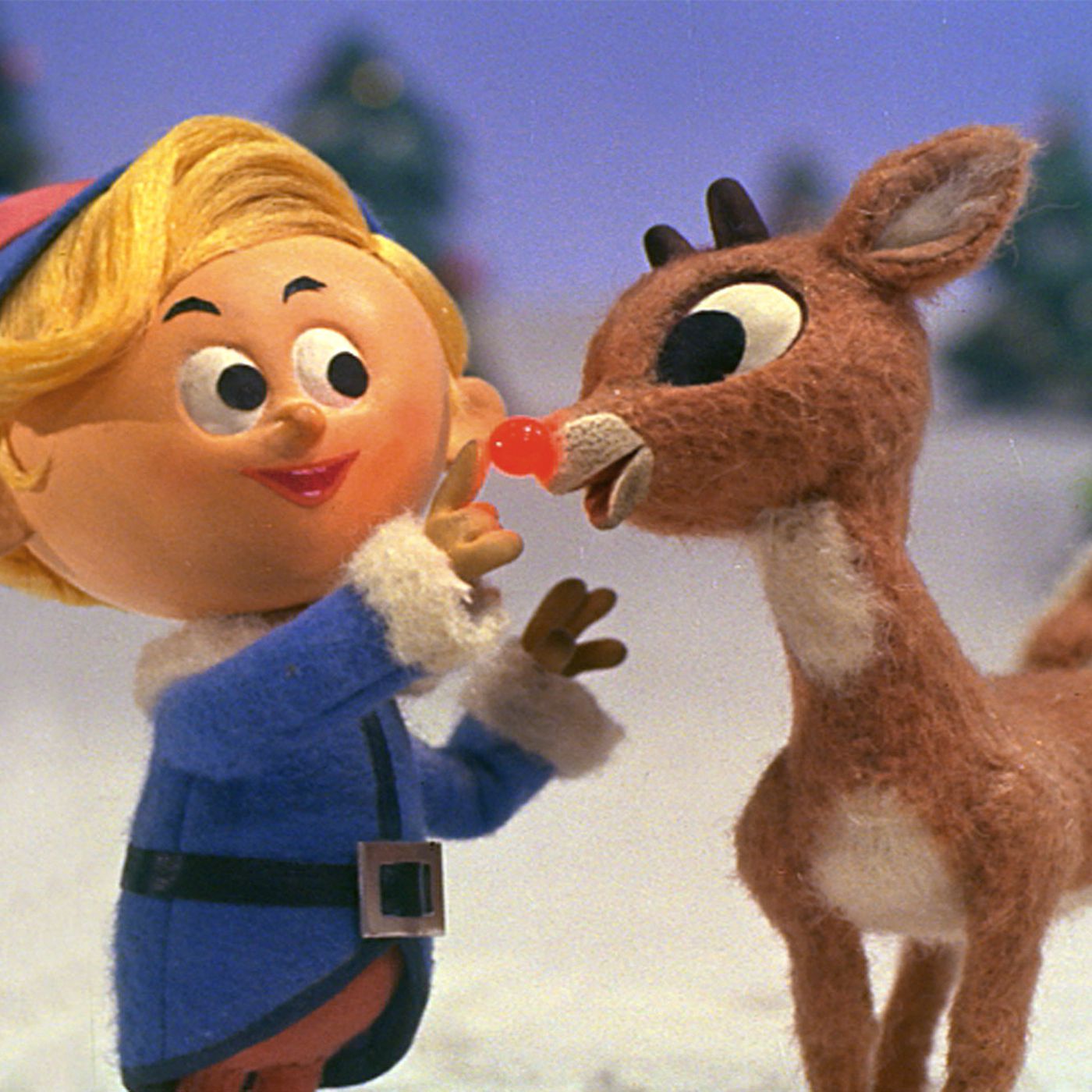
Learning from Rudolph the Red-Nosed Reindeer (1964)

When I first began to write, one of the common pieces of advice was to learn good story structure from the books and movies I enjoyed.  This is good advice, but I've found that I often learn more from bad stories, the ones I should have enjoyed, but didn't.  Figuring out why those stories didn't work and plotting out how I would have done them differently has taught me a lot about editing and story-telling. (Warning: this post will contain spoilers)

I'm sure I'm not the only one for whom the stop-motion Rudolph the Red-Nosed Reindeer is a holiday staple.  And I'm sure I'm not the only one who finds herself wincing through the nostalgia.  The story itself is pretty good and it has a lovely message about being true to yourself and found families, but there are a lot of dated approaches and references that grate on a current viewing.  So this month, I decided to think about how it could be updated, while still keeping the good parts.


First off, let's look at what works.  I love the stop-motion aesthetic and think it works really well for a fanciful holiday story.  I like that Rudolph leaves the North Pole to try and find a place that he belongs, but ends up finding it among friends who also don't fit in.  I think that part of the story speaks to a lot of us who felt like outsiders growing up.  From the moment Rudolph leaves with Hermey, the plot flows nicely.  They run into the prospector, Cornelius, and the Abominable Snowman (Bumble).  They float off on an iceflow and find the Island of Misfit Toys.  Rudolph sneaks away, afraid that his nose is drawing the Bumble and endangering his friends.  Then there's a growing up montage, and he decides to go home and confront his family.  He discovers his family is gone and goes to rescue them from the Bumble, but only succeeds with the help of his friends.  Then they all return to the North Pole and Rudolph helps Santa save Christmas.

That's good.  What's not good are the repeated sexist references sprinkled throughout the story.  Any reference to "not for does, this is bucks' work" needs to be ditched immediately.  Next to go can be the references to what "makes Christmas"; such as silver and gold ornaments on a tree or lots of toys.  There are too many families celebrating in too many ways to declare something as a required Christmas experience.  Luckily, those things are fairly minor.  They don't affect the plot and are mostly asides which don't even drive dialogue.

Slightly harder is toning down the rejection from Santa and Rudolph's parents.  It makes them very difficult to like.  I honestly think an updated version would provide a powerful opportunity to examine how painful microaggressions can be.  Most people would already agree that Rudolph's parents treating him as a freak is bad.  But most people don't understand how a careless comment or joke can cause harm.  I would probably write the introduction as Rudolph is shy, his parents encourage him to be himself, but he still faces rejection from the other reindeer.  That would allow the message of self-acceptance to be more resonant.

There is a bit of a nasty undercurrent to the 1964 story.  The misfits are only accepted because they are useful.  But people don't have to be useful to be accepted.  By changing it so that Rudolph has a supportive family, he's got an unconditional place to belong.  And by gaining friends, he learns that he doesn't need to rely on his reindeer peers for acceptance.


It also would add poignancy to the Island of Misfit Toys (which is my favourite part - side note: I wanted an elephant with pink polkadots and a swimming bird).  These are toys that self-loathe themselves because they don't fit in.  Except their differences make them the perfect toys for particular children.  There are people waiting to love them just as they are, which is a fantastic message for a children's movie.  I would make that part more explicit, showing them being happy with different children.

The music would have to be updated.  The songs are mostly forgettable, aside from Rudolph the Red-Nosed Reindeer and Holly, Jolly Christmas.  And since I'm partial to musicals, I'd keep the key points of the story tied into music.

I would also tweak Cornelius.  Rather than having him be a prospector, I'd make him a naturalist or an environmentalist (which is why he knows so much about Bumbles!).  He finds and helps Hermey and Rudolph.


The ending also needs work.  I'm not a big fan of pulling out the Bumble's teeth to make him helpless.  I'd much rather Cornelius be working with him and ends up gentling him so that the North Pole doesn't have to be afraid any more.  And Hermey gets accepted because Santa has a nasty toothache (and that's why he didn't want to eat).  He fixes it and Santa makes him the official North Pole dentist.  Rudolph can still save Christmas, but he tells the other reindeer that he doesn't need them to be his friends.  He knows who he is and he's proud to be red-nosed.

Previous Learning from Suicide Squad

Previous blog post: Things I Love: December 2020

Blog homepage


Thursday, 26 November 2020

Learning From Suicide Squad

 When I first began to write, one of the common pieces of advice was to learn good story structure from the books and movies I enjoyed.  This is good advice, but I've found that I often learn more from bad stories, the ones I should have enjoyed, but didn't.  Figuring out why those stories didn't work and plotting out how I would have done them differently has taught me a lot about editing and story-telling. (Warning: this post will contain spoilers)

I love comic book movies, and I love stories about redeeming villains, so I should have loved Suicide Squad.  But while I did really enjoy some parts of the movie, overall, it's not a great experience.  However, it could have been with some changes.

First of all, let's look at the parts that did work, specifically Margot Robbie, Will Smith and Viola Davis.  Harley Quinn, Deadshot, and Amanda Waller were all brilliantly developed characters with good, clear arcs.  They played off against each other well, with Deadshot's methodical precision acting as a great foil for Harley's chaotic impulsivity.  And Waller was the perfect villain, one who believes that her chosen ends justify the means.  The scenes with these three make the film worth watching.

Jay Hernandez's Diablo had the potential to be a really strong character with a powerful backstory, but he got lost in the general mishmash of plotlines.  And I actually liked Jared Leto's Joker.  The combination of lethality and playfulness is an approach to the character which is often used in the comics but hasn't usually been attempted in film.  However, many of the Joker's scenes seemed superfluous in the greater story.

This is where Suicide Squad falls down.  Too many characters, too many contrasting character arcs, and a vaguely defined overall conflict.  There are 8 named characters in the title squad: Deadshot, Harley, Diablo, Killer Croc, Slipknot, Boomerang, Rick Flag and Katana.  There are 3 main villains: Amanda Waller, Enchantress, and Incubus.  And then there's the Joker, who I don't count as a villain for this movie because he isn't trying to attack the protagonists or the city.  That's 13 characters competing for screen time.

- Deadshot wants to provide for his daughter

- Harley wants to reunite with the Joker

- Diablo wants to atone for killing his family

- Killer Croc wants to be free to... lurk in the sewers, I guess?  He just seems to want to enjoy himself, to be honest

- Slipknot wants to escape and gets his head blown off

- Boomerang wants to screw over Amanda Waller and make her look bad

- Rick Flag wants to protect his girlfriend, June Moon (who is also Enchantress)

- Katana wants to avenge her husband's spirit, who is trapped inside her sword

- Amanda Waller wants to make use of a bunch of villains instead of leaving them trapped in a black site at taxpayer expense

- Enchantress wants to resurrect her brother, Incubus, and break free of Amanda Waller's control

- Incubus wants to rule the world after being imprisoned for millennia


That's a lot of different competing motivations and is one reason why the movie ends up being muddy.  The other reason is that the audience rarely knows what the stakes are, especially for the mystical elements.  Is there a reason why Diablo is afraid of losing control of his powers or is it just an issue of emotional regulation?  Why do Enchantress and Incubus want to take over the world and what do they plan to do with it?  Is there a deadline on Katana's vengeance?  Why is she even connected with Suicide Squad to begin with?

Without knowing the stakes, it's hard to achieve dramatic tension.  This is a particular problem for Diablo's storyline, which is why it comes as a complete (and frankly, meaningless) surprise when he morphs into a Mexican fire god to battle Incubus.  We had no idea it was possible, we have no idea if this means Diablo is sacrificing himself or his personality, and we don't know if this is Diablo leveling up on his powers or something completely unrelated.


The only stakes that are clearly spelled out are for Deadshot, Harley, and Waller.  Deadshot wants to be reunited with his daughter and provide for her.  If he goes along with Waller's proposal, he'll be able to do that.  However, following Waller's instructions mean breaking his own moral code.  That's a good tension set up.  

Harley wants to be the Joker's wife and have a fairytale life with him.  She is using the Squad as a means to escape, but risks having her head blown off by the explosive boobytraps installed by Waller.  She thinks the Joker dies in an explosion, leaving her to find her own goals and path.  That's a journey of self-discovery and one the audience can empathize with.

Waller's main motivation seems to be power and efficiency.  She's got no problem with using dangerous people to further what she sees as laudable goals.  She's also got no problem with discarding them (by blowing their heads off) if they step out of line.  She's a manipulator but has a lot of enemies waiting to see her fail and take her power.  The audience knows that if the Suicide Squad doesn't succeed, she faces a professional crisis.  As the film's main antagonist and the only one where we understand why she's taking the actions she is, she serves to keep the plot moving.


For everyone else, it's really foggy what's supposed to be going on or why we're supposed to care.

I'm a huge comic nerd.  And if I can't figure out what's going on, then that's a pretty sad condemnation of the storytelling.

Now comes the fun part: how I'd change the movie to make it a better story.

First, I'd trim down the cast.  My Suicide Squad would be Deadshot, Harley, Killer Croc, and Diablo.  My villains would be Amanda Waller and Enchantress, with Joker thrown in for chaotic intervention.  I would keep Rick Flag as the token "good guy" on the squad, but change it so that he thinks Enchantress killed his girlfriend, June Moon.

I would start with Amanda Waller proposing the Suicide Squad and getting rejected.  The government has decided to move the villains out of her control and put them in some extremely isolated place (out in the ocean or even a space station).  The proposal could be used to introduce the various characters in the Squad and what their skills are.

Next would be the transfer.  Deadshot, Harley, Killer Croc, Diablo and Enchantress are loaded into the transport.  Flag and Waller are overseeing it.  The audience knows that Joker has gotten wind of the transit and is planning to intercept.  I would include a terse conversation between Flag and Enchantress about how she destroyed the one person he loved (June) and Enchantress gives him a knowing smirk.  Lots of insulting petty bickering between the villains (because I love that kind of thing).  Enchantress keeps promising that they'll all die painfully.

The Joker intercepts the transport.  During his attack, Enchantress breaks loose.  She transforms the guards into the stone creatures, which then attack the remaining human guards.  Harley leaves with the Joker and Waller tries to activate her booby-trap bomb.  It doesn't work.  Deadshot and Killer Croc both react with "we're getting out of here."  Enchantress blasts them (not killing them), then sends a blast after Joker and Harley in the helicopter, bringing it down.  Next she turns on Waller, but Diablo stands between Waller and Enchantress.  Instead of attacking him, Enchantress vanishes.

This would set up an understandable conflict, plus give the group a reason to stay together.  They want to stay with Diablo because Enchantress is afraid of him.  Flag and Diablo insist that Waller be allowed to come along.  They find Harley near the wreckage, in tears.  Killer Croc convinces her to come with them.  She wants vengeance on the Enchantress for killing her Puddin'.  Waller tells them that the new prison will be hell on earth and their new warden won't see their potential the way she does, so this is their only chance to prove themselves.  She offers them privileges if they get her to safety (this is where Harley could get her expresso machine, Croc gets BET, etc.). 


There could be adventure and conflict as they move through the city, which is rapidly filling up with the Enchantress's stone creatures.  There's a conflict between Deadshot, Flag and Waller as to who is in charge.  There's the conflict of getting Diablo to reveal his story (which would need to include some kind of mystical element for his powers to set up the god reveal properly) and that he is protecting others because he doesn't want his soul to succumb to the devil, since the afterlife is the only way he'll ever see his daughters and wife again.  Again, this would set up a relatable tension between using his powers and his own goals.

The Enchantress is building some kind of portal device that will allow her to escape this Earth and thus never be at the mercy of people like Waller ever again.  (This is a much more understandable villain goal than just ruling the world.)  If she opens the portal, the world will be destroyed, giving our motley crew the motivation to stop her.

There would have to be an acknowledgment of why Superman, Batman, Wonder Woman, etc. aren't able to fight the Enchantress themselves.  Maybe we get a report of them attacking and failing, because they're not willing to kill the Enchantress.  Or they're occupied with something else and the Enchantress is blocking them somehow (a dome over the city, which means the Suicide Squad is the only one in position to stop her).

Finally, we get down to the climatic conflict.  The Squad is preparing to attack the Enchantress when she tries to bribe them with their deepest dreams, including Flag, who is promised that he could have June again.  Flag is furious and goes to attack Enchantress, who then reveals that she is in June's body.  He hesitates and is struck down.

Waller tries to get the Squad to attack, but they are ignoring her (if this has been set up properly, the audience should be tense as to whether or not they'll step up and save the world).  Enchantress contrasts herself with Waller: "I just want to go home.  She wants to control all your lives."

I would keep the climactic twist of Harley attacking Enchantress just when we think she's going to accept the offer to have her dream life with the Joker.  The Enchantress's hold is broken and Diablo surrenders himself to the fire god.  The two gods battle it out while the Squad and Flag fight the stone creatures.  Waller is conspicuously absent from the battle.

Diablo is winning the fight when Flag approaches.  Diablo expects Flag to try and stop him, but instead Flag helps him to defeat Enchantress.  He blasts her, driving her out of June's body.  Diablo then collapses, returned to his human form and gravely weakened.

Fresh troops arrive.  The Squad is faced with a choice of surrender or fight their way out.  Flag steps up for them, protecting them.  The Squad surrenders, under the condition that they stay with Waller rather than get transferred to the middle of nowhere.

Epilogue, we see everyone happily enjoying their rewards.  In particular, Diablo, who is hoping that saving the world will be enough to offset his gangster past.  Final scene is Waller meeting with the Joker, revealing that she's the one who told him about the transport because she wanted an opportunity to demonstrate her Suicide Squad idea.  She asks him if he wants Harley back and he ends with "I always want what's mine."

Because this story isn't overloaded with characters, there's time to properly develop each arc and make sure they complement the overall story instead of seeming forced or unnecessary.  Sometimes writers have really cool ideas, but those ideas don't fit, so we have to be strong enough to let them go.  And we need to focus on the elements that we do choose to include to make sure that they're given a proper opportunity to shine.

I am going to be curious to see what the writers and director have done with Suicide Squad 2, which is supposed to release in 2021.  It'll be interesting to see if it's another chaotic, overloaded romp or if they're willing to pare their ideas down to ensure each one shines.

Other posts you might like:

Learning from Jurassic Park III

Previous post: Why Is Self-Care So Hard?

Blog homepage

Thursday, 22 October 2020

Learning From Jurassic Park III

One of the first pieces of writing advice that I received was to examine my favourite movies and books to see why they worked.  This is good advice, but I've actually discovered that it can be more helpful to examine movies that I should have enjoyed, but didn't.

I love the Jurassic Park movies.  They're a great combination of action and terror.  But just about everyone agrees that Jurassic Park III missed the mark.  It failed to connect with audiences, even the enthusiastic fans.  The question is: why?

Superficially, it should have worked.  It followed the formula of the other movies, the special effects were decent, and the cast was talented.  But I can explain where Jurassic Park III worked and where it didn't, and I'll share how I would have rewritten it to avoid some of the inherent problems.  Those are the exercises that I've found most helpful for improving my own writing.

It case it's not already clear, there will be spoilers in this post.

There are actually a lot of good elements in the movie.  Setting up a repeat of the "rich guy bribes Dr. Grant to come to the dinosaur park" element and then twisting it when Grant discovers that the Kirbys aren't actually rich was a good idea.  There was a good mix of humour with the danger, which gives the audience relief from the thrills and usually make them eager for more.  The displays of raptor intelligence, using a trap to lure in the humans and sophisticated communication, were awesome.  The pterosaurs and Spinosaurus were something new for the audience to be afraid of.  And, as a parent who as watched way too much Elmo's World, I will admit to a little schadenfreudish satisfaction watching the actor who plays Mr. Noodle get killed and eaten.

In my opinion, one of the biggest problems with the structure of the story is that there are very few tension builds.  In order for an audience to connect with a story, they have to be engaged with it.  They have to care about the characters and they need to understand the stakes and dangers so that they're worried when the characters are in jeopardy.


In Jurassic Park III, the audience is rarely given a chance to understand the dangers.  The writers didn't tell the audience that the grad student, Billy, had stolen raptor eggs, thus provoking the raptors to track the group.  We're never really shown what the spinosaurus's capabilities are, so we have no way to judge when the group is in danger from it.  The clearest example of this is when the Spino breaks through the fence.  We had no idea it was possible, so the moment is basically a jump scare rather than a tension build.  Ten seconds later, the group is behind another barrier and safe, so the audience doesn't feel any lingering effects from what should have been a major moment.

That's something that a lot of writers have problems with.  We, as authors, know everything that's happening and sometimes we forget to let our audience know the details they need to share in our excitement.  This is where beta readers and test audiences are crucial.  They don't know anything about the story and thus can point out when an author's vision hasn't quite made it into the current draft.

Another challenge is giving the audience enough time to make an emotional connection with what's happening on the page or on screen.  If things happen too quickly, they don't have an impact.  In movies, the time is built into what's on screen and for how long.  In a book, the author needs to recreate the subjective experience of time.  Time seems to slow down when an experience is intense, so an event that only takes a few seconds can last for several paragraphs or several pages.  The focus shifts from the narrative to the emotional.

This is why Jurassic Park III doesn't resonate the way Jurassic Park or Jurassic World does.  The dangers are rushed into and over too quickly.  The audience doesn't know what the stakes are.  Too many things are treated as surprise twists, but the twists rarely have any consequences past the immediate moment.  Those are all lessons that writers can learn from.  Figure out what the big moments are in your story and make sure that the audience clearly understands why they're important and that they have important consequences afterward.  Don't be afraid to take your time with them.

Now the fun part (or at least, the fun part for me).  Rewriting the story to make it better.

First things first, I would have had Ellie be with Dr. Grant as opposed to being married to someone else.  (This isn't a structural plot issue, but I shipped them in the first movie and since I'm writing it, I can do that.)  I also would have gotten rid of the Kirby's divorce and reconciliation subplot.  It didn't really add anything to the story.  They could have been married and arguing about the best way to parent their son and the story still would have worked.

The movie opens with the son (Eric) and the mom's boyfriend doing a Dino-Soar parasailing tour.  The boat is attacked behind fog and crashes, sending the two into Isla Sorna.  This is the inciting incident.

I would have opened with a similar scene, but with a few crucial changes.  I would have had the mom there with the son.  She's taking him on an "adventure" that his dad wouldn't approve of while they're on a family vacation.  Paint the dad as a rule-following fuddy-duddy and the mom as the freewheeling fun parent.  The tour guide mentions that they have to be careful because of an elevated U.S. military presence in Costa Rican waters (this is to set up the rescue at the end).  The kid is sent up on the parasail and is having a great time... until the pterosaurs come out.

The pterosaurs attack the sail and end up snapping the line holding the kid to the boat.  He goes flying toward the island.  The mom frantically tries to get the tour guide to follow but he refuses.  End the scene with the mom screaming and fighting to get to her kid.

This is a very relatable situation which instantly raises stakes for the audience.  We know the kid is alone on the island, which is full of dangerous dinosaurs.

Next scene, the mom and dad are together on the resort.  They're blaming each other (Dad: he never should have been anywhere near that island, Mom: It's not important now, we just have to find him.)  During the argument, mention that the family runs a plumbing supply chain, profitable but not stratospherically rich.  Mom has approached some mercenaries that the tour guide knows and suggested, but they won't go without a dinosaur expert.  Cue a poster about Dr. Alan Grant's scheduled lecture.

This set-up allows the audience to know that the Kirbys are fooling Dr. Grant, but it also compresses the timeline.  In the original movie, the kid is on his own on the island for 8 weeks, which they did to make it plausible that the kid learns to navigate the island, but also decreases the stakes.  (This was also another lost opportunity to build tension, where the parents expect to find their child dead, but I don't like dead kid stories so I'd make it a race against the clock instead.)

The scene where the Kirbys lie to Grant and claim to want him to serve as their guide for an island overflight could continue pretty much as is.  I would have Dr. Grant arguing with Ellie.  He wants to accept the deal because they haven't been able to get funding for their digs.  She tells him that he's crazy for even thinking of going back there and refuses to go.  He decides to go anyway, setting up a nice wedge between them which makes it questionable whether or not she'll take his call later on in the movie.

Now we've got a good batch of interpersonal tension going, plus the audience knows what the stakes are.

The rest of the movie only needs a few tweaks.  I would make the raptors and the pterosaurs the main threats and forget the spinosaurus.  Or, if necessary to include the Spino, make it a secondary threat (much like they did with the aquatic mosasoar in Jurassic World).  Have Grant explain what these animals can and can't do so that we know what the stakes are.  Spend more time building the tension in the big impact scenes.  I'd keep Billy (Grant's grad student) stealing the eggs and later sacrificing himself to save the kid, but make sure the audience is following along with it.

The difference between a story that works and one that doesn't is often pretty subtle.  That's why analyzing stories that don't work can be a great tool to make sure your own stories shine.

(And now my shameless self-promo moment, if you like the way I would have told this story, you'd probably like the books I wrote!)

Previous blogpost: Update on Audiobook Progress

Blog Homepage