Tuesday, 18 January 2022

A Few of My Favourite Things - Blogpost links

 I'm still having a lot of challenges post-COVID, including long-COVID complications.  However, I did manage to post some blogs over on Soul Mate's site and for those who would like to enjoy them, here they are.  I did a theme of talking about my favourite romance tropes, subgenres, scenes, etc.

The Forced Proximity Trope (who doesn't love only one bed!)

Bodyguard Romances (when one will do anything to protect the other... chef's kiss)

Death Watch (is there anything better than watching one character panic, thinking they're about to lose their best love, and then they DON'T!)

Buttons (slow seduction at its finest and most mouth-watering)

Cynics and Dreamers (when one believes in everything and the other believes in nothing and yet they're both gonna have to take the plunge into love together... sigh)

Real Life Edition (this one isn't a romance trope but it's a post about a pretty cool lady who would have made an excellent heroine: my grandmother)

Second Chance Romances (sometimes people don't get things right the first time and how they can still get to a satisfactory HEA)

Thanks for sticking with me.  :)

Monday, 15 March 2021

Post COVID update

 On February 28th, I started to feel sick with a bad cough, headache, and sore throat.  On March 1st, I was diagnosed with COVID.  That began 10 days of being isolated in my room and worrying about who else I might have infected.

Two weeks later, I can answer the second question: no one.  My children, parents and ex-husband all tested negative for the virus.  I'm still not sure where I got it, but I am relieved to know I didn't pass it on to anyone else.

Being isolated in my room for 10 days was... an experience.  It made me very grateful that I live in an era where my phone can function as a TV, communication device, and internet browser.  Also very grateful for my e-readers, which let me get new books to combat the boredom (once I'd recovered enough to look at screen without an instantly splitting headache).

I spent a lot of my isolation time sleeping.  I was utterly exhausted for the first week of COVID and could only spend an hour or two awake at a time.  For the second week, I was still easily worn out, but my brain started being able to concentrate again.

On March 12th, I was declared officially recovered and allowed to come out of isolation.  It was such a weird sense of relief to be able to come downstairs and sit on the couch.  (Yes, it was good to be able to see my kids and my dog, but sitting up with back support... that was heavenly.)

I'm still getting tired fairly easily, but I think I'm ultimately going to be fine.  However, there are two odd leftovers of my isolation.

The first is guilt.  It's irrational, but I feel guilty for everyone who had to go into isolation because I caught COVID.  That's two weeks of their lives disrupted, lost income, and all sorts of other consequences.  My rational brain recognizes that it was an absolutely necessary precaution but at the same time, since no one else got sick, I feel bad.  Of course, if anyone else had gotten sick, I would have felt devastated, so there really wasn't an emotional-win possible here.

Given my inherent blame-myselfism, the second thing caught me by surprise.  I haven't had a nightmare since I was diagnosed.  (This is huge.  Normally I have 2-3 wake-yourself-up-shouting nightmares per week at a minimum.)  Not one nocturnal vision of being chased by a relentless hunter/predator, not one heart-pounding jerking awake because I can't find my kids, and no sudden illusions of my legs no longer working and dropping me into the middle of traffic.

Because I am the kind of person who absolutely examines the mouths of my gift-horses, I tried to figure out why that might be.  I wondered if it was because although I was sick and worried, I wasn't dealing with my usual 15 ball juggling routine and therefore my anxiety was actually much lower than usual.  (I had a similar experience on a day when I was getting surgery: my usually skyrocketing bloodpressure was down in the it's-all-cool range because I'd handed off all my responsibilities for the day.)  Or maybe I was too tired to really worry.  Or did my subconscious think I'd already achieved the worst outcome and thus had nowhere else to go.  (I don't think that last one is it.  My subconscious is way too good at coming up with how things could be worse.)

On Monday, I go back to work.  On Tuesday, my oldest son can go back to school.  (My youngest is in digital school so he didn't get a break.)  Life will slowly get back to normal.  Hopefully, I can manage my energy levels to be able to work and finish the edits for Until Proven Guilty.  Oh, and finish my online course.

Is it too late to go back into isolation?

Thursday, 4 March 2021

Is The Crow A Fridging Movie Or Not?

 Recently, I was embroiled in a debate as to whether or not the 1994 movie The Crow counts as a fridging story.  This is one of my all-time favourite movies and I began to defend it, but had to stop.  Were they right?  Could this beautiful dark romance be an example of toxic masculinity?


I had to take time to think about it rather than rely on a knee-jerk denial.

"Fridging" is a term that arrives from comic books, specifically from a trend of treating women as objects to inspire righteous rage in the male heroes.  It originated from a Green Lantern comic where the Lantern finds his girlfriend's dead body in a refrigerator.  However, there are dozens of examples and not just in comicbooks.  Aside from romance, pretty much all genres treat happy relationships as the end of action and tension.  Therefore a happy relationship is a preamble and a guarantee that either the relationship isn't really happy (i.e., one of the individuals is a traitor or faking their feelings), or someone is going to be hurt or die in order to launch the other partner into a murderous rampage.

This is a pattern of toxic masculinity, where feelings are considered bad, unless it's rage.  The partnership is meaningless except as a socially acceptable excuse for the main character to become violent.  The focus of the story is on the violence and celebrating righteous male anger.  Often the relationship is entirely forgotten once vengeance is complete and the hero moves on to violently brood his way into the next episode.

On the surface, The Crow seems to fit these parameters.  The story is about Eric and Shelley, who are in love and about to be married when they are both killed by home invaders.  Shelley is brutalized and Eric is killed before he even has a chance to try and defend her.  This creates such great pain in his soul that he returns from the land of the dead for vengeance.  His crow companion grants him instant healing and awesome martial arts skills.

Eric hunts down each of the four home invaders and violently dispatches them.  He also kills the crime boss who ordered the attack, wanting to intimidate the neighborhood into abandoning protests about tenant eviction.  There is a strong argument that The Crow is a male power fantasy.  Eric doesn't have to work through official or legal channels, he doesn't have to be patient.  People hurt him and he can hurt them back without consequence.


Shelley doesn't return from the dead to avenge her own rape and death.  She appears only in flashbacks and briefly at the end of the film to reclaim Eric for the land of the dead.  The story is about Eric and it isn't his own death that he wants to avenge, it's Shelley's.

However, I would argue that The Crow lacks the essential toxic masculinity element to make it a true fridging story.

First, James O'Barr wrote the original comic book, The Crow, to help himself to cope with the death of his fiance, who was killed by a drunk driver.  It was an active choice to manage his grief and feelings of helplessness.  In a toxic fridging story, the killed partner is solely an inciting incident.  They don't truly matter except as an excuse.  In The Crow, Shelley is never forgotten.  She is the heart of the story and there are frequent powerful reminders of the love that she and Eric shared.  O'Barr incorporated his feelings into every aspect of the story, and had included multiple romantic flashbacks which were edited out of the original comic release.

Second, the subplots of Sarah and her mother, and Detective Albrecht and his relationship undermine a toxic masculine interpretation.  Eric doesn't only seek vengeance, he also seeks to help the two living people who were also harmed by Shelley's death.  Sarah lost her mother substitute (Shelley) and was forced back into the orbit of her addicted mother and her toxic boyfriend (one of the attackers).  Albrecht tried to take up Shelley's fight to protect others and ended up being penalized professionally and losing his own marriage.

When Eric kills Sarah's mother's boyfriend for his role in Shelley's death, he takes the time to help the mother.  Holding her in front of the mirror, he whispers "Mother is the name for God on the lips and hearts of all children.  Morphine is bad for you."  We then see the drugs emerge from the track marks in her arms.  For the first time, the mother looks up and seems to be aware.  Later, we see Sarah and her mother in their apartment, having breakfast.  This is one of only a few scenes with sunlight, indicating a true healing and change.


Eric breaks into Albrecht's home and has a frank conversation with him, not about the killers, but about how much he regrets not making his relationship with Shelley his number one priority in life.  He laments that it would have taken so little effort on his part, but he was caught up in other priorities and missed those opportunities.  The fact that the message Eric is most focused on is on honoring personal connection and feelings tells the reader that this is far more important than his vengeance.

It's also telling that Eric does not go to visit his former bandmates or other presumed friends.  This is another way in which Shelley is centered despite being dead.  It is her relationships which are key to Eric.

The final proof that The Crow is not celebrating toxic masculinity is the final battle between the crimeboss (Top Dollar) and his sister against Eric.  The sister has realized that the crow companion is the key to Eric's power.  She arranges for the crow to be shot, which destroys Eric's invulnerability.  The male power fantasy is destroyed.  Eric is no longer able to hurt others without facing consequences.  This is something that rarely happens in toxic masculinity stories.  Vulnerability is seen as emasculating and is thus avoided at all costs by those who only want an excuse for violence.

Eric confronts Top Dollar and is run through, effectively killing him for a second time.  Top Dollar is unharmed and gloats to Eric that his efforts have all been meaningless.  Meanwhile, the sister is about to catch the crow, wanting to claim its power for her own.

Instead of surrendering, the crow flies at the sister.  It pecks out her eyes, which could be interpreted as manifesting her blindness to the truly important things in life or as an example of how even the very small and seemingly helpless can bring down those who are much more powerful.  The sister becomes disoriented and falls to her death.

Eric reaches out and touches Top Dollar, unloading all the painful memories of Shelley's attack and prolonged death.  "All of her pain... all for you."  Faced with the consequences of his order, Top Dollar also falls to his death.


It's important that Eric and the crow are not the direct instruments of the final bosses' deaths.  It's also important to note the final attacks are not celebrations of unilateral violence.  The crow's attack is the most violent of the two, but it is not attacking from a position of power.  It is defending itself against someone who wants to abuse its inherent strength for their own purposes.  It is refusing to be used and defying the implied order that the powerful should control those smaller and weaker than themselves.

Eric's defeat of Top Dollar is even more explicit.  It isn't violence that takes out the final boss.  It's feelings.  Feelings are the ultimate power, not the ultimate weakness.

Perhaps this is more splitting hairs than a true distinction, but to me, these differences are significant.  It takes Eric out of the realm of toxic masculinity.  He begins as a male power fantasy, but ends as someone whose love conquered all.  The end of his story isn't him striding off into the sunset to solve yet more problems with violence, but him lying on his grave, waiting for his one true love to return to him.  She comes to him and smiles, bringing him home to the land of the dead with her (and, in my opinion, enjoying a happily ever after).  I think it's implied that she didn't need vengeance, she only needed him to be content and then they could be together.


The story of The Crow is one of Eric growing beyond his pain and regaining love.  And that is nowhere near toxic masculinity.

Previous blogpost: Trust between Authors and Audience

Blog homepage

Thursday, 25 February 2021

Trust Between Authors and Audience

This post has spoilers for Wandavision.

I've found myself thinking a lot lately about the trust that exists between authors and their audience, whether they write books, TV, or movies.

There are some authors that I will trust to take me to hell and back.  No matter how dark the story is and how impossible it seems, I know there is a point to the bad stuff and it will be worth it in the end.  Gena Showalter, Jenna Black, and J. Michael Strazynski are a few of the examples that immediately spring to mind.

Then there are other authors who seem to insist on making their characters suffer for no reason other than to glory in their pain (cough - Ronald D. Moore - cough).  It won't take much for me to bail out of their stories because I no longer trust them to see me through to the other side.

This ties in with genre expectations, but goes beyond them as well.  Yes, if I'm reading something marketed as a mystery, I expect the murder to be solved.  If I'm reading a book marketed as a romance, I expect there to be a central love story and a happy ending.  If I'm watching a movie marketed as a disaster action film, I expect the tornado footage to last more than two minutes total (yes, that's a specific example - Into The Storm, I don't recommend it).


I started thinking about this as I've been watching
Wandavision.  After the fourth episode, I was tempted to bail, even though I'd really been enjoying the writing and the chemistry between Elizabeth Olsen (Wanda) and Paul Bettany (Vision).  As a comic geek, I know that Wanda, aka The Scarlet Witch, is usually a villain.  I didn't want to watch another five episodes of her descending into grief and losing everything all over.  I didn't want to watch her be broken and become one of the bad guys.  That's not a story that I want to have inside my head.

I really loved the relationship between Wanda and Vision in the MCU movies.  I **hated** that they killed him off in Infinity War and that he didn't get to come back in Endgame.  But I wasn't surprised.  It's the one part of comics that I dislike: relationships almost always end in misery.  And for a genre that constantly brings characters back from the dead, their inability to imagine people being both in love and in exciting adventures is kind of disappointing.

I didn't want to watch Wanda's heart break all over again, but I stuck with it.  Because the MCU has delivered on its promise to tell nuanced stories where characters may go through bad times, but they don't suffer unnecessarily.  Heroes might be tempted down a dark path but they don't stay there.

This week's episode (7) proved I was right to trust them.  She's not the villain.  She's not broken.  And it's a relief that's renewed my excitement for the rest of the series.

Stories need tension to be interesting.  Some stories have light tension with low stakes and they can be quite enjoyable.  Some stories have a lot of tension with very high stakes and that is where trust in the author becomes essential.

Just putting characters in horrible situation creates tension, but it's the way they get out of it that makes a story satisfying.  Making horrible things happen to them just to have them in pain, that's not satisfying.  Or at least, not to me.

And that's why, while my stories deal with dark subject matter such as assault, trauma, addiction, and prejudice, they are there because I want to show people coming out of that darkness.  I want to show that those things don't preclude finding love and happiness in life later on.  There's a reason, and there's a satisfying outcome.  That's why my readers know they can trust me.

Previous blogpost: Reclaiming My HEA: New Plan

Blog homepage

Thursday, 18 February 2021

Reclaiming My HEA: New Plan

 Reclaiming My HEA is a monthly feature where I share my progress through my separation and divorce.  It also includes snippets of a therapy exercise where I imagine myself in a healthy relationship.  The purpose is to remind myself of what a supportive, caring partner would be like, to try and offset the effects of over a decade without one.

Dating sites take awhile, especially when we're still in the middle of a pandemic, which makes physically meeting new people difficult.  I'm still moving ahead, but I'm also trying to take a more comprehensive approach.

After some careful self-reflection, I've realized that one of the reasons that I've been so uncomfortable with moving forward is because I'm afraid of failing to recognize the signs of another bad relationship.  I'm working on that, but I also decided to tackle one of the underlying causes: touch deprivation.


In the 1960's, an
experiment with baby monkeys showed how crucial touch can be.  It is just as critical as the need for food.  One of the issues with my former relationship was a complete lack of physical contact.  As this pandemic has carried on, I've been unable to meet up with friends which has meant no hugs or other contact.  I've always been a cuddly person and I think that deprivation has affected me more than I realized.

One of the things I've been thinking about for the past year is whether or not I wanted to get myself a pet of my own.  My boys each have a pet.  The 16yo has a service dog, Lynyrd, and the 13yo has a cat, Neelix.  Both pets enjoy being around their people but aren't really cuddlers.  This suits the boys perfectly, since they aren't cuddlers either.

But I am.  And I'd love to have a pet to cuddle with.  I think it might help me more than I realize.

So I've decided to pursue adopting/rescuing a cat of my own.  It will have to be a young cat, in order for it to adapt to the household.

Maybe this will be the first step toward becoming a crazy cat lady... or maybe it's going to be the start of a path that will lead to me being happier.  Only time will tell.

Previous Reclaiming My HEA: Finding My Courage

Previous Blogpost: HEA Match For Everyone (Valentine's Special)

Blog homepage

Monday, 8 February 2021

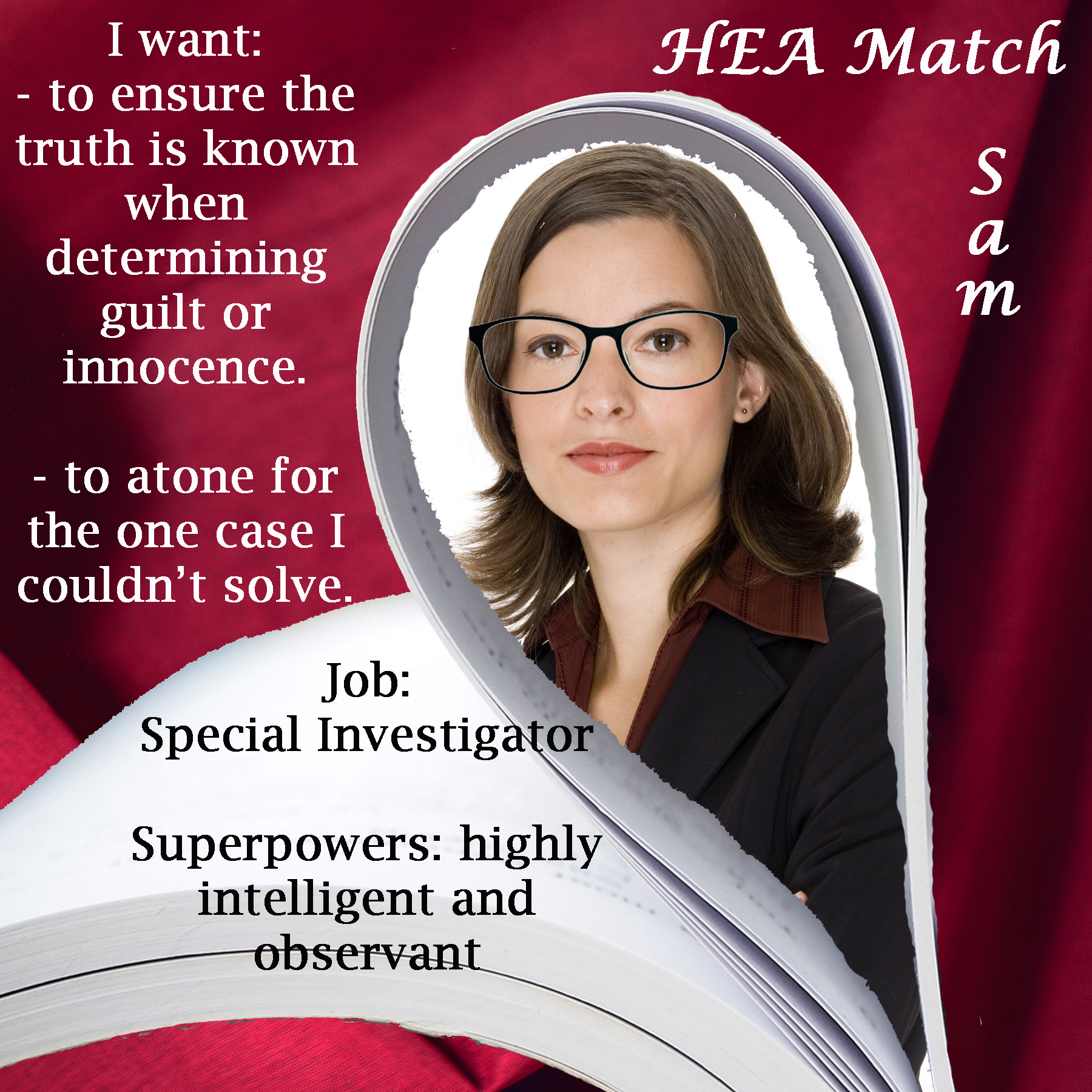
Valentine's Day Special - Part Two (HEA Match)

 Time for part 2 of my Valentine's Day special.  Everyone has an HEA match!

Honestly, this is why I love writing romance.  I love helping people to find their happiness, even fictional people.  (Maybe especially fictional people, since its so much easier than the real life versions.)


Previous blogpost: Valentine's Day Special - Part One (Choose Your HEA Hottie)

Blog Homepage

Sunday, 31 January 2021

Valentine's Day Special - Part One (HEA Match)

 With Valentine's Day coming up, I thought it would be fun to do a special dating app post for my characters.  Who would be your HEA hottie?


Previous blogpost: Things I Love (January)

Blog Homepage


Thursday, 21 January 2021

Things I Love: January 2021

This year has been so difficult and finding joy has been a challenge, so here's some fun stuff that's made my life livable.

Books:

I've been reading more non-fiction than fiction this month.  It's something that tends to happen in waves, especially if I find something that intrigues me.  And these two books definitely got me thinking.


The Secret Poisoner: A Century of Murder by Linda Stratmann

I promise I haven't taken up a new hobby.  This book is all about the development of toxicology detection between 1800-1900.  It was a fascinating look at a variety of cases and trial and experimentation to reliably detect poison residue after death.  Two things I learned especially stuck with me.  One, pharmacists and grocers use to be able to dispense "quieteners" over the counter, an opium-based solution that was explicitly marketed as a way for wives to sedate their belligerent and abusive husbands.  Two, the number of doctors who suspected that their patients were being slowly poisoned and didn't say anything to the patients in question is appallingly high.


On the Clock: What Low-Wage Work Did to Me and How It Drives America Insane by Emily Guendelsberger

Guendelsberger went undercover at McDonalds, Convergys and Amazon and while I knew those companies didn't treat their employees well, I was shocked to learn how bad it actually is.  It was disheartening to learn how many of these corporations rely on high levels of turnover to keep salary costs down.  It starts with a historical look at Ford's assembly line, which paid far more than the standard day's wage but was considered de-humanizing and discouraging.

TV Shows:


Sleepy Hollow.  I started rewatching this a few weeks ago.  The story-telling is a little uneven but the chemistry between Tom Mison and Nicole Beharie is amazing.  I'll admit that the first time I watched the show, I was hoping that they would develop a romantic relationship.  But on this watch, I'm really appreciating the depiction of a strong friendship between a man and woman.  I like fish out of water stories so I enjoy watching Ichabod's reaction to modern society.


Star Trek: Discovery
, season 3 (spoilers).  I love Star Trek and I've always thought that the series worked best when it was looking forward, so I'm very much enjoying the season 3 switch to 700 years in the future.  I love the new character, Booker, and his relationship with Michael.  And of course, my girl Tilly is having an awesome season.

All Rise.  I discovered this show last year and it's become a new favourite.  I enjoy legal dramas and was excited to see one from the judge's perspective.  The cast is amazing and the dialogue is witty.  The second season is set during the pandemic and I think the show has handled it rather well.


Fictional Crushes:


I'm still loyal to the Mandalorian and Ghost Rider, but I can't watch Sleepy Hollow without being reminded of how undeniably hot Tom Mison is, especially with long hair and the beard.  He's courteous and a gentleman, smart and loyal.  And the man can rock a frock coat.  I like how he respects his partner's expertise and skills, but is still protective of her.

I also had a refresher of another cinnamon roll hero, Aram from The Blacklist, played by Amir Arison.  He's kind and sweet, a man who sees the best in people.  Add in the fact that he's a passionate defender and protector, and he's just the kind of hero that I adore.

Songs:

I've been listening to my burlesque playlist a lot.  Most of the songs are from the movie Burlesque, but I added in some other classics like "Diamonds Are A Girl's Best Friend" and "Candyman."  I like the boldness and confidence of burlesque songs, but my favourites are the ones that include humour, like "A Guy What Takes His Time" and "I am a Good Girl."

Previous Things I Love (December)

Previous Post: Reclaiming My HEA: Finding My Courage

Blog Homepage

Thursday, 14 January 2021

Reclaiming My HEA: I Have A Heart and a Brain, Now I Need Courage

Reclaiming My HEA is a monthly feature where I share my progress through my separation and divorce.  It also includes snippets of a therapy exercise where I imagine myself in a healthy relationship.  The purpose is to remind myself of what a supportive, caring partner would be like, to try and offset the effects of over a decade without one.

I don't like rejection.  Yeah, I know, it's a complete shocker.  No one likes rejection.  But that fear has been holding me back for a very long time and it's time for me to face it.  In short, I've already gotten my heart and my brain, which means it's time for me to wizard up some courage.  (Possibly cute braids and an innocent yet sultry singing voice as well, but those are more optional.)

I'm a GenXer, which means I'm very comfortable with jaded nonchalance and self-deprecating jabs.  But I am also a geek, which means I couldn't maintain a cool facade if my life depended on it.  By nature, I'm bouncy, excited and eager to share.  And over the years, my exuberance has been slapped down many times as "too much" for the people I was with.  I get caught between the necessity of being myself and the desire not to drive people away with who I am.

Yet, the thing is that who I am isn't bad.  I'm not claiming to be flawless or unproblematic, but as I try to untangle the negative messages of a lifetime, I'm realizing that I'm also not difficult or demanding.  I'm not "too much" for the world, just too much for some of the people in it.  And that's about them.  Not about me.

However, that's easier said that believed sometimes.  Especially when I'm taking the plunge of signing up for a dating app.

As I'm filling out the initial forms, all I'm finding myself thinking is about how the whole online dating process feels like setting myself up for a lot of rejection.  I don't really want to open myself up to a whole new crowd of people who will tell me that I'm "too much."

And yet, that's the price of admission.  If I want to find someone who thinks I'm exactly right just as I am, then I need to be strong enough to face the rejections.

This month's HEA writing exercise is based on a favourite scene of mine from the 1997 movie Fools Rush In, where the hero comes in to find the heroine preparing dinner.  While she cooks, she's dancing around the kitchen and he pauses to watch her, entranced by her exuberance and passion.


I dance a lot.  I'm usually the first one on and the last one off any dance floor.  I dance when I'm doing chores and sometimes just because I feel like it.  According to home movies, I've been doing it since I could barely walk.  But I've never had a romantic partner who treated it as anything except a joke.

Here is this month's snippet:

   The weekend getaway had seemed like the perfect idea.  A rare opportunity to relax without the pressures of their day to day life.  It would have all been much more effective if his business partner hadn't spent the last two hours bombarding him with emails and phone calls.  The excessive barrage had required him to descend into the hotel's business centre instead of spending the evening with his partner.

   Crisis finally resolved well after midnight, he returned to the suite, expecting to find his love sleeping or lost in a book.  Instead, as he slipped through the door, he heard the muted thump of dance music.  He stopped just inside the entrance, a shy smile curving his lips.

   He treasured these glimpses of the free spirit that still thrived in her.  Her life had been hard, far more difficult than it should have been, but it somehow hadn't crushed her.

   She spun and saw him watching her.  Instantly she slowed, uncertainty freezing the smile on her face.  He smiled at her, reassuring her that there would be no mockery or dismissal.  He held out his hand, inviting her to dance into his arms.

Previous Reclaiming My HEA: Better Living Through Crushes

Previous Blogpost: To Epilogue or Not to Epilogue

Blog homepage

Thursday, 31 December 2020

To Epilogue or Not To Epilogue

Every couple of months, there will be a debate in the writers' corners of social media.  Are epilogues a good tool for wrapping up a story or are they the tool of a lazy writer who should have made the ending clear within the main plot?  In other words, are they useful/enjoyable or not useful/enjoyable?


For the most part, I like epilogues, so I usually just shrug and say "No one's forcing you to read them if you don't like them" to myself and move on to the next amusing cat video.

However, the last time this debate circled, I actually asked myself the question: why do I like epilogues?  Their critics raise valuable points: an epilogue shouldn't be necessary to complete the story, and they are often used as bait-hooks which can leave the story feeling incomplete.  I've been annoyed by some epilogues in the past, so why do I continue to believe that some stories need an epilogue in order to work?

I sat down to figure it out.  And now I'm sharing my conclusions with you. (I'll mostly be talking about romance novels since that's most of what I read these days.)

The most consistent factor that makes an epilogue satisfactory (in my opinion) is the timeline/pacing of the main story and the main characters' relationship.  When I'm reading a fast-paced suspense novel, the epilogue is a welcome opportunity to breathe.  It's a chance for the author to show me that the characters have overcome their challenges and have a smoother path ahead.  Especially in romance stories, I like to know that the characters are still finding their happily ever after with one another, without the stress of saving the world, or being on the run, or whatever other danger has overshadowed the relationship to that point.

Perhaps I'm too much of a realist to put my faith in a relationship that has only existed under high stress and forced proximity.  Especially if the individuals in question have spent most of the story fighting their feelings for one another.  In those cases, an epilogue reassures me that the ending really was the start of a happily ever after.  Seeing the couple a few months or a few years after the official end gives me that contentment.  I don't need them to have gotten married or have kids, or anything like that.  I just need to know that they're still happy and together.

Another factor that makes an epilogue necessary (again, in my opinion) is when the conflict of the relationship has been solved via a grand gesture.  If I am reading a character who has chosen to self-sabotage their feelings (eg.: pushing their love away to "keep them safe" or because "they deserve better" or because the character thinks they'll only screw everything up) then I need to know that they have truly overcome their tendency to run away rather than face their problems.  A grand gesture can be wonderful, but it's only one moment in the character's history.  If there are lots of other moments where they've made the wrong choice, then that one moment isn't enough to convince me of the change.  I need to see that they've sustained it over time.

This also applies when a character is struggling with addiction as part of their arc.  Relapse is an expected and frequent part of recovery, so I need to know they've made it through those initial hurdles.

Critics are right when they say that an epilogue shouldn't be necessary.  All the crucial plot elements and character growth should happen in the main story.  But an epilogue can provide reassurance to the reader.  It gives comfort and a sense of security.

That's what an epilogue should do.  It shouldn't be used to undermine the main story or to solely provide a hook for the next book in the series.  It should enhance and support the main story, relieving any lingering tension for the reader.

I suppose, by this definition, the epilogue isn't necessary.  The conflict has been resolved and what the epilogue shows is that it has remained resolved.  For some readers, they may not need the reassurance that everything continues to be okay.  And that's all right, they can skip it and move on to their next read in perfect confidence.  But for those of us who wonder what happened after The End, an epilogue can be a perfectly enjoyable thing.  Like dessert after a good meal.  It might not be necessary, but it is satisfying.

In other words: "No one's forcing you to read them if you don't like them" so please, let's all agree to disagree and finish by watching this adorable cat video.

Previous Blogpost: Learning From Rudolph The Red Nosed Reindeer (1964)

Blog Homepage

Thursday, 24 December 2020

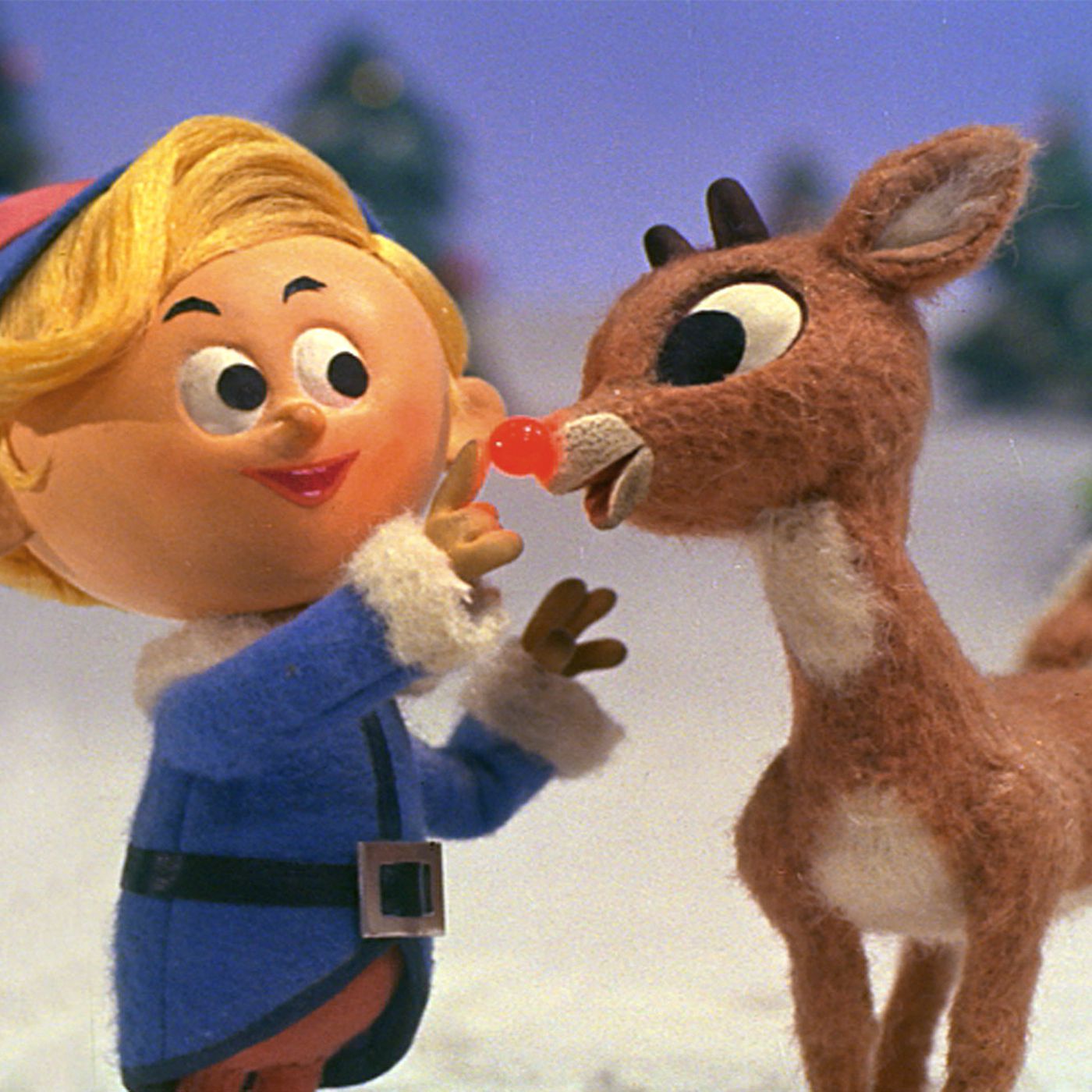
Learning from Rudolph the Red-Nosed Reindeer (1964)

When I first began to write, one of the common pieces of advice was to learn good story structure from the books and movies I enjoyed.  This is good advice, but I've found that I often learn more from bad stories, the ones I should have enjoyed, but didn't.  Figuring out why those stories didn't work and plotting out how I would have done them differently has taught me a lot about editing and story-telling. (Warning: this post will contain spoilers)

I'm sure I'm not the only one for whom the stop-motion Rudolph the Red-Nosed Reindeer is a holiday staple.  And I'm sure I'm not the only one who finds herself wincing through the nostalgia.  The story itself is pretty good and it has a lovely message about being true to yourself and found families, but there are a lot of dated approaches and references that grate on a current viewing.  So this month, I decided to think about how it could be updated, while still keeping the good parts.


First off, let's look at what works.  I love the stop-motion aesthetic and think it works really well for a fanciful holiday story.  I like that Rudolph leaves the North Pole to try and find a place that he belongs, but ends up finding it among friends who also don't fit in.  I think that part of the story speaks to a lot of us who felt like outsiders growing up.  From the moment Rudolph leaves with Hermey, the plot flows nicely.  They run into the prospector, Cornelius, and the Abominable Snowman (Bumble).  They float off on an iceflow and find the Island of Misfit Toys.  Rudolph sneaks away, afraid that his nose is drawing the Bumble and endangering his friends.  Then there's a growing up montage, and he decides to go home and confront his family.  He discovers his family is gone and goes to rescue them from the Bumble, but only succeeds with the help of his friends.  Then they all return to the North Pole and Rudolph helps Santa save Christmas.

That's good.  What's not good are the repeated sexist references sprinkled throughout the story.  Any reference to "not for does, this is bucks' work" needs to be ditched immediately.  Next to go can be the references to what "makes Christmas"; such as silver and gold ornaments on a tree or lots of toys.  There are too many families celebrating in too many ways to declare something as a required Christmas experience.  Luckily, those things are fairly minor.  They don't affect the plot and are mostly asides which don't even drive dialogue.

Slightly harder is toning down the rejection from Santa and Rudolph's parents.  It makes them very difficult to like.  I honestly think an updated version would provide a powerful opportunity to examine how painful microaggressions can be.  Most people would already agree that Rudolph's parents treating him as a freak is bad.  But most people don't understand how a careless comment or joke can cause harm.  I would probably write the introduction as Rudolph is shy, his parents encourage him to be himself, but he still faces rejection from the other reindeer.  That would allow the message of self-acceptance to be more resonant.

There is a bit of a nasty undercurrent to the 1964 story.  The misfits are only accepted because they are useful.  But people don't have to be useful to be accepted.  By changing it so that Rudolph has a supportive family, he's got an unconditional place to belong.  And by gaining friends, he learns that he doesn't need to rely on his reindeer peers for acceptance.


It also would add poignancy to the Island of Misfit Toys (which is my favourite part - side note: I wanted an elephant with pink polkadots and a swimming bird).  These are toys that self-loathe themselves because they don't fit in.  Except their differences make them the perfect toys for particular children.  There are people waiting to love them just as they are, which is a fantastic message for a children's movie.  I would make that part more explicit, showing them being happy with different children.

The music would have to be updated.  The songs are mostly forgettable, aside from Rudolph the Red-Nosed Reindeer and Holly, Jolly Christmas.  And since I'm partial to musicals, I'd keep the key points of the story tied into music.

I would also tweak Cornelius.  Rather than having him be a prospector, I'd make him a naturalist or an environmentalist (which is why he knows so much about Bumbles!).  He finds and helps Hermey and Rudolph.


The ending also needs work.  I'm not a big fan of pulling out the Bumble's teeth to make him helpless.  I'd much rather Cornelius be working with him and ends up gentling him so that the North Pole doesn't have to be afraid any more.  And Hermey gets accepted because Santa has a nasty toothache (and that's why he didn't want to eat).  He fixes it and Santa makes him the official North Pole dentist.  Rudolph can still save Christmas, but he tells the other reindeer that he doesn't need them to be his friends.  He knows who he is and he's proud to be red-nosed.

Previous Learning from Suicide Squad

Previous blog post: Things I Love: December 2020

Blog homepage


Thursday, 17 December 2020

Things I Love: December 2020

 I've decided to start a new monthly feature sharing what I'm currently enjoying.  This year has been so difficult and finding joy has been a challenge, so here's some fun stuff that's made my life livable.

Books:

I've been reading Shiloh Walker's Barnes Brother series and Erica Kelly's Rock Star Romance series.

I really like the Barnes Brother books because there's a rawness to them that speaks to me.  In Wrecked, Abby is trying to reclaim her life and her identity.  She's spent a long time trying to be what she should be and trying to fit her life into preconceived boxes.  It's scary for her to abandon that structure and be free.  I connected with that.  In Razed, Keelie is struggling with a guilty past she doesn't want to talk about but is also facing life with a "f*ck you" attitude.  In Busted, there's a beautiful slow burn romance between two people who aren't looking for it any more.  That one is my favourite and the one I've re-read most often.  Ruined is a powerful story about recovery and being true to one's authentic self.

The Erica Kelly series is full of energy and fire.  It pairs some of my favourite things: music and happily ever afters.  Everyone is trying to find success in their own way and the first two books touch strongly on the dangers of addiction and how prevalent it can be in the performance industry.  The third book, Take Me Home Tonight, explores the challenge of finding a new normal after a traumatic event.

This bit is a highly personal reason why I love these books.  My 16 year old son is a huge 80's rock fan and whenever he sees these books on the table, he begins to sing the title songs.

TV Shows:

I've got a couple of shows on the go right now that I'm enjoying.


First and most enjoyment is The Mandalorian.  It's intergalactic bounty hunter single dad catnip to me.  It's Star Wars, it's a "character wanders through different places and becomes involved in local issues" Western-esque, it's a guy learning to be a dad to a superpowered infant.  All things I absolutely love (and all I can share without spoilers!)


A new one that I'm catching up on is Suits.  I love law shows that actually look at the law and this one is full of geek references and witty dialogue.  This one got me with an exchange between Harvey and Mike.  "What's the gun for?"  "We're going to go start a knife fight."  I was braced to DNF the series quickly, but instead I got sucked in by the amazing characters.  
The heroines are wonderfully written and complex individuals.  I love Donna's independence and competence and Jessica's cool superiority and control.  I'd probably love it more if it was all about them, but the heroes aren't too bad either.  I'm on Season 3 and I'm even starting to have a grudging admiration for Lewis Litt.


And one more that I'm so thrilled to find on my Disney plus plan is Once Upon A Time In Wonderland.  It was a single season but I enjoyed it so much!  I wasn't a fan of the original Once Upon A Time but I caught the Wonderland version while channel flipping and just adored it.  (Eventually I went back and did enjoy the original but it took effort.)  The season arc is a beautiful romance novel between Alice and Cyrus (a genie) and has a brilliant set of villains with Emma Rigby as The Red Queen and Naveen Andrews as Jafar.

Fictional Crushes and Fanfic

I have a fickle heart when it comes to my fictional crushes.  Or maybe it's just a broadly appreciative taste for hotness in all its wonderful forms.  But no list of the things that I'm enjoying would be complete without the imaginary stories I find myself composing.  Creating a little fanfic is one of the primary ways I cope with difficult situations.  It never fails to re-energize me.


I've had two which have dominated my imagination of late: Pedro Pascal as The Mandalorian and Gabriel Luna as Ghost Rider (from Season 3 of Agents of SHIELD).  For my Mandalorian fanfic, I created a plucky, cheerful Force-sensitive engineer (think Kaylee from Firefly as a Jedi) who joins the Razorcrest to keep it flying and to watch over Baby Yoda when the Mandalorian is busy mandalor-ing.  For Ghost Rider, I paired him with Firestar (from The Amazing Spider-Man and Friends Saturday morning cartoon) but I made her an independent superhero who is also working as an accessibility consultant for the university that Robbie Reyes's paralyzed brother attends.  The two of them team up for justice and vengeance.


And of course, each partnership ends up having Feelings.  And Kissing.  And More Feelings.  Because the lack of that is why I write superhero romance to start with.

And I have to share one cool (though minimal) brush with celebrity.  A friend on Twitter wished me a good night's sleep.  I replied that I'd gotten it, including a weird dream about me and Gabriel Luna being in a pancake making contest.

His twitter account liked it!  I had a moment of geek excitement and no one to share it with.  Luckily, I can share it now.

Songs

Last but not least, I'll share the songs that I've been finding myself playing on repeat a lot.  Losing myself in music is my preferred form of meditation and I often connect songs with scenes or stories.

I've been listening to ADONA's Hit Me With Your Best Shot (a cover of the Pat Benetar classic that was featured in the Birds of Prey movie).  It's a haunting, slow version of the original and to me, it's perfect for someone slowly standing up against someone who has been hurting them and refusing to back down.  

Another one I've just been loving is Lady Gaga and Ariana Grande's Rain On Me.  It's an energizing pop-dance song.  I love the harmonies between Lady Gaga and Ariana Grande and it instantly gets my toes tapping.

Previous blogpost: Reclaiming My HEA: Better Living Through Crushes

Blog homepage

Thursday, 10 December 2020

Reclaiming My HEA: Part Three - Better Living Through Crushes

Reclaiming My HEA is a monthly feature where I share my progress through my separation and divorce.  Starting last month, I'm including snippets of a therapy exercise where I imagine myself in a healthy relationship.  The purpose is to remind myself of what a supportive, caring partner would be like, to try and offset the effects of over a decade without one.

I was recently asked to list off the names of people that I find attractive.  Hmm, thinking about cute guys... what a hardship.  Being firmly committed to my psychological recovery, I devoted myself to the task.

I am nothing if not thorough for my mental health.

As I compiled my list, two things became very obvious.  First: I have a lot of crushes.  Second: every one of those crushes are on fictional characters.

In some ways, it's not surprising.  Thirsting about fictional characters has none of the potential complications or ickiness of fantasizing about real world people.  One knows the inner heart of fictional characters, so there's no danger of discovering that one's crush is actually an asshole.  (Unless assholery is what works for you.)  Fictional characters are safely remote, never disappointing a person.  There's no risk of rejection or any other unpleasant consequence.  They're the safest kind of crush there is.

There's another bonus, especially if, like me, the fictional characters also tend to be superheroes.  They're also capable of larger than life actions.  They have superpowers.  They possess superior fighting skills.  They are deeply protective, especially when they love someone.  They are knights (in shining armor or otherwise) who are always willing to ride to the rescue.

In my fiction, I like a balanced rescuing on all sides.  However, I will admit that the idea of being rescued is extremely appealing to me.  In reality, I've been exhaustively doing the rescuing for a long time and it would be so refreshing to have someone else to rely on.  To not have to be on guard all the time.

The question is: what would I consider a rescue?  I don't need someone to snatch the mystical McGuffin or rip apart the fabric of space-time.

What I want is someone to give me a hug when I've had a hard day.  Someone who will tell me that they have faith in me and who will offer to help me, whether it's something simple like getting dinner started or more complicated like researching different school choices.  Someone who doesn't have to be asked to participate in the household.  Someone who wants to help and support me, because that's what people who are in love do for one another.

And, to be honest, that seems more fantastical than a guy who can bench-press a helicopter right now.  But I have to believe it's possible.

This month's snippet is my own version of a rescue.

   It had been one hell of a day.  From the moment I woke up, it seemed I was falling further and further behind.  My to-do list kept getting larger and larger and everything seemed to be utterly crucial.  As I struggled up to the house with grocery bags, I was so exhausted and overwhelmed that I was ready to cry.

   I fumbled with my keys, dropping them into the snow.  Great.  I put down the heavy bags, wincing at the icy chill on my fingers as I plucked the ring from the fluffy ice crystals.  Before I could shove the key into the lock, the front door opened.

   "Hey, I thought I heard the car," he said. "Let me give you a hand."

   My brain was too tired to come up with anything witty.  "I thought you were out of town until the weekend."

   He easily hefted three of the overloaded bags, leaving one for me.  "I finished up early.  I missed you."

  "I missed you, too."  The words were automatic, though the sentiment was genuine.  Or at least it would be once I got enough rest to wake up my benumbed brain and heart.  As I stepped into the house, I stopped, unable to believe my eyes.

   The toys scattered all over the floor had been tidied up.  My stack of library books was gone and a new selection waited in its place.  A neat pile of envelopes waited for my perusal.  He'd cleaned, gone to the library, and checked the mailbox.  My jaw was slack as I stumbled through to the kitchen.

   Pasta bubbled on the stove and a pan of tomato sauce simmered on another burner.

   He cooked dinner.  Tears pricked my eyes.

   "Hey, what's wrong?" he asked, concerned.

   "Five seconds ago, I was worrying about the kids eating late and having to pay late fines and when I was going to pick up the gift for the birthday party this weekend and my computer broke at work and people kept yelling at me because nothing was working and--"

   "Got it."  He wrapped his arms around me and planted a kiss on the top of my head.  "Bad day."

   "Yeah."  I sniffled.

   "I got you," he whispered in my ear.  "You don't have to do it alone any more."

Previous Reclaiming My HEA: Part Two - Practice Makes Perfect

Previous blogpost: Missing My Writing Retreat

Blog homepage

Thursday, 3 December 2020

Missing My Writing Retreat

 Usually, the first week of November finds me on a beach in South Carolina with 10-12 other writers, enjoying a writers' retreat.  For 2020, even before the pandemic hit, we were nervous about being in the United States during what was expected to be a highly polarizing election.  With Corona, it became a non-decision: any thought of the trip was cancelled.

Writing retreats are one of the ways I keep up my writing progress through the year.  I've got a lot of responsibilities at home, plus a full time job, so my writing time is pretty minimal.  In a typical year, I can manage 4000-6000 words per week, but on a writing retreat, I can often do 20 000 to 25 000 words, which is a major jump forward.  Being able to just concentrate on my writing, plus the fun, energy-boost of being around some amazing and entertaining folk turns on the creative flow at full volume.  (The relative warmth and sunshine helps too, energizing my inner lizard from winter sleep to summer productivity.)

I really miss having that break this year.

Pictured: not this November

However, I have a bunch of unclaimed time-for-time through my day job, so I decided to try an at-home writing retreat.  I've been managing about 1000-1500 words per week since the kids went back to school in September.  For my writing retreat, I did about 8000 words, which puts me within a chapter or two of finishing my WIP.  (For those looking for perspective, a 300 page book is about 90 000 words, and my books tend to be 100 000 to 130 000 words.)

It's hard not to compare what I usually do on a writing retreat with what I was able to do this time.  Usually I write for about 5-7 hours throughout the day.  For this week, I wrote for 2-4 hours.  I am very aware that my energy levels are still quite fragile and that I needed to be able to preserve enough to function as a parent during the evening.

I'm glad I took the time.  It felt good to be able to concentrate on my writing.  I've had to switch my writing time from the afternoon (when I was traditionally able to do 1500-2500 words in 90 minutes) to the morning (where I'm only able to do 500-700 words in the same amount of time).  Usually I have to turn off my computer when the words are just starting to flow and I can feel my brain starting to spark with ideas.  For this week, I could keep going and it was a real pleasure.

Going back to the regular routine is hard, but its necessary.  I do like my day job and the people I work with, but it's not my heart's calling.  I keep hoping that someday I'll make enough money with selling stories to support myself and my family.  That would be one of my happily ever afters.