Thursday, 12 April 2018

Heroine Fix: Crafting a Great Bad Girl: Letty of Good Behavior

Heroine Fix is a monthly feature looking at characters that I admire and who influence my own writing. (Warning: this article will contain spoilers.)

Last October, I joined a wonderful group of women for a writers' retreat.  I introduced them to one of my favorite series, Lucifer, and they in turn introduced me to Good Behavior.  I was hooked instantly and became an insta-fan of the heroine, Letty.


He's in it, too.  If you need extra incentive.

But it got me thinking: why did I like Letty so much?  She's an addict, demonstrating problems with drugs, alcohol and impulse control.  She's a con artist, constantly lying to people from claiming to work for Instagram to pretending to be a ghost writer.  She steals, shoplifting $20 000 rings and chocolate bars with equal ease (and I'm one of those people who wonders what happens to background characters after the protagonist leaves).  By the logic of likeable heroines, Letty Raines has a lot more in common with villains than heroines.

That led me to take a closer look.  How did the writers make Letty likeable?

It starts with the first scene where Letty is dealing with a crap job at a restaurant and fights off a would-be rapist in the bathroom.  By putting her in a bad situation and in danger, the audience begins on her side.  We cheer when she slams the guy's head into the wall and steals his wallet all in one move.  More cheering when she quits the job immediately.


Then the writers begin to introduce Letty's story.  We learn she's been to prison.  We learn she has a child that she's not allowed to see.  We see the addiction and damage it has caused.  But we also see that she is making an effort to overcome it.  She constantly recites self-affirmations to boost her self-esteem.  She is struggling, which helps to keep the audience's sympathy.  But writers have to be careful, because struggle and failure can also alienate an audience.  It needs to feel as if suffering has a purpose within the narrative and that the character has a chance at overcoming their obstacles.

Enter the second weapon, they make Letty glamorous.  Wigs, clothes, shoes, Letty gets to play in the ultimate fantasy dress-up closet.  Her attractiveness also makes the audience more inclined to give her the benefit of the doubt. 


Then they show that she has a good heart.  She cares about her son.  She supports her mother, even when her mother is cruel to her.  She tries to save a complete stranger from being murdered when she overhears a hitman meeting with his client.  Her methods might be ethically dubious, but her efforts counteract the appearance of callousness.

And last but not least, they play on the audience's inherent desire to break the rules and get away with it.  Most of us have fantasized about doing whatever we wanted, without consequences.  Taking what we want without having to worry about paying for it.  Letty makes it look easy and tempting.  When she describes the thrill of deceiving someone and getting away with a crime, it's a statement that rings true for all of us, even if our biggest duping delight comes from successfully pretending to be sick so that we can stay home from work.
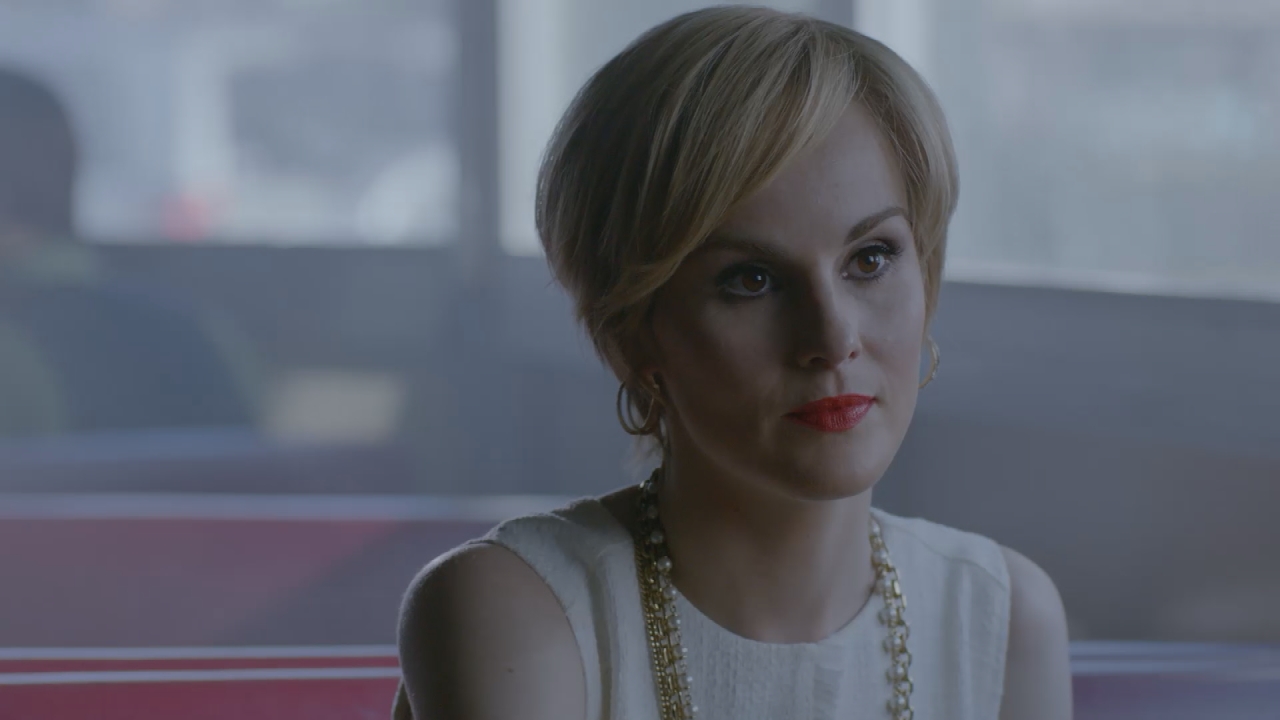


Letty is an unusually complex character.  Like people in real life, she's hard to pigeon-hole as good or bad.  She's both, sometimes at the same time.  She makes bad choices and stupid mistakes, but she also cares deeply about those around her.  She's self-destructive but trying to escape it.  Hopefully she reminds the audience about the dangers of judging someone based on a thin slice of their life and experiences.

But unlike people in real life, Letty manages to skate past the worst consequences of her decisions.  She gets away with things we never could, taking the audience with her in a vicarious Robin-Hood-esque crime spree.  Writing this kind of complexity is a challenge but it's also a goal, because complexity is what keeps characters real.  It's a balance between writing something that readers relate to and something that makes them think.  Too much on one side or the other saps the life out of a story: too much predictable relating leads to stereotypes and over-used plotpoints; too much making people think leads to characters they don't care about.

It's a fine line and it varies from book to book, character to character.  But Good Behavior nailed it for season one.  And it's definitely made me think about how I want to craft my next awesome bad girl.

Are you addicted to strong and interesting heroines like I am?  Share your favourite heroines with me on Twitter (@jclewisupdate) and #HeroineFix.

And if you'd like to give my strong heroines a try for free, enter my giveaway for a copy of my first book.  Revelations tells Dani's story: a burlesque dancer with superpowers who is searching to find her brothers before they disappear into a testing facility. 

a Rafflecopter giveaway


Previous Heroine Fix: The brilliant ladies of Hidden Figures

Previous Post: Diversity and the RITA Awards

Blog homepage

Next month's Heroine Fix will be looking at one of the first heroines who ever inspired me.  Meg Murray from A Wrinkle In Time.  Coming May 10th!


Monday, 9 April 2018

Weekly Update: April 1 to 7

Word count: 4620

Most of those words happened on Sunday, Monday and Saturday.  The middle of the week was a complete wash.  Life knocked me down and I had to get my feet back under me before I could move forward.

I've been looking at my deadline to get this manuscript done and it's hit me that it's taken me three months to write the first 30 000 words.  Usually my books are between 90 000 and 120 000 words, so that's a lot of words still to go at the half-way point.  I'm trying to keep myself rational by reminding myself there was a lot of other stuff going on, too.  Like editing and life crises.  

But it still means that I'm going to have to buckle down if I want to have this manuscript ready for mid-July.  

Thanks to everyone who gave me their support.  I'm trying to combat my own perfectionism and failure-phobia by being honest about my struggles so that I can remind myself that they are not insurmountable.

Thursday, 5 April 2018

Diversity and the RITAs

The RITA awards are pretty much the Oscars for romance writers.  Books are submitted and judged by fellow authors.  It's by the industry, for the industry, not necessarily reflecting popularity or sales.  There are 2000 entries (although authors are allowed to submit more than one book each year), with various categories.  It's one of the more expensive contest to enter, although there have been efforts made lately to allow people to submit ebooks rather than having to mail physical copies.

I entered my first book in the RITAs and it did very well.  I didn't final, but when I looked at my score vs the average score of the finalists, I was within 0.5 of them (on a 10 point scale).  It made me feel very proud and accepted.

But there are problems with the contest and how it is structured.  Last week RWA sent out an announcement letting all authors know that it had been brought to their attention that authors of color were hugely underrepresented.  They've committed to fixing the issue which has sparked a lot of discussion about how the contest could be revised.  (And also awareness that this is not the only diversity barrier.)  For a closer look at the issue, please check out Courtney Milan (@courtneymilan) or Robin Covington (@RobinCovington) or The Ripped Bodice (@TheRippedBodice) or Rebekah Weatherspoon (@RdotSpoon) who are all far more eloquent than I would be.

Right now, any author who submits a book must also sign up as a judge.  People have rightfully pointed out that this means that unconscious or conscious bias could be influencing the scores that judges give.  There have also been suggestions that authors of color are deliberately avoiding entering because they have not felt accepted by RWA, and many have cited personal experiences of prejudice at RWA chapters and conferences.

I'm proud that RWA has acknowledged the problem and is working on fixing it.  I'm not okay with people feeling unwelcome within a professional organization that exists to support all of its members.  There are some amazing authors out there who are not getting recognized, which is not good for either the organization, the writers, or the readers.  I hope that RWA will take the time to figure out what the barriers have been (and I'm sure there have been more than one) and how best to effectively eliminate them.  Some people have been pushing for immediate action but that could end up making the situation worse if the wrong assumptions are made.

I didn't enter the RITAs this year, but I will be there to applaud my fellow authors at the awards ceremony.  To be meaningful, the RITA should represent the very best of the romance genre, not just a small corner of it.  I want all of our amazing stories to be awarded and recognized and I feel that this announcement is a good first step in making that happen.


Previous post: Ink Tip: The Dos and Don'ts of Accountability Buddies to boost your writing productivity.

Blog homepage

My fourth book, Judgment, is coming out soon.  You can pre-order your copy now or pick up Book One: Revelations on sale to find out how it all began.

Tuesday, 3 April 2018

Cover Reveal: Judgment


Big thanks to Streetlight Graphics for another fantastic cover!

Judgment will be coming out on May 14th but you can preorder your copy now!  Or, if you want to know how it all got started, Book One: Revelations is on sale for just 99 cents (US) or equivalent in local currency.  

Monday, 2 April 2018

Weekly Update: March 25 to 31

Weekly word count: 7610

The good news is that I'm pretty much back at the total word count I had two weeks ago, before I started tearing Deadly Potential apart, which makes me feel much happier about having it ready to pitch in July.

I'm also working hard on getting pre-orders ready for Judgment, along with revealing the new cover tomorrow.  I can't wait to share it with everyone.

Hopefully I can do well with writing for the rest of this week.  It feels really good to be back at the keyboard and letting my imagination flow again.  Editing is necessary and important but my heart will always lie with the blank page, waiting to be filled.


Thursday, 29 March 2018

Ink Tip: Dos and Don'ts of Accountability Buddies

Writing is solitary.  No matter how many voices and worlds live inside a person's head and how real they feel, in the end it's just the author and a keyboard (or paper and pen if they prefer old school).  Add in the fact that most authors also have jobs they need to pay the bills, and all the other things that can complicate life and it becomes clear why sometimes letting the words flow isn't as easy as it sounds.

Inspiration is going to strike any second now.
Or maybe now.
How about now?
One of the ways to overcome life-induced inertia is to pair up with an accountability buddy.  It's a fairly simple concept: pick someone and then each day or each week or each month, you have to tell them how much you've written.  But setting up your accountability buddy can be more complicated than it sounds.  The wrong type can actually end up discouraging an author instead of encouraging them.  So here are some suggestions from my own experience with accountability buddies.

First question to look at: do you actually do better if you have someone to be accountable to?  

Not everyone likes having to share their successes and failures with another person.  If the idea of having to tell someone that you've failed to meet your writing goal is something that is going to gnaw at you, casting a pall over your writing time, then an accountability buddy isn't the best system to get your fingers moving.  But if admitting failure lights a fire under you, then the next step is to find the right accountability buddy.

Second question: how competitive are you?

I've had a few accountability buddies over the years and I've discovered that I have to be careful.  If my buddy is too productive, I feel discouraged.  My first buddy regularly wrote between 5000 and 10 000 words a day, at a time when I was doing amazing if I wrote over 500 words in a day.  My second buddy didn't write more days than she did, and so it didn't drive me.  Because she wasn't writing, it was easier to tell myself that I'd write tomorrow.

If you're competitive then you need to make sure that you don't feel like you're losing to your accountability buddy.  If you're more on the congratulate and celebrate side of the spectrum, then your buddy's output isn't as critical.

Which leads to our next step: what are the rules going to be?

Do you want your buddy to kick your butt if you don't make your writing goals?  Or would you rather have encouragement and pats on the back?  How often do you want to share?  Daily?  Weekly?  Monthly?  Do you have to share if you have a 0 word day?  Do you share privately or on a public forum?

Having a buddy should feel good.  It can be a great feeling to be able to tell someone "I did it!" and know that they will understand how good that can feel.   Having someone to celebrate with can make this solitary profession a little easier.  

Big thanks to my accountability buddy @LBoota and her amazing gifs of encouragement that keep me going.


Previous Ink Tip: Punctuation and Grammar (Comprehension vs Consistency)

Previous Post: Please take time to think (How we can all work to prevent online bullying)

Blog homepage

Monday, 26 March 2018

Weekly Update: March 18 to 24

Weekly word count: 4480

Editing: done!  Judgment went off to the editor for line edits on Wednesday.

That means I have a couple of weeks before the next round starts and so I'm back to working on Deadly Potential.  I spent Wednesday re-reading what I had and decided to go in a slightly different direction, plot-wise.  I like what I had and I'll probably still use it (or parts of it) later in the manuscript, but it was pushing things too quickly for the characters.  But it meant that my total word count dropped by almost 12k.

This is how my manuscripts usually go.  At a certain point, I realize the story isn't quite stable and so I prune it back until I'm back on solid ground.  Then I can move forward again.  It's a balance between not getting too far off track and not ending up constantly rewriting the first ten chapters over and over.

I've got three and a half months left before RWA Nationals.  If I can keep up my pace, then I'll be able to pitch Deadly Potential.  

In other news, I got some good news this week.  I'm going to be an official panelist at Ottawa Comic-Con this year, along with my fellow ORWAns Eve Langlais and Lucy Farago, and my friend, 'Nathan Burgoine.  We're going to be talking about the different paths available to those who want to publish.  And I got asked to do a workshop for Ottawa Independent Writers in May.

Lots of balls in the air between now and the summer but luckily my mental juggling skills are much better than my actual hand-eye coordination.